
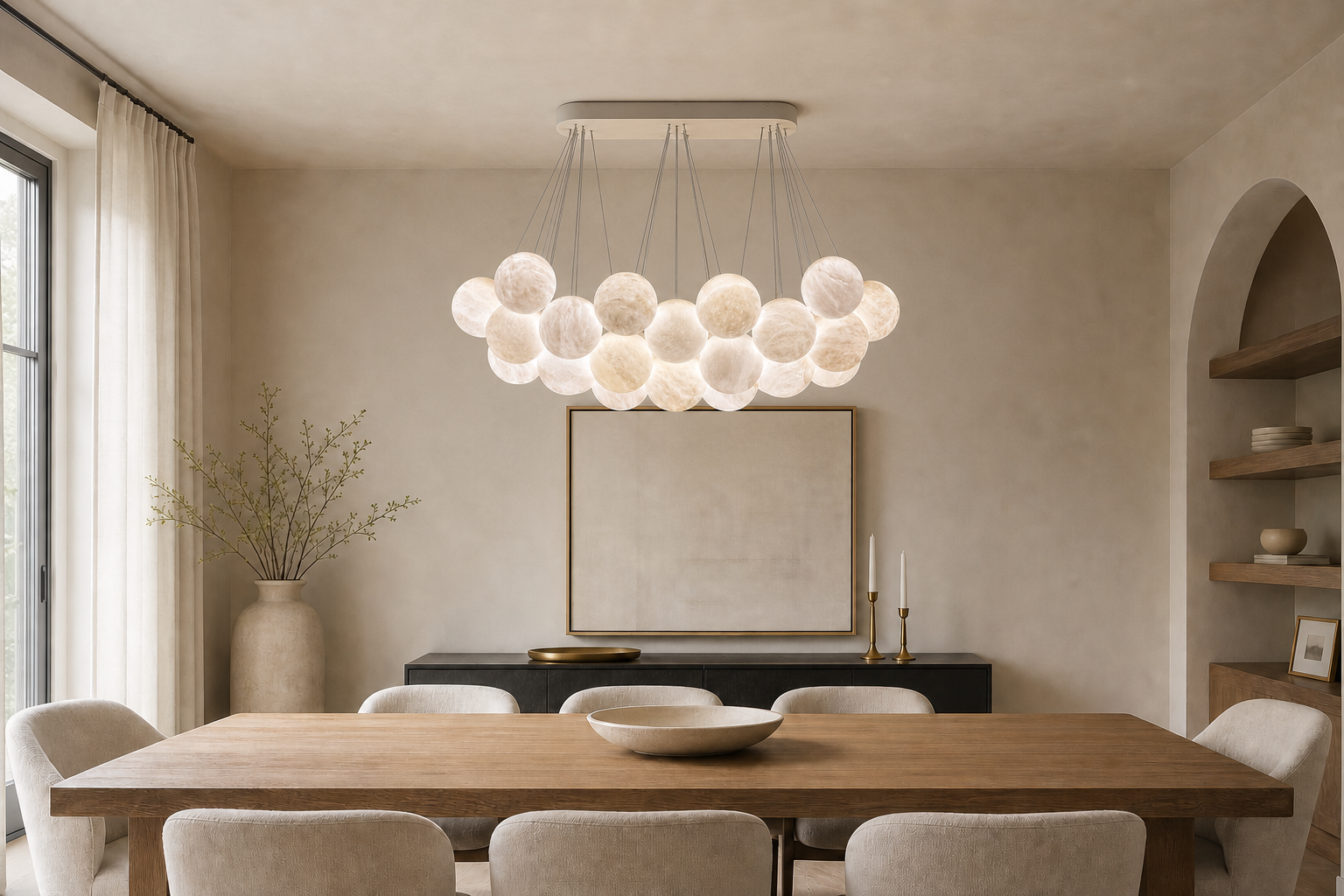
Alabaster lighting has a quiet presence that feels both decorative and calming. Rather than producing a sharp, exposed point of light, the pale stone surface creates a soft glow that reveals subtle veining and natural variation.
Designers often choose alabaster when a room needs warmth, texture, and a refined focal point without excessive ornament. It can feel contemporary, classic, sculptural, or minimal depending on the shape of the fixture and the materials paired with it.
What makes alabaster lighting distinctive?
Alabaster is valued for its translucent appearance and cloud-like patterning. When illuminated, the material can reveal layers of ivory, cream, pale gray, and warm beige. When the light is off, it still contributes visible texture to the room.
Every piece may show different lines, tonal shifts, and areas of translucency. That variation gives alabaster lighting a more organic character than a completely uniform manufactured shade.
The soft glow creates a comfortable atmosphere
One of alabaster's strongest qualities is the way it visually softens the light source. The glowing surface becomes part of the design rather than simply hiding what is inside the fixture.
This makes alabaster especially appealing in dining rooms, bedrooms, living areas, and entryways where atmosphere matters as much as brightness. The result can feel warm and inviting without looking overly decorative.
Explore our alabaster lighting collection for soft natural glow, from sculptural alabaster chandeliers to refined alabaster wall sconces for layered ambient light.
Natural veining makes every fixture visually interesting

Alabaster often features delicate veins, cloudy bands, and tonal variations. Light emphasizes these details, creating depth across the surface and making the fixture appear different throughout the day.
During daylight hours, the stone reads as a pale sculptural material. In the evening, the internal glow brings forward its layered texture. This changing appearance is one reason alabaster works well as a long-term design element rather than a short-lived trend.
Alabaster feels luxurious without being overly formal
Luxury lighting does not always need crystal sparkle or elaborate metalwork. Alabaster creates a more restrained sense of richness through material, texture, and glow.
Its pale surface can soften strong architecture, while its natural patterning adds detail to minimalist interiors. The material feels elevated but remains comfortable enough for everyday living spaces.
It works across modern and traditional interiors
Alabaster is unusually versatile because the stone itself does not belong to one specific design era. The surrounding frame determines much of the style.
- Modern interiors: clean rings, globes, and linear forms emphasize the material's sculptural quality.
- Contemporary luxury rooms: brass details add warmth and definition.
- Minimalist spaces: simple shades bring texture without visual clutter.
- Art deco-inspired rooms: repeated geometric stone elements create rhythm.
- Classic interiors: balanced round chandeliers complement formal furniture and architectural molding.
Alabaster pairs naturally with brass and dark metal
Warm brass highlights the cream and honey tones within the stone, creating a cohesive and inviting look. Dark bronze or black metal provides stronger contrast and makes pale alabaster appear more graphic.
Both approaches can work. Choose the frame finish according to nearby hardware, furniture, and the amount of contrast you want in the room.
Why alabaster chandeliers work in dining rooms
Dining room lighting needs to define the table while supporting a comfortable atmosphere. Alabaster chandeliers combine visual presence with a softer decorative effect than many exposed-light designs.
The Alabaster 27-Ball Chandelier uses repeated spherical forms to create a broad sculptural composition. The clustered arrangement suits a rectangular dining table and gives the material enough surface area to become the room's focal point.
When choosing a dining room fixture, compare its complete width with the table and leave comfortable visual space around the edges.
Round alabaster chandeliers create a balanced focal point
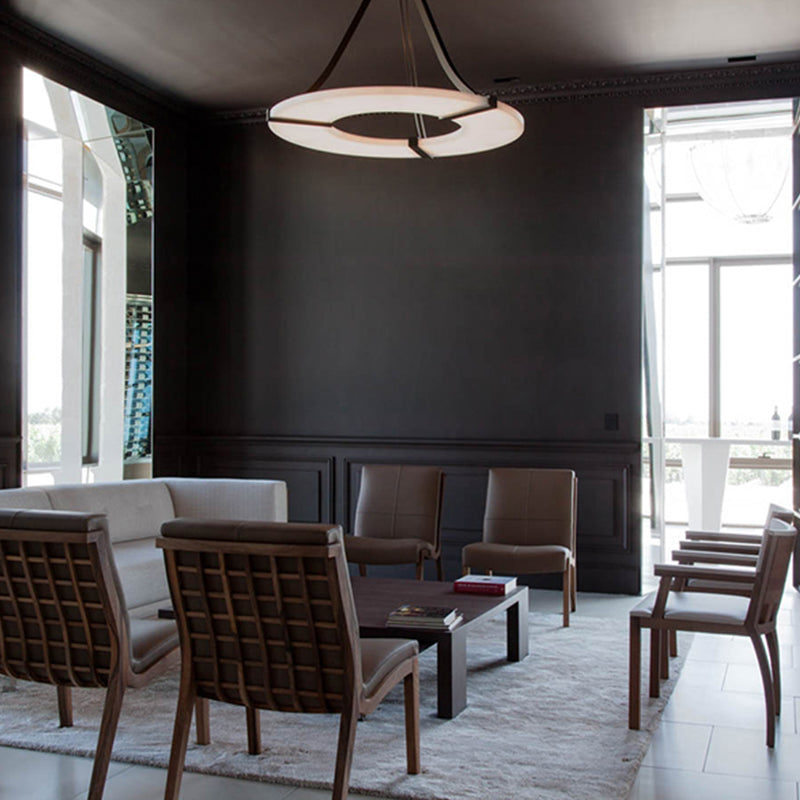
Round chandeliers work particularly well over circular tables, square dining areas, and centrally arranged living rooms. Their symmetry allows the fixture to read clearly from several directions.
The Round Alabaster Plate Chandelier presents the stone in a clean ring form. Its simple geometry places the emphasis on the glowing alabaster surface and natural patterning.
Round designs can also soften rooms dominated by straight cabinetry, rectangular windows, and angular furniture.
Alabaster pendant lights bring texture to smaller spaces
A single alabaster pendant can introduce the material without the scale of a chandelier. Pendants work well over bedside tables, reading corners, compact dining tables, and kitchen islands.
Groups of smaller pendants can create rhythm across a long surface. Because alabaster has visual weight, leave enough space between fixtures so each shade remains distinct.
Wall sconces create a layered evening glow
Alabaster wall sconces can bring warmth to hallways, bedrooms, dining rooms, and living areas. They add light at eye level and help balance a central chandelier or ceiling light.
Use sconces to emphasize artwork, frame a mirror, or create a gentle transition between adjoining rooms. Browse the wall sconce collection for complementary options.
Alabaster suits entryways and high ceilings
In an entryway, glowing stone creates an inviting first impression. Large globes, vertical clusters, and sculptural suspended forms can fill tall spaces while maintaining a softer appearance than dense metal or crystal designs.
For a high ceiling, consider both fixture width and vertical presence. A cluster or tiered arrangement can connect upper architecture with the occupied space below.
How to choose the right alabaster fixture
Begin with the room and the surface below the light. A dining table may need a round or linear chandelier, while a staircase may suit a vertical pendant cluster.
Then compare:
- The complete fixture width and height.
- The visual density of the stone elements.
- The ceiling height and required suspension length.
- The relationship between the fixture shape and nearby furniture.
- The metal finish and surrounding room palette.
- The product specifications and installation requirements.
Explore the complete alabaster lighting collection to compare chandeliers, pendants, and wall sconces in different forms.
Choose scale according to visual weight
Alabaster often feels more substantial than clear glass because the shades appear solid when unlit. A fixture can therefore have strong visual presence even when its dimensions seem moderate.
Use product images and actual measurements together. If a chandelier contains many stone elements, give it enough surrounding space so the individual forms do not crowd nearby walls or furniture.
Keep the surrounding palette calm and complementary
Alabaster works beautifully with warm white, taupe, beige, walnut, oak, bronze, and brushed brass. It can also provide a soft counterpoint to charcoal walls or dark cabinetry.
Avoid filling the room with too many competing stone patterns. If the lighting is highly textured, simpler walls and furniture allow the material to remain visible.
Caring for alabaster lighting
Follow the care instructions provided with the specific fixture. In general, use a soft dry cloth for routine dusting and avoid harsh cleaners, abrasive materials, or excessive moisture on stone surfaces.
Always switch off power and allow the fixture to cool before cleaning. For installation, internal maintenance, or electrical work, use a qualified professional.
Common design mistakes to avoid
- Choosing a fixture by appearance without checking its dimensions.
- Using too many dense stone elements in a small room.
- Hanging the fixture too high and losing connection with the surface below.
- Combining alabaster with several competing patterned materials.
- Expecting every natural stone element to have identical veining.
- Using cleaning products not recommended for the fixture.
Frequently asked questions
Does alabaster lighting suit modern interiors?
Yes. Simple globes, rings, linear forms, and minimal frames highlight the material's natural texture while keeping the overall design contemporary.
Is every alabaster shade identical?
Natural-looking veining and tonal variation are part of the material's appeal. Review the product information for details about the construction and expected variation of a specific fixture.
Where does alabaster lighting work best?
It is especially effective in dining rooms, living areas, bedrooms, entryways, hallways, and staircases where a soft decorative glow supports the atmosphere.
Final thoughts
Designers return to alabaster lighting because it combines material richness with visual calm. The stone introduces natural pattern, a soft glow, and a sculptural presence without overwhelming the room.
Choose a form that suits the architecture, confirm the scale carefully, and allow the material enough space to be appreciated. The result can feel warm, timeless, and distinctly refined.
<h2>Related lighting guides</h2>
<p>Continue planning your lighting layout with these related guides:</p>
<ul>
<li><a href="/blogs/news/alabaster-lighting-soft-natural-glow">Alabaster Lighting: Why Designers Love Its Soft Natural Glow</a></li>
<li><a href="/blogs/news/pendant-lights-vs-chandeliers-which-one-is-right-for-your-space">Pendant Lights vs Chandeliers: Which One Is Right for Your Space?</a></li>
</ul>
Related lighting guides
Continue planning your lighting layout with these related guides: