
High ceilings and grand entryways create an immediate sense of space, but they also demand lighting with enough scale to feel intentional. A fixture that works beautifully in a standard room can appear undersized when surrounded by tall walls, expansive windows, or a sweeping staircase.
The strongest lighting plans do more than fill empty volume. They guide the eye, define the entrance, and connect the upper architecture with the furniture and pathways below. These ideas will help you choose lighting that feels balanced, refined, and comfortable in a tall interior.
Begin with the architecture of the space
Before choosing a fixture, study the shape of the room. Note the ceiling height, width of the entry, staircase position, upper-level sightlines, windows, and the direction people move through the space.
A double-height foyer with a central floor area can support a broad round chandelier. A narrow stairwell may suit a vertical cluster pendant. A long entrance hall may feel more balanced with an elongated fixture or a sequence of smaller lights.
The architecture should determine the lighting shape. This prevents the fixture from feeling like an isolated object suspended in a large void.
Choose a fixture with enough visual scale
In a tall room, scale is both physical and visual. Width matters, but so do height, layering, material density, and the amount of open space inside the fixture.
A wide open-frame chandelier may feel lighter than a smaller design with dense crystal, stone, or glass elements. Similarly, a long vertical pendant can occupy significant height without overwhelming a narrow staircase.
View the fixture from the front door, the upper landing, and adjoining rooms. It should remain legible from each important viewpoint.
Use a statement chandelier to anchor a grand foyer
A large chandelier can establish one clear focal point in a spacious entryway. Round and multi-tier fixtures are especially effective in square or centrally organized foyers because they distribute visual weight in every direction.
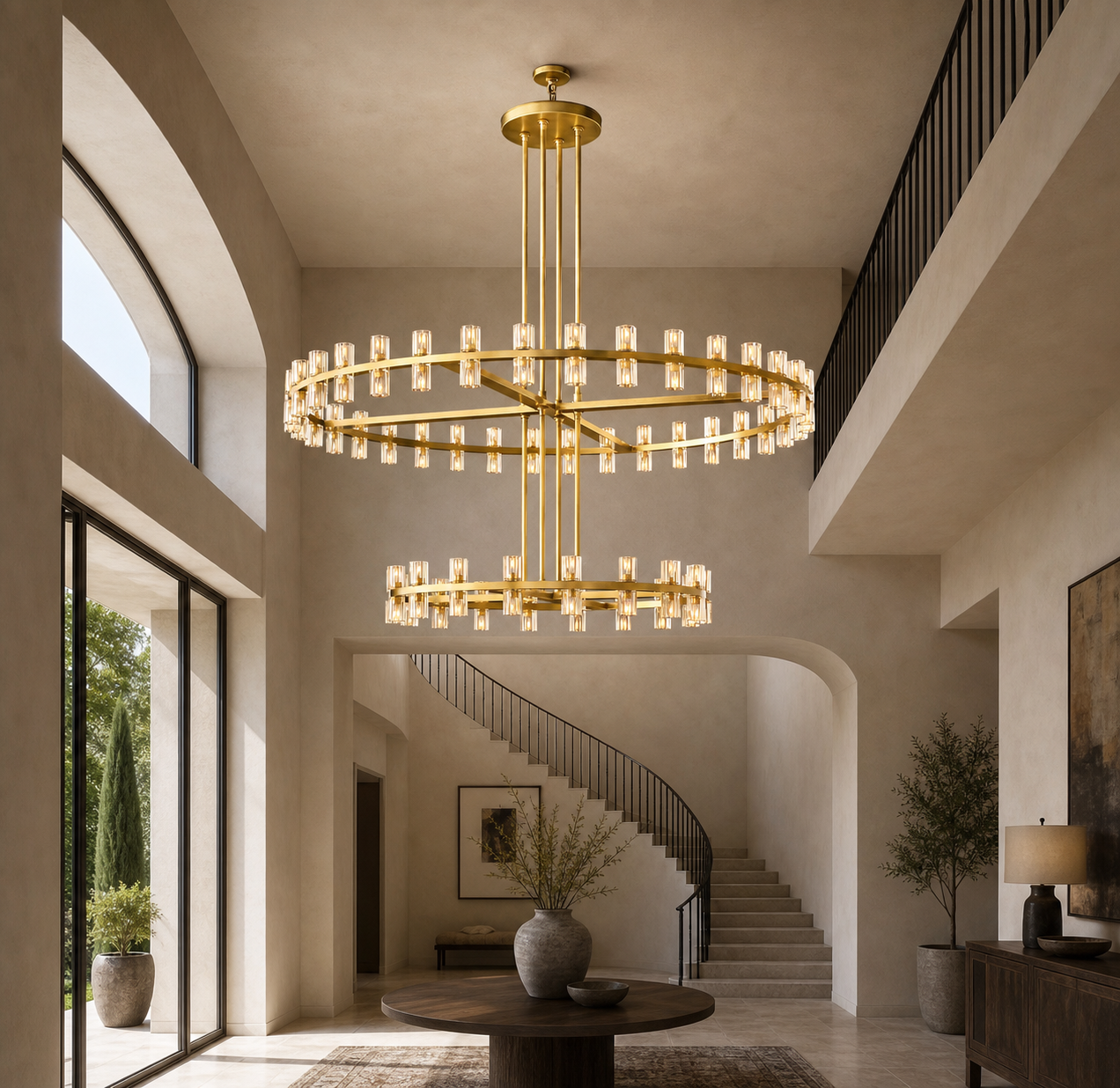
Explore foyer chandeliers for tall entries, browse statement chandeliers for larger rooms, or view the Akio Wine-Glass Round 2-Tier Chandelier for a layered high-ceiling look.
The Akio Wine-Glass Round Two-Tier Chandelier illustrates how a layered form can connect a high ceiling with the area below. Its broad rings create presence across the room, while the two-tier structure makes use of vertical space.
When selecting a statement fixture, make sure its lower edge preserves comfortable clearance and does not compete with doors, transoms, or major architectural lines.
Consider multi-tier chandeliers for double-height rooms
Multi-tier chandeliers naturally suit tall interiors because they create interest at more than one level. The upper tier engages the ceiling volume while the lower tier brings the fixture visually closer to the entry floor or table beneath it.
Choose tiers that feel clearly related rather than crowded. A design with open space between layers often reads more elegantly from an upper landing and allows daylight to move through the fixture.
Use vertical clusters in staircases and narrow voids
Not every high ceiling needs a wide chandelier. Staircases, corner voids, and narrow entrance spaces often benefit from pendant clusters arranged at different heights.
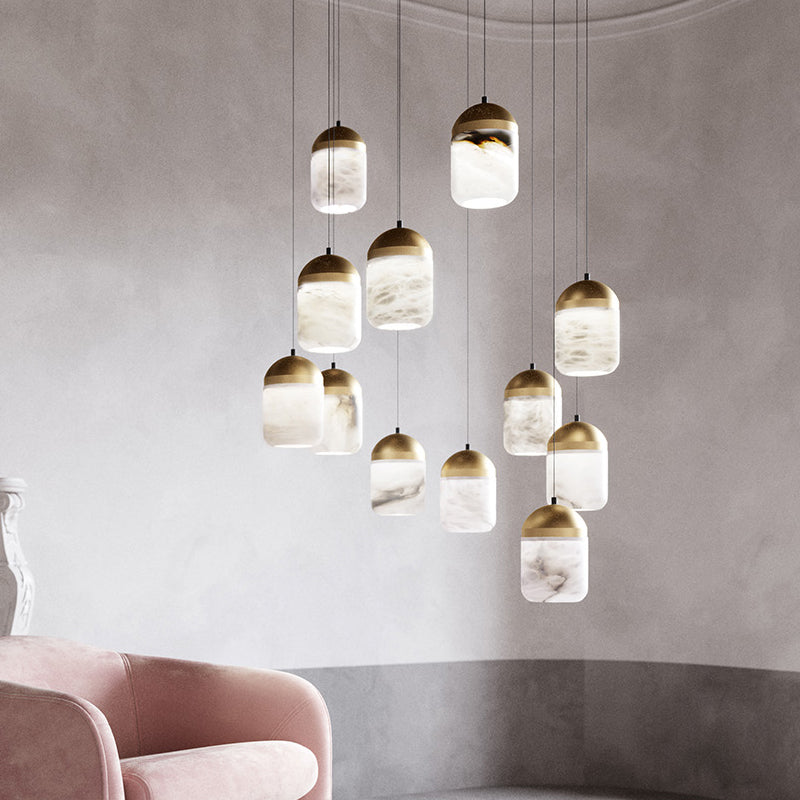
Vertical clusters draw the eye upward without extending too far across the room. They can follow the direction of a stair flight, fill an otherwise empty shaft, and create a changing composition as the viewer moves between floors.
The Serenity's Cascade Alabaster Staircase Pendant Light uses repeated illuminated forms to create a soft descending rhythm. This approach works particularly well where a single wide fixture would obstruct the staircase or feel too horizontal.
Let the entryway shape guide round or linear forms
Round chandeliers feel natural in square foyers, rotundas, and spaces organized around a central table. Their symmetry creates a balanced view from multiple directions.
Linear chandeliers suit long halls, rectangular entryways, and areas where the eye moves toward a staircase or distant room. They emphasize direction and can make an elongated space feel more cohesive.
For irregular architecture, a sculptural pendant may be the best solution because it can respond to the room without depending on strict symmetry.
Use sculptural lighting in modern entryways
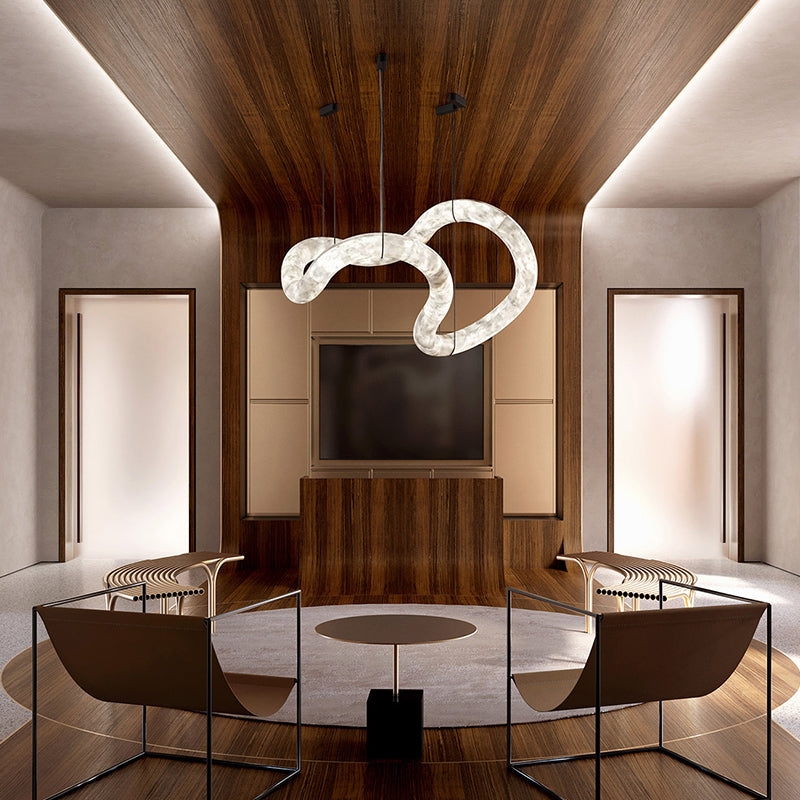
Modern foyers often benefit from lighting that acts almost like suspended artwork. Curved alabaster forms, asymmetrical glass, and minimal metal frames can create strong identity without relying on traditional arms or tiers.
The Oslo Infinity Entryway Alabaster Pendant Light offers a sculptural alternative for contemporary interiors. Its looping form works well against clean architecture and adds movement to a space with simple surfaces.
When using an expressive fixture, keep nearby decorative elements restrained so the lighting remains the primary focal point.
Determine the right hanging height
High ceilings do not mean the fixture should remain close to the ceiling. It needs to connect visually with the occupied area below.
In an open foyer without furniture beneath, maintain safe walking clearance and consider views from both floors. Where a central table or seating arrangement sits below the fixture, use that surface as the visual anchor.
Stand at the front door and upper landing before finalizing the suspension length. The chandelier should feel centered within the architecture rather than compressed at the top or hanging awkwardly low.
Plan for views from the staircase and upper floor
In a double-height interior, people may see the fixture from above, below, and at eye level. This makes canopy details, suspension rods, upper frames, and wiring organization more visible than they would be in a standard room.
Choose a design that looks complete from every angle. Multi-tier rings, globe clusters, and sculptural pendants often perform well because their composition remains clear from changing viewpoints.
Layer chandeliers with wall sconces
A statement fixture creates the focal point, but it should not be the only source of visual warmth. Wall sconces can illuminate tall walls, emphasize artwork, and soften transitions between the entry and adjoining rooms.
Place sconces where they support the architecture rather than compete with the chandelier. Repeating a related finish or material can connect the lighting layers without making them look identical.
Explore the wall sconce collection for complementary lighting along hallways, staircases, and entrance walls.
Use material to shape the atmosphere
Material affects how a large fixture feels within a tall space. Clear glass preserves openness and reflects surrounding architecture. Crystal adds sparkle and formality. Brass brings warmth and definition. Alabaster and pale stone create a softer natural glow and visible texture.
Dense materials often feel more substantial, while transparent or open-frame designs reduce visual weight. Match the material to the atmosphere of the home rather than choosing by size alone.
Balance daylight and evening ambience
Grand entries often include tall windows that bring strong daylight into the room. During the day, the fixture should remain visually interesting even when it is not illuminated.
At night, the lighting should create a welcoming transition from outside to inside. Consider how the fixture interacts with wall sconces, adjacent rooms, and exterior lighting viewed through the windows.
Connect the fixture with the rooms beyond
An entryway is the first chapter of the interior. Its lighting should introduce the home's materials and style without revealing every design idea at once.
In an open plan, coordinate the foyer fixture with nearby dining or living room lighting through finish, shape, glass texture, or level of detail. Allow one fixture to be dominant while the others support it.
Common high-ceiling lighting mistakes
- Choosing a fixture that is wide enough but not visually tall enough.
- Hanging the chandelier too close to the ceiling.
- Ignoring the view from an upper landing or staircase.
- Using a wide fixture in a narrow stairwell.
- Relying on one chandelier without supporting wall or accent lighting.
- Combining several competing statement fixtures in one sightline.
- Selecting a fixture before measuring doors, windows, and circulation paths.
A practical planning checklist
- Measure ceiling height, room width, and entry length.
- Map front-door, staircase, and upper-floor sightlines.
- Choose round, linear, tiered, or clustered forms according to the architecture.
- Confirm comfortable walking and door clearance.
- Review the fixture from both lower and upper levels.
- Coordinate wall sconces and adjoining-room lighting.
- Check actual product dimensions and suspension options.
- Use a qualified professional for final electrical installation.
Frequently asked questions
What type of chandelier works best for a high ceiling?
Multi-tier chandeliers, large round fixtures, and vertical clusters often work well because they use both the width and height of the room. The best form depends on the architecture below.
How large should an entryway chandelier be?
The fixture should have enough presence to remain visible within the room, but it must preserve door, walkway, and staircase clearance. Measure the complete fixture rather than relying only on its listed diameter.
Can pendant lights work in a grand foyer?
Yes. Sculptural pendants and clustered installations are especially effective in narrow entries, stairwells, and modern double-height spaces.
Final thoughts
Lighting a high ceiling or grand entryway is an exercise in proportion, placement, and visual connection. The fixture should engage the architecture above while remaining related to the people and pathways below.
Start with the room shape, choose a form with enough scale, and evaluate it from every level. The result will feel welcoming at the door, balanced from the staircase, and naturally connected to the rest of the home.
Related lighting guides
Continue planning your lighting layout with these related guides: