

The right chandelier height can make a dining room feel composed, comfortable, and inviting. Hang the fixture too high and it may feel disconnected from the table. Hang it too low and it can interrupt sightlines or make the space feel crowded.
Fortunately, there is a reliable starting point. From there, a few adjustments for ceiling height, fixture scale, and room proportions will help you find the most balanced position.
The quick answer: start 30 to 36 inches above the table
For an 8-foot ceiling, the bottom of a dining room chandelier should generally hang 30 to 36 inches above the tabletop. This range places the light close enough to visually anchor the dining area while leaving comfortable space for conversation and serving.
Measured in metric units, that is approximately 76 to 91 centimeters from the tabletop to the lowest point of the fixture.
Treat this measurement as a starting point rather than an inflexible rule. A visually light glass chandelier may work toward the lower end, while a broad or heavily detailed fixture may feel better slightly higher.
For inspiration, browse our dining room chandeliers, compare linear chandeliers for rectangular tables, or view the Round Alabaster Dining Room Chandelier for a softer stone-inspired look.
How chandelier height changes with ceiling height
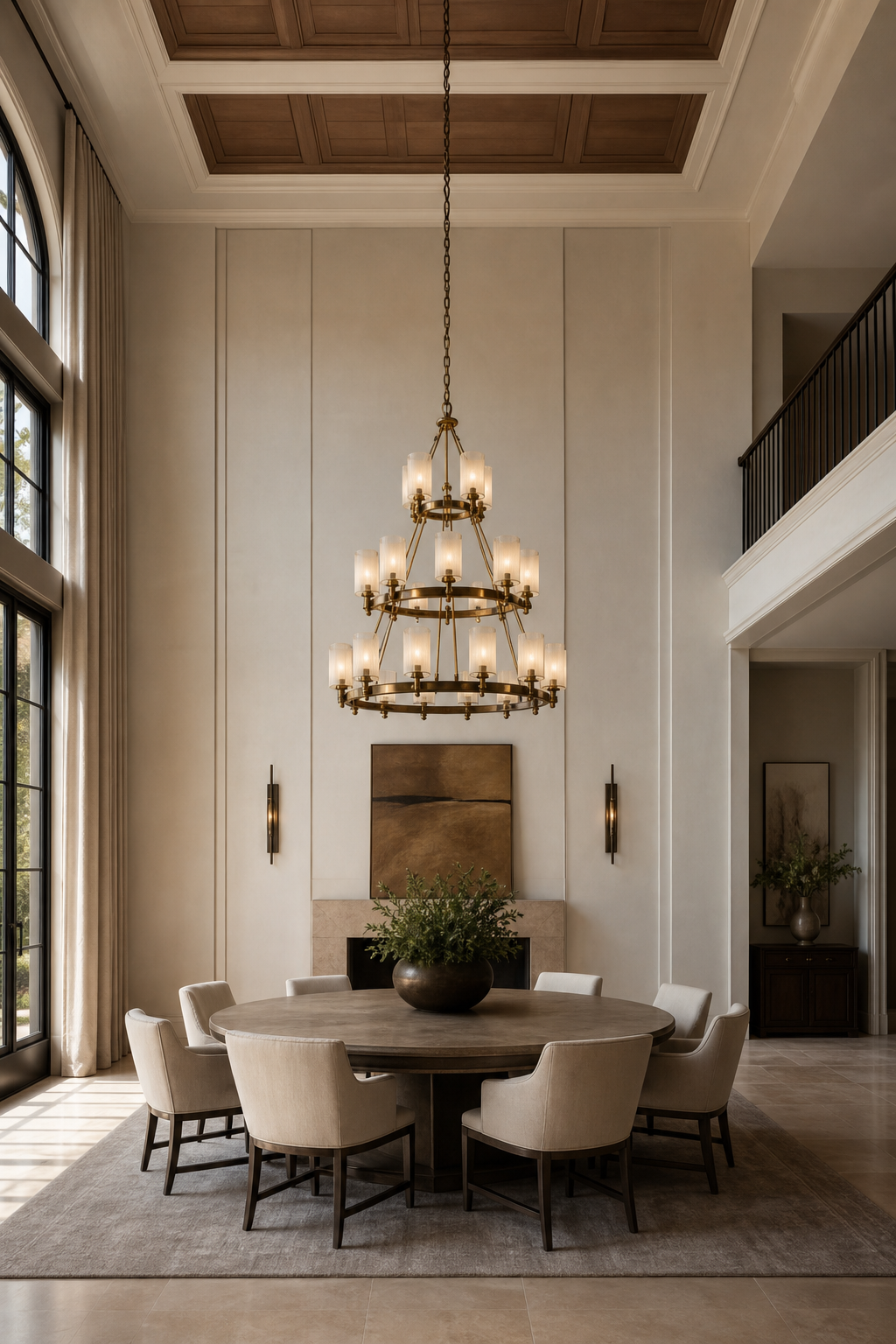
As the ceiling becomes taller, the chandelier can usually move upward without losing its connection to the table. A useful guideline is to add about 3 inches of hanging height for each additional foot of ceiling height.
| Ceiling height | Suggested clearance above table |
|---|---|
| 8 feet | 30-36 inches |
| 9 feet | 33-39 inches |
| 10 feet | 36-42 inches |
| 11 feet or higher | Begin around 39-45 inches, then adjust visually |
With vaulted or double-height ceilings, avoid positioning the chandelier solely according to the ceiling. The table remains the visual anchor. Even with a long chain or downrod, the fixture should still feel connected to the dining zone below.
Measure from the tabletop, not the floor
Dining tables vary in height, so the most dependable measurement begins at the table surface. Measure vertically from the tabletop to the lowest visible point of the chandelier, including crystal drops, shades, or decorative elements.
This approach also makes the result more practical. The table is the surface people interact with, and the clearance above it determines how open the dining area feels when everyone is seated.
Check seated and standing sightlines
A chandelier should create a focal point without becoming a visual barrier. Sit in several chairs and look across the table. Guests should be able to see one another comfortably without leaning around the fixture.
Then stand at the main entrances to the room. From these viewpoints, the chandelier should appear centered over the table and visually balanced with nearby windows, artwork, and architectural details.
If the fixture blocks faces or dominates the view, raise it a few inches. If it appears to float too far above the table, lower it slightly.
Consider the scale and visual weight of the chandelier
Two chandeliers with the same dimensions can feel very different. An airy globe chandelier or clear glass design has less visual weight than a dense crystal fixture or a chandelier with layered arms.
- Light, open designs: can often hang closer to the tabletop without feeling intrusive.
- Wide or detailed chandeliers: may benefit from a little extra clearance.
- Tall multi-tier fixtures: need enough vertical space above and below to show their full shape.
- Sculptural fixtures: should be viewed from the room entrances before the final height is fixed.
The goal is not simply to follow a number. It is to create a comfortable relationship between the chandelier, table, chairs, and surrounding room.
How high should a linear chandelier hang?
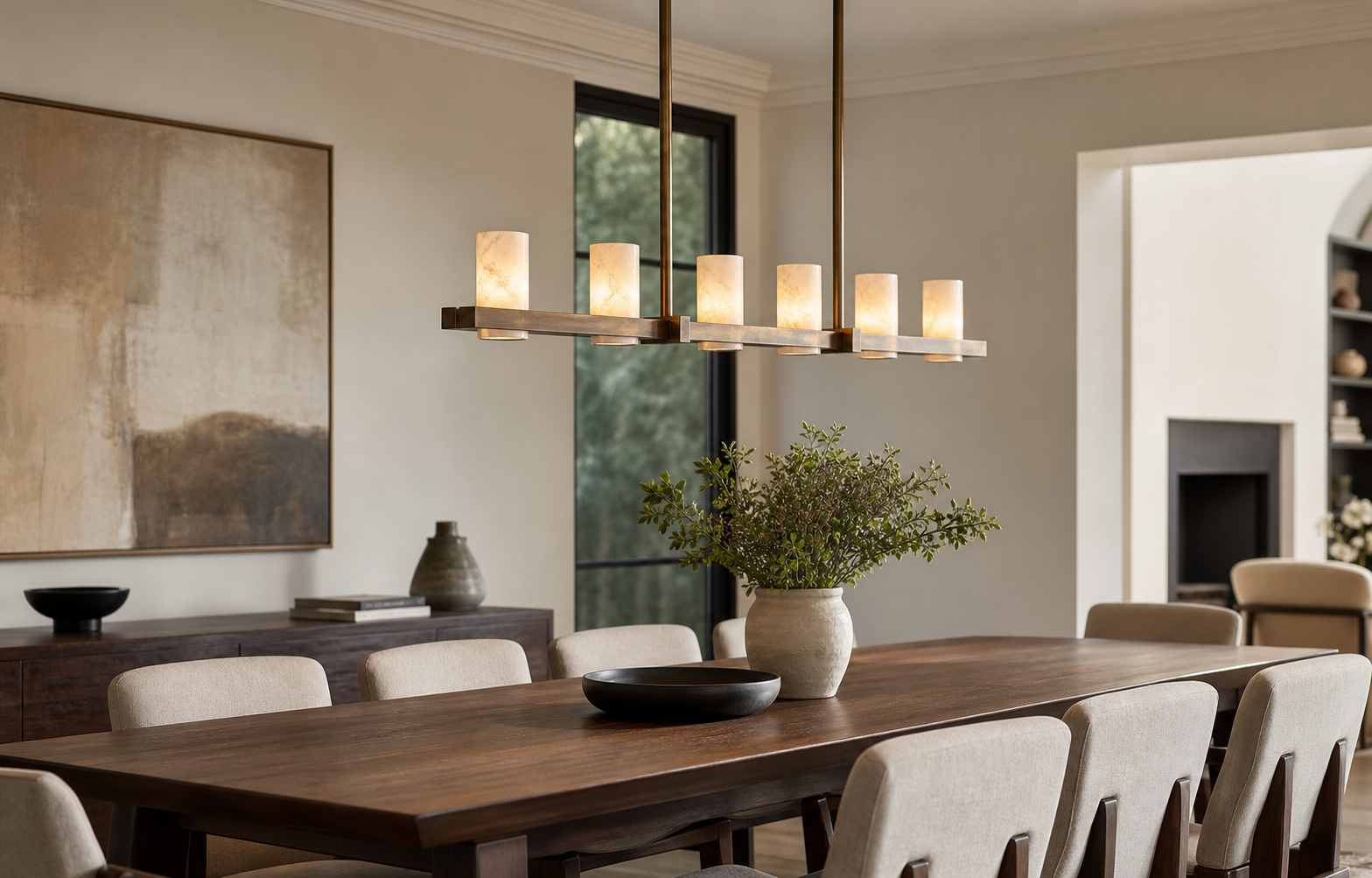
A linear chandelier above a rectangular dining table generally follows the same 30-to-36-inch starting range. Because the fixture stretches across more of the table, sightlines and proportions deserve extra attention.
Make sure the chandelier is centered along the length and width of the table. It should illuminate the dining surface evenly while leaving enough clearance at both ends. From a seated position, the frame and shades should not form a heavy visual band across the room.
Explore our linear lighting collection for elongated fixtures suited to rectangular dining tables and open-plan spaces.
What about open-plan dining spaces?
In an open layout, the chandelier helps define the dining zone. It should relate closely to the table rather than the dimensions of the entire shared room.
Step into the adjoining kitchen and living area to check how the fixture aligns with pendant lights, ceiling lights, and major furniture. A small adjustment in height can improve the visual rhythm between neighboring spaces.
Common chandelier hanging mistakes
- Measuring from the ceiling only: this can leave the chandelier disconnected from the dining table.
- Ignoring the lowest decorative element: crystal drops and shades count toward the final clearance.
- Choosing height before the table is in place: the tabletop is the essential reference point.
- Forgetting seated sightlines: a fixture can look perfect while standing but feel obstructive during dinner.
- Following a formula without viewing the whole room: scale, shape, and visual weight may require a small adjustment.
A simple installation checklist
- Place the dining table in its final position.
- Mark the center of the tabletop on the ceiling.
- Begin with 30-36 inches of clearance for an 8-foot ceiling.
- Add approximately 3 inches for each extra foot of ceiling height.
- Measure to the lowest point of the chandelier.
- Check views while both seated and standing.
- Confirm the fixture is centered from every main entrance.
- Have the final electrical installation completed safely by a qualified professional.
Frequently asked questions
Is 36 inches too high above a dining table?
No. Thirty-six inches is within the standard range for an 8-foot ceiling and often works especially well for broad, visually substantial chandeliers. The best final height depends on the fixture and the room.
Can a chandelier hang lower than 30 inches?
It can, particularly when the fixture is visually light and the table is rarely moved. However, check sightlines carefully and make sure the lower position does not feel intrusive.
Should a chandelier be centered over the table or the room?
In most dining rooms, center the chandelier over the dining table. The table is the functional and visual anchor, especially when it is not positioned exactly at the center of the room.
Final thoughts
The ideal chandelier height is the point where practical clearance and visual balance meet. Start with 30 to 36 inches above the table, adjust for ceiling height, and then judge the result from the seats and entrances you use every day.
Once the height feels right, the chandelier will frame the dining area naturally, support comfortable conversation, and give the room a polished sense of proportion. Browse our chandelier collection to compare round, linear, glass, crystal, and alabaster-inspired designs for different dining spaces.
Related lighting guides
Continue planning your lighting layout with these related guides: