
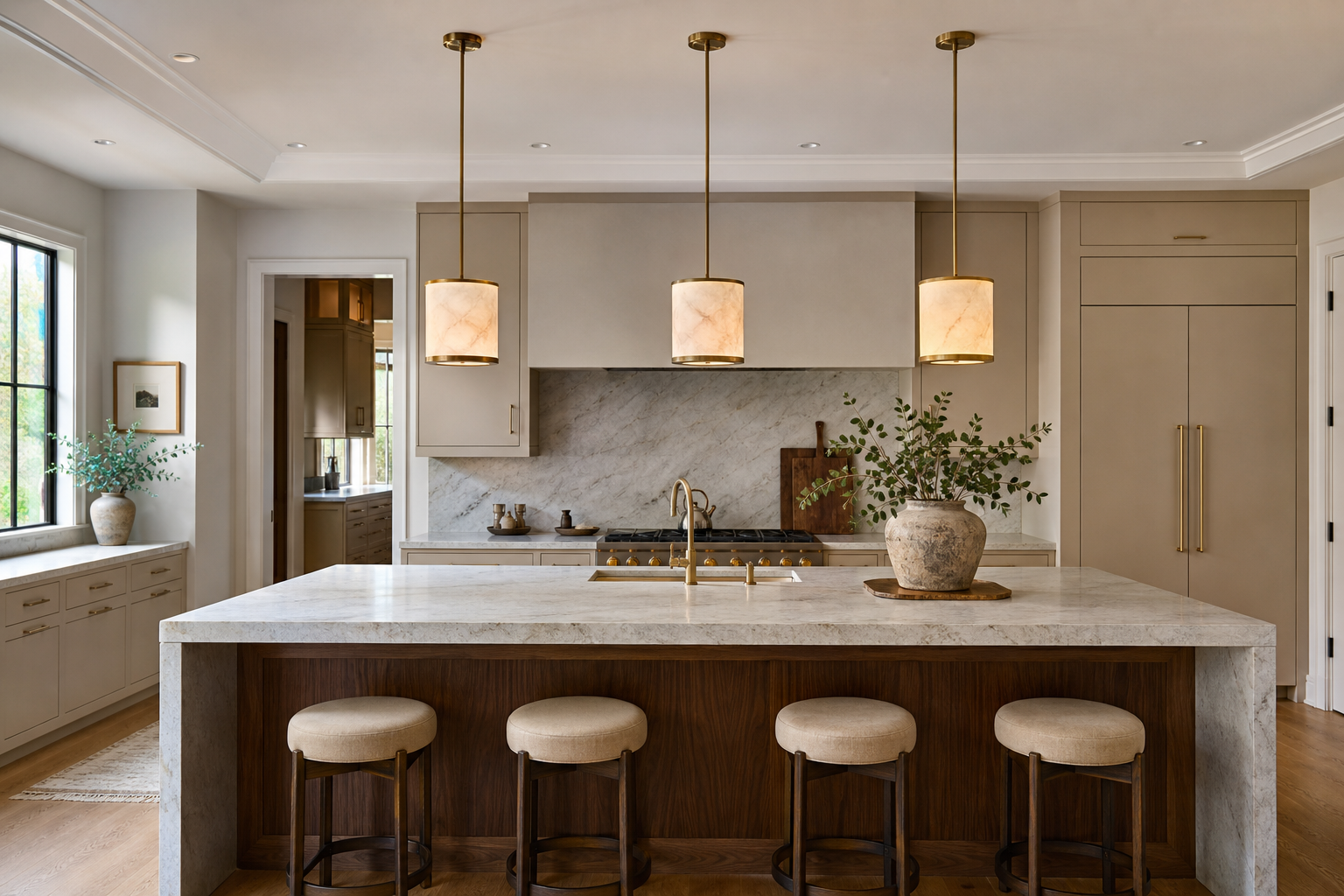
Pendant lights can transform a kitchen island from a practical work surface into the visual center of the room. The right fixtures add warmth, define the island, and create a more polished relationship between the kitchen and nearby living spaces.
The challenge is finding the right balance. Pendant size, quantity, spacing, and hanging height all need to work with the island rather than compete with it. This guide walks through each decision in a simple order.
For a refined island layout, browse our pendant lights, compare linear lights for longer countertops, or view the Modern Alabaster Kitchen Island Pendant Light for a soft sculptural option.
Start with the size of the kitchen island
Before choosing a pendant style, measure the island's length, width, and countertop height. These dimensions determine how much visual space the lights need to fill and how many fixtures the island can comfortably support.
A large island does not automatically require large pendants. Three smaller fixtures can create a light, rhythmic look, while two substantial pendants may feel calmer and more architectural. The goal is to fill the space without crowding the island or leaving the lighting visually disconnected.
How many pendant lights should go over a kitchen island?
Most kitchen islands work well with two or three pendant lights, but the ideal number depends on the island length and the diameter of each fixture.
- Small islands: one statement pendant or two compact pendants can provide enough presence.
- Medium islands: two medium pendants often create a clean, balanced arrangement.
- Long islands: three pendants can distribute visual weight evenly across the countertop.
- Extra-long islands: a linear pendant or linear chandelier may look more cohesive than several individual fixtures.
Odd-numbered groups often feel relaxed and decorative, while two larger pendants create stronger symmetry. Both approaches can work beautifully when the fixtures are centered and proportionate.
Choose pendant size before finalizing the quantity
Pendant diameter affects how many fixtures will fit. A common mistake is deciding on three lights first, then selecting shades that are too wide for the available space.
As a practical starting point, compact pendants around 10 to 14 inches wide can work well in groups of three. Larger fixtures around 16 to 24 inches wide are often better used in pairs. These are general ranges, so always compare the actual fixture dimensions with the island.
Also consider visual weight. Clear glass feels lighter than opaque stone, metal, or fabric shades of the same size. A visually dense pendant may need more breathing room.
How far apart should kitchen island pendant lights be?
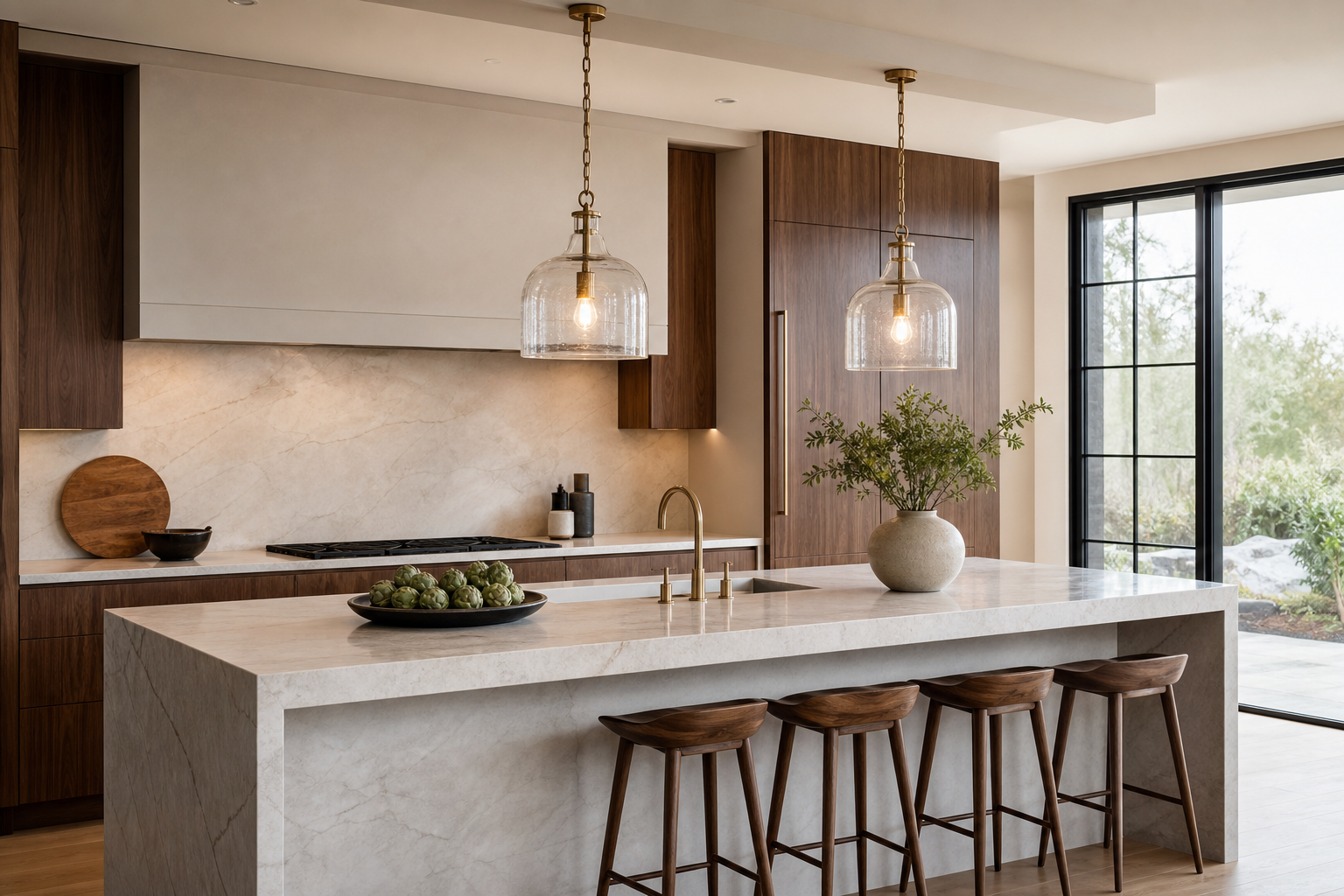
A useful starting point is to leave approximately 24 to 30 inches between the centers of adjacent pendants. Larger fixtures may need more space, while compact pendants can sit slightly closer together.
Another reliable method is to divide the usable length of the island into equal sections and place each pendant at the center of its section. This creates consistent rhythm without relying on guesswork.
Keep the outer pendants comfortably inside the ends of the island. Leaving approximately 6 to 12 inches from each island edge to the outer edge of the nearest shade helps the arrangement feel contained.
How high should pendant lights hang above a kitchen island?
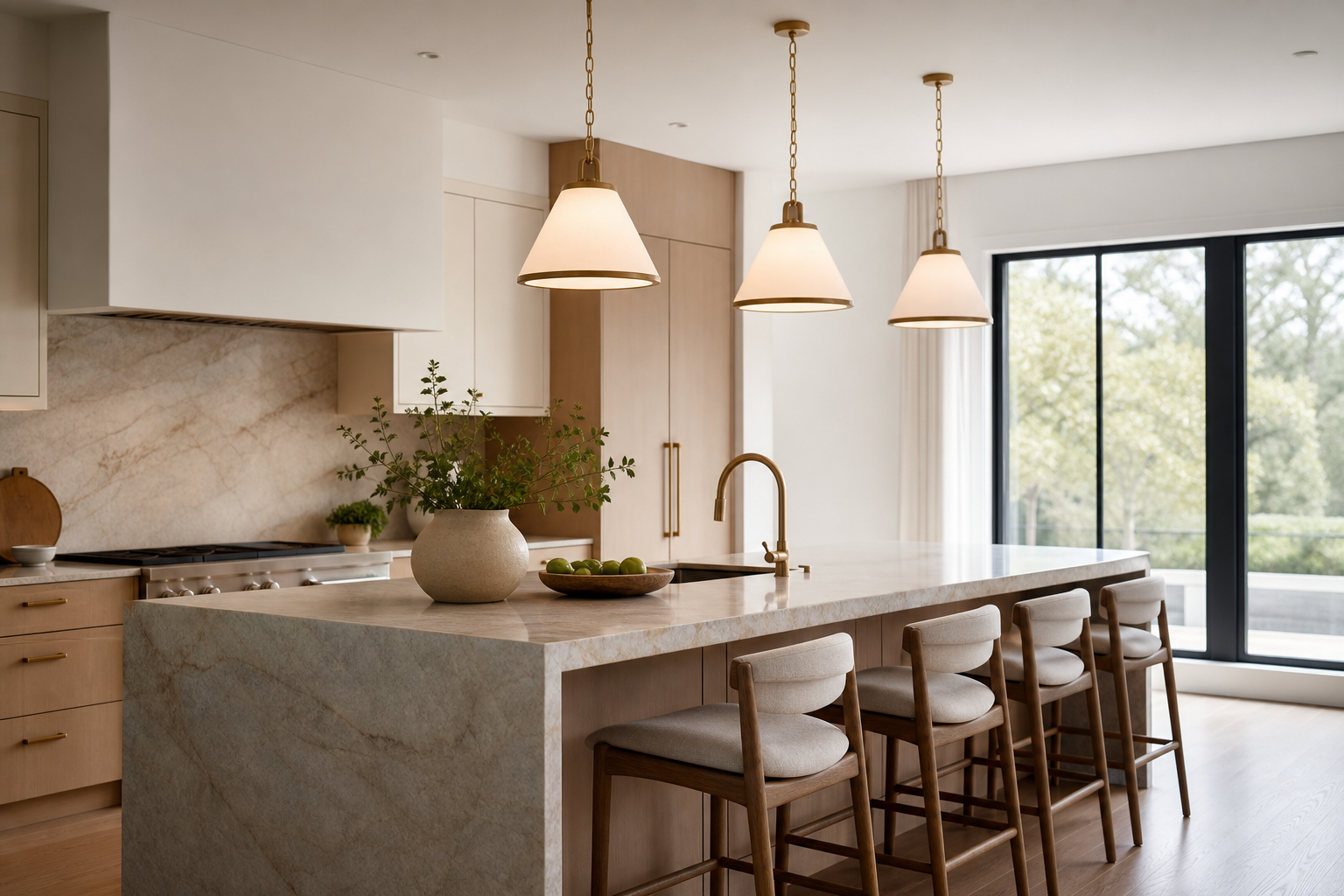
For most kitchens, the bottom of a pendant should hang about 30 to 36 inches above the countertop. This range usually provides useful illumination while keeping sightlines open across the room.
Measure from the countertop to the lowest visible part of the fixture. If the pendant has a tall shade, decorative frame, or hanging crystal detail, include that lowest point in the measurement.
Taller ceilings may allow the pendants to hang slightly higher, but the island remains the visual anchor. Raising the lights too far can make them feel disconnected from the work surface.
Protect clear sightlines across the island
Stand and sit on both sides of the island before the final height is fixed. The pendants should not block faces, cabinet views, or the open connection to an adjacent dining or living room.
If the shades appear heavy at eye level, raise them a few inches. If they seem to float near the ceiling, lower them until they visually relate to the countertop again.
Center pendants over the island, not the entire room
Kitchen islands are not always positioned at the exact center of the ceiling. Center the pendant arrangement over the island itself, using its length and width as the reference.
For a wide island with seating on one side, the fixtures usually look best along the center line of the countertop rather than directly above the stools. This keeps the lighting balanced over both the preparation and seating areas.
Match pendant style to the kitchen materials
The strongest pendant choices repeat or complement materials already present in the room without matching every finish exactly.
- Glass pendants keep the room feeling open and work well in kitchens with detailed cabinetry or strong stone patterns.
- Brass and metal pendants add warmth, structure, and a refined architectural accent.
- Alabaster or stone-inspired shades create a soft glow and natural texture.
- Fabric shades bring a gentler decorative character to open-plan kitchens.
- Minimal globe pendants suit contemporary and mid-century interiors.
Explore our pendant light collection to compare glass, brass, globe, and sculptural designs for kitchen islands.
When a linear light works better than separate pendants
A linear fixture can be a strong choice for a long, narrow island or a kitchen with clean architectural lines. It creates one continuous focal point and avoids the repeated ceiling connections required by several individual pendants.
Choose a linear fixture that remains comfortably shorter than the island and leaves visual space at both ends. Browse our linear lighting collection for elongated designs suited to larger islands and open interiors.
Consider ceiling height and architecture
Standard ceilings usually suit shorter rods, cords, or chains. High or vaulted ceilings may need longer suspension lengths so the lights remain connected to the island below.
If the ceiling slopes, confirm that the fixture canopy and suspension system are appropriate for the intended installation. Final positioning and electrical work should be completed by a qualified professional.
Common kitchen island pendant mistakes
- Choosing the number of pendants before checking their diameter.
- Spacing fixtures from the island edges instead of their centers.
- Hanging pendants too high and losing visual connection with the countertop.
- Hanging them too low and blocking sightlines.
- Centering the lights in the room rather than over the island.
- Ignoring the visual weight of opaque or highly detailed shades.
A simple pendant planning checklist
- Measure the island length, width, and countertop height.
- Confirm the pendant diameter before choosing the quantity.
- Begin with 24-30 inches between fixture centers.
- Leave comfortable space inside both ends of the island.
- Start with 30-36 inches above the countertop.
- Check sightlines from seated and standing positions.
- Review the arrangement from nearby rooms.
- Confirm final installation requirements with a qualified professional.
Frequently asked questions
Are two or three pendant lights better over an island?
Two larger pendants often create a clean symmetrical look, while three smaller pendants provide a lighter visual rhythm. The better choice depends on island length and fixture diameter.
Should pendant lights be wider than the island?
No. The full arrangement should remain visually contained within the island, with comfortable clearance from both ends and sides.
Can I use one large pendant over a kitchen island?
Yes. A single sculptural pendant can work over a compact or square island, provided it is centered and scaled to the countertop.
Final thoughts
The best kitchen island pendant lighting feels intentional from every angle. Start with the island dimensions, select the fixture size, then decide on quantity, spacing, and height in that order.
A well-planned arrangement will illuminate the countertop, preserve open sightlines, and give the kitchen a refined focal point that feels naturally integrated with the surrounding interior.
Related lighting guides
Continue planning your lighting layout with these related guides: