
Start with the dining table, not just the room
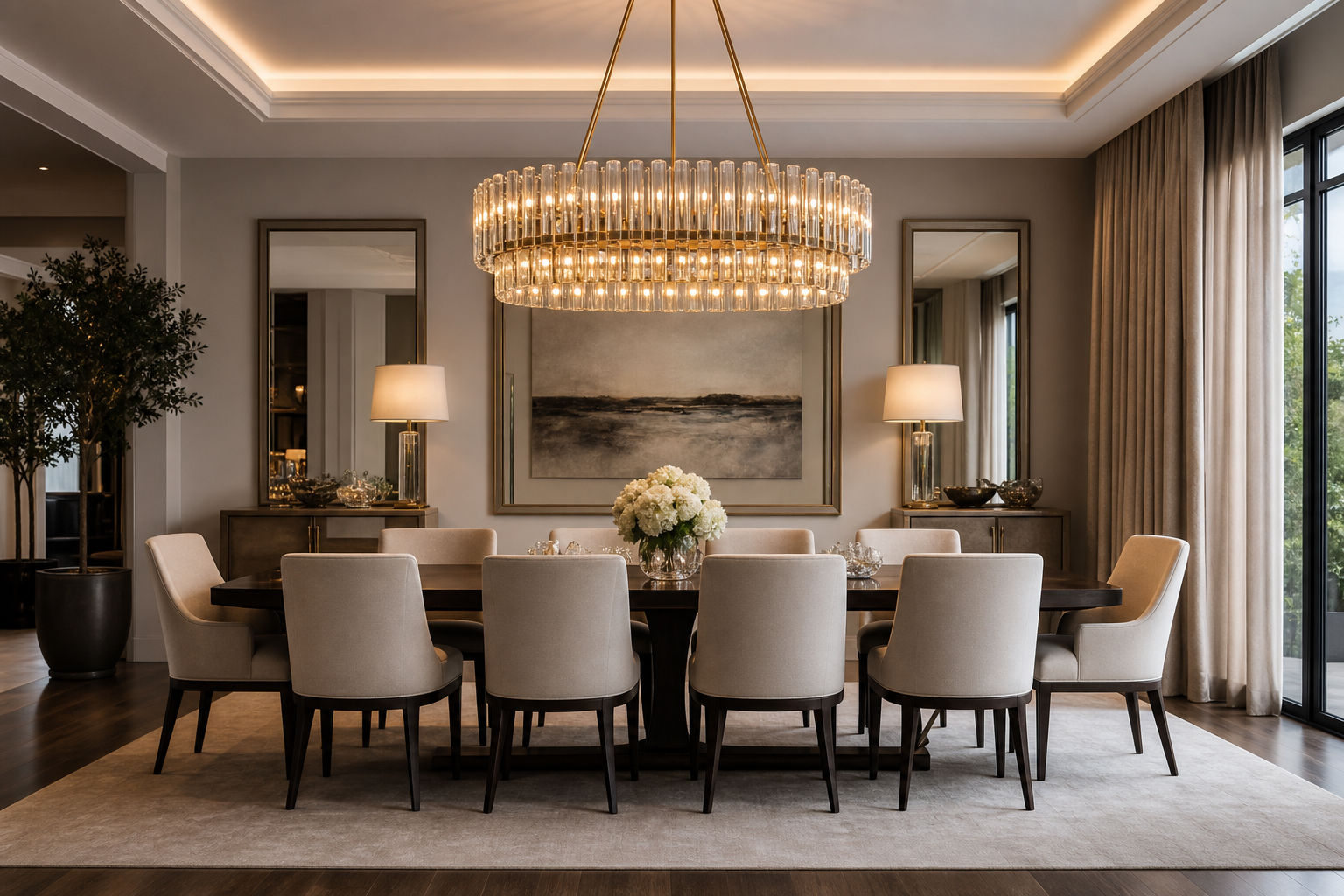
In most dining rooms, the chandelier is visually centered over the table, so the table should be the first reference point. Even in a larger room, the light fixture needs to feel proportionate to the surface below it.
A common guideline is to choose a chandelier that is about one-half to two-thirds the width of the dining table.
For example:
- A 48-inch dining table often pairs well with a chandelier around 24 to 32 inches wide
- A 60-inch dining table may suit a chandelier around 30 to 40 inches wide
- A 72-inch dining table can often handle a chandelier around 36 to 48 inches wide
This proportion helps the fixture feel substantial without extending too far beyond the table edges.
If you are still comparing styles, explore our dining room chandeliers, luxury chandeliers, and round chandeliers to find a fixture that feels balanced over your table.
Leave enough space around the edges of the table
Another easy rule is to leave around 12 inches of space between the edge of the chandelier and the edge of the table on each side.
This helps create a clean visual frame and prevents the chandelier from feeling too crowded over the dining area. It also keeps the fixture aligned with the table rather than competing with the rest of the room.
If your chandelier has a wide or dramatic silhouette, such as branching arms or layered crystal drops, it can be wise to stay slightly more conservative with width.
Consider the shape of the table
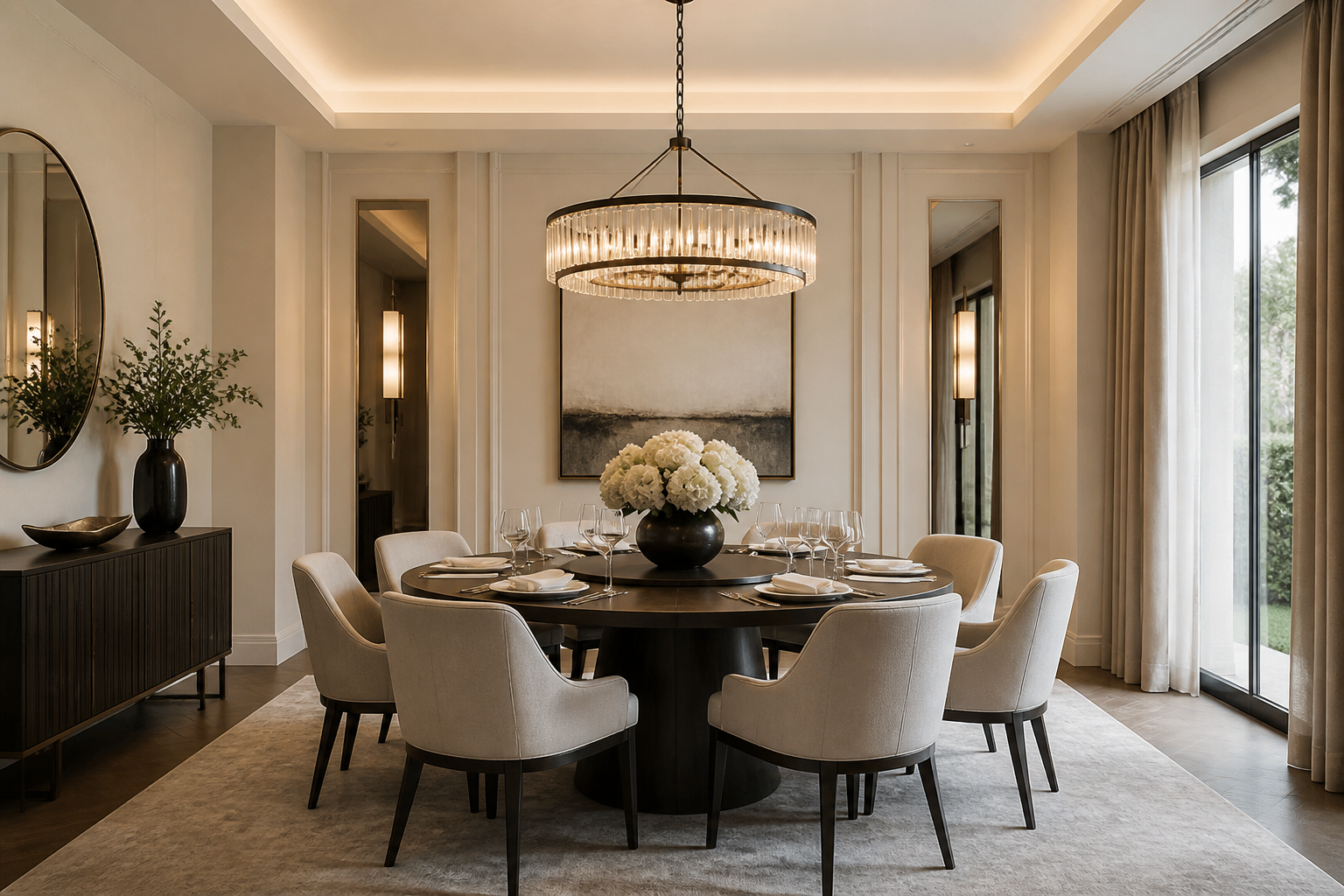
The shape of your dining table should influence the shape and scale of your chandelier.
Round tables often work beautifully with:
- Round chandeliers
- Globe chandeliers
- Tiered center fixtures
Rectangular tables are often better suited to:
- Linear chandeliers
- Elongated pendant lights
- A pair or row of smaller fixtures
Matching the visual shape of the light to the shape of the table creates a more cohesive and intentional look.
Use room size as a secondary guide
Once the chandelier is proportionate to the dining table, the next step is to make sure it also feels right within the room.
One traditional rule is to add the length and width of the room in feet, then convert that number to inches for an approximate chandelier diameter.
For example:
- A room that is 12 feet by 14 feet gives you 26
- That suggests a chandelier around 26 inches wide as a starting point
This is not a strict rule, but it can be helpful when choosing between two nearby sizes.
If the table size and the room size suggest different answers, the table usually matters more in a dining room.
Think about ceiling height
Ceiling height affects not only the size of the chandelier, but also how much visual presence it should have.
For standard dining rooms with 8-foot ceilings, a chandelier should usually hang about 30 to 36 inches above the tabletop.
For taller ceilings, you can raise the fixture slightly. A common approach is to add about 3 inches in hanging height for each additional foot of ceiling height.
For example:
- 8-foot ceiling: 30 to 36 inches above the table
- 9-foot ceiling: about 33 to 39 inches
- 10-foot ceiling: about 36 to 42 inches
If the chandelier is especially tall or layered, make sure the bottom of the fixture still feels comfortably placed and does not block sightlines across the table.
Decide how much visual statement you want
Not every chandelier needs to make the same kind of statement. Some dining rooms benefit from a bold centerpiece, while others feel better with a quieter, more restrained fixture.
If your dining room already includes strong furniture lines, wall paneling, patterned rugs, or decorative artwork, a simpler chandelier may create better balance.
If the room is more minimal, a larger or more sculptural chandelier can provide the focal point that gives the space character.
This is where material and form matter:
- Crystal chandeliers often bring sparkle and decorative presence
- Alabaster chandeliers create a softer, more sculptural glow
- Glass chandeliers can feel light, elegant, and visually open
- Brass or mixed-metal finishes often add warmth and definition
The right size is not only about measurement. It is also about how visually heavy or light the fixture feels in the room.
What if you are between two sizes?
If you are deciding between two chandelier sizes, the better choice is often the slightly larger option, especially in a formal dining room.
A chandelier that is slightly too large usually reads as intentional and luxurious. A chandelier that is too small often feels like an afterthought.
That said, scale should still feel controlled. Oversized fixtures work best when they are paired with enough ceiling height, table width, and surrounding breathing room.
When to choose a linear chandelier instead
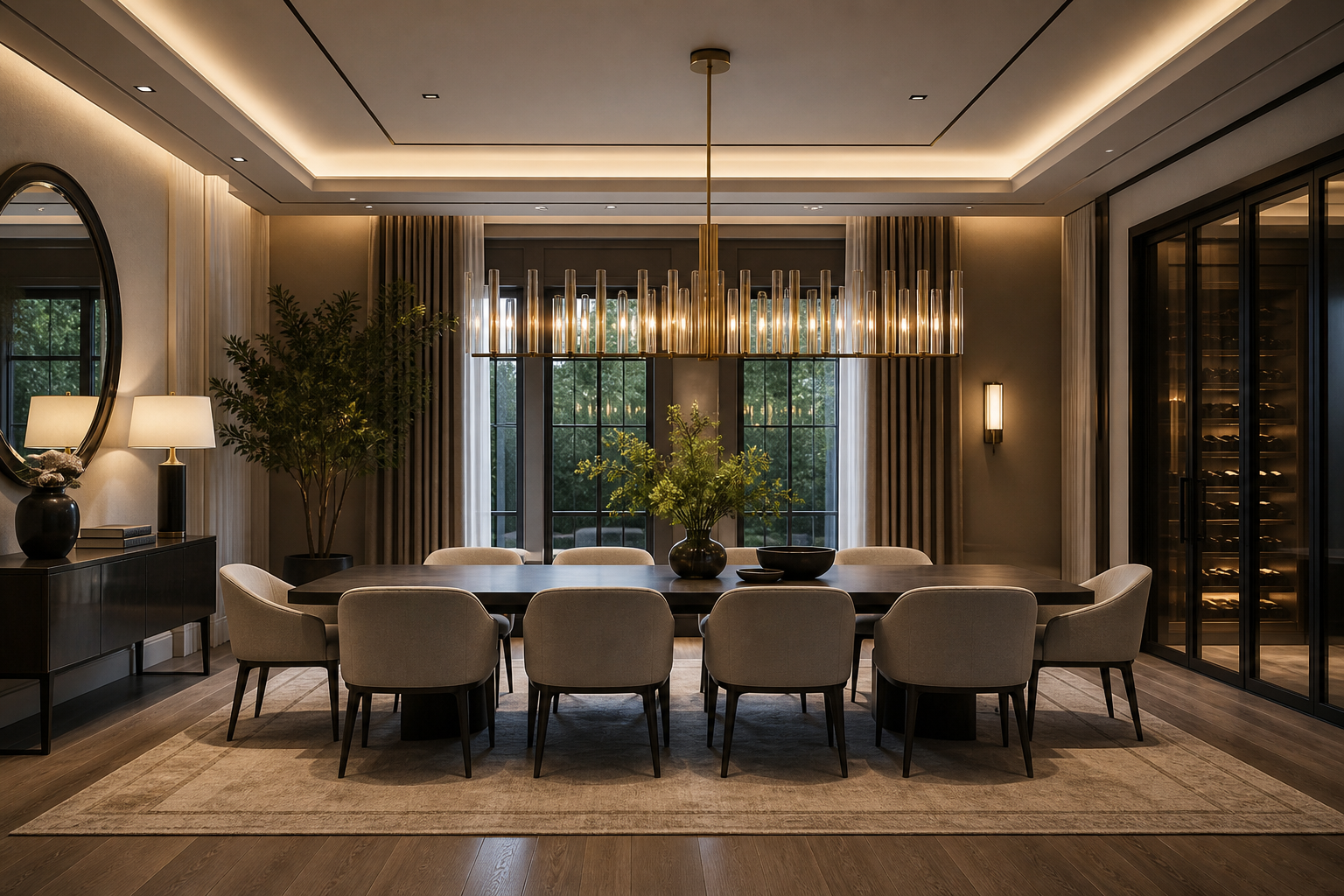
Some dining rooms simply work better with a linear fixture than a round one.
A linear chandelier is often the better choice when:
- The dining table is long and rectangular
- You want more even light distribution across the surface
- The room has clean architectural lines
- You want the lighting to feel modern and structured
Round or tiered chandeliers, on the other hand, tend to work especially well when you want a softer focal point or a more classic decorative effect.
A simple chandelier sizing checklist
Before making your final decision, use this quick checklist:
- Is the chandelier about one-half to two-thirds the width of the dining table?
- Does it leave roughly 12 inches between the fixture edge and the table edge?
- Does the chandelier shape suit the table shape?
- Will it hang about 30 to 36 inches above the tabletop, adjusted for ceiling height?
- Does it feel visually balanced with the room, furniture, and surrounding decor?
If the answer is yes to most of these questions, you are likely in the right range.
Final thoughts
The best chandelier size for a dining room is one that feels balanced, comfortable, and visually connected to the table below it. A good fixture does more than provide light. It shapes the atmosphere of the room, anchors the dining area, and helps turn everyday meals into a more elevated experience.
Whether you prefer a refined alabaster chandelier, a sparkling crystal statement piece, or a clean linear design, starting with the right proportions will always lead to a more polished result.
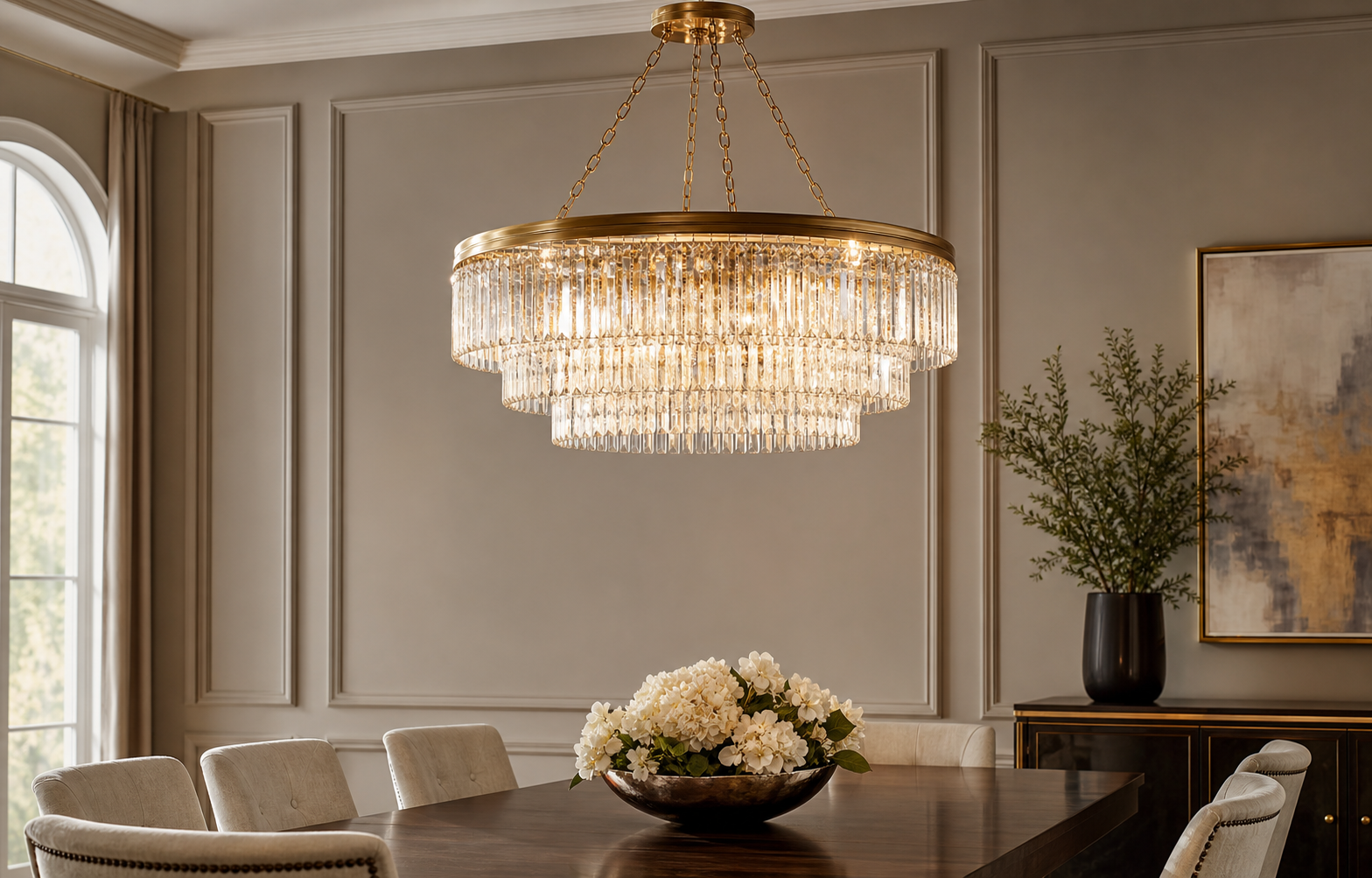
If you are exploring options for your space, browse our chandelier collections to compare round, linear, crystal, glass, and alabaster designs for dining rooms of different sizes and styles.
Suggested internal links
- Chandelier collection
- Dining Room collection
- Round collection
- Linear Light collection
- Alabaster collection
Related lighting guides
Continue planning your lighting layout with these related guides and collections: