
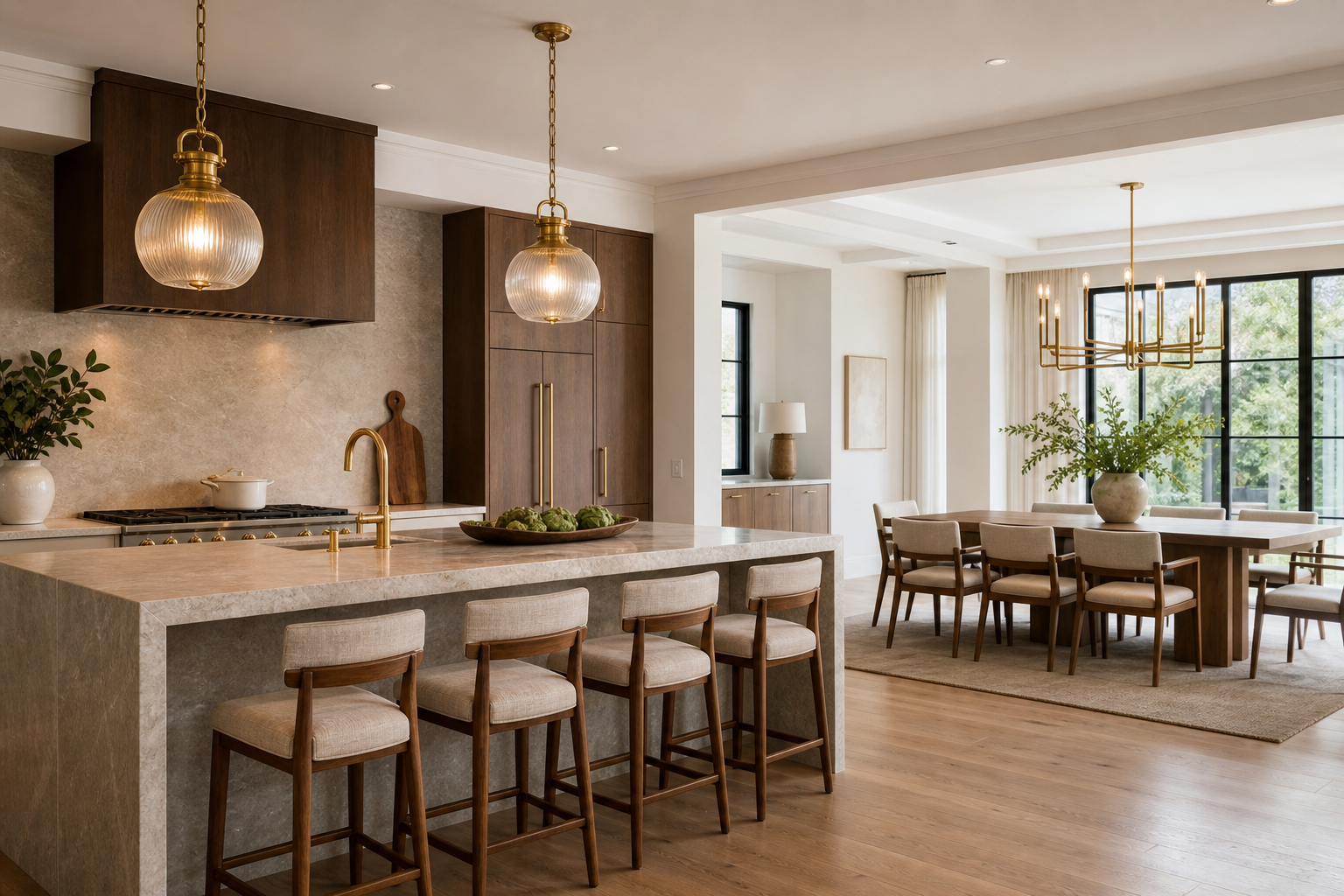
Pendant lights and chandeliers both bring illumination and character to a room, but they shape a space in different ways. A pendant usually creates a focused point of light, while a chandelier has a broader visual presence and often acts as the main decorative feature.
The right choice depends less on the name of the fixture and more on the room, ceiling height, surface below, and atmosphere you want to create. This guide compares the two options so you can choose with greater confidence.
If you want a cleaner overhead profile, ceiling lights can offer balanced illumination without the visual drop of a pendant or chandelier.
Pendant lights vs chandeliers: the quick difference
A pendant light is typically a single shade or light source suspended from the ceiling by a cord, chain, or rod. Pendants may be installed alone or arranged in a group.
A chandelier usually combines multiple arms, shades, globes, or light sources within one larger fixture. It is designed to create a wider decorative statement and visually anchor a room.
| Feature | Pendant lights | Chandeliers |
|---|---|---|
| Visual effect | Focused and streamlined | Broad and statement-making |
| Typical placement | Kitchen islands, bedside areas, small tables | Dining rooms, foyers, living rooms |
| Arrangement | Single, pair, or group | Usually one central fixture |
| Best quality | Flexible placement | Strong visual anchor |
When pendant lights are the better choice
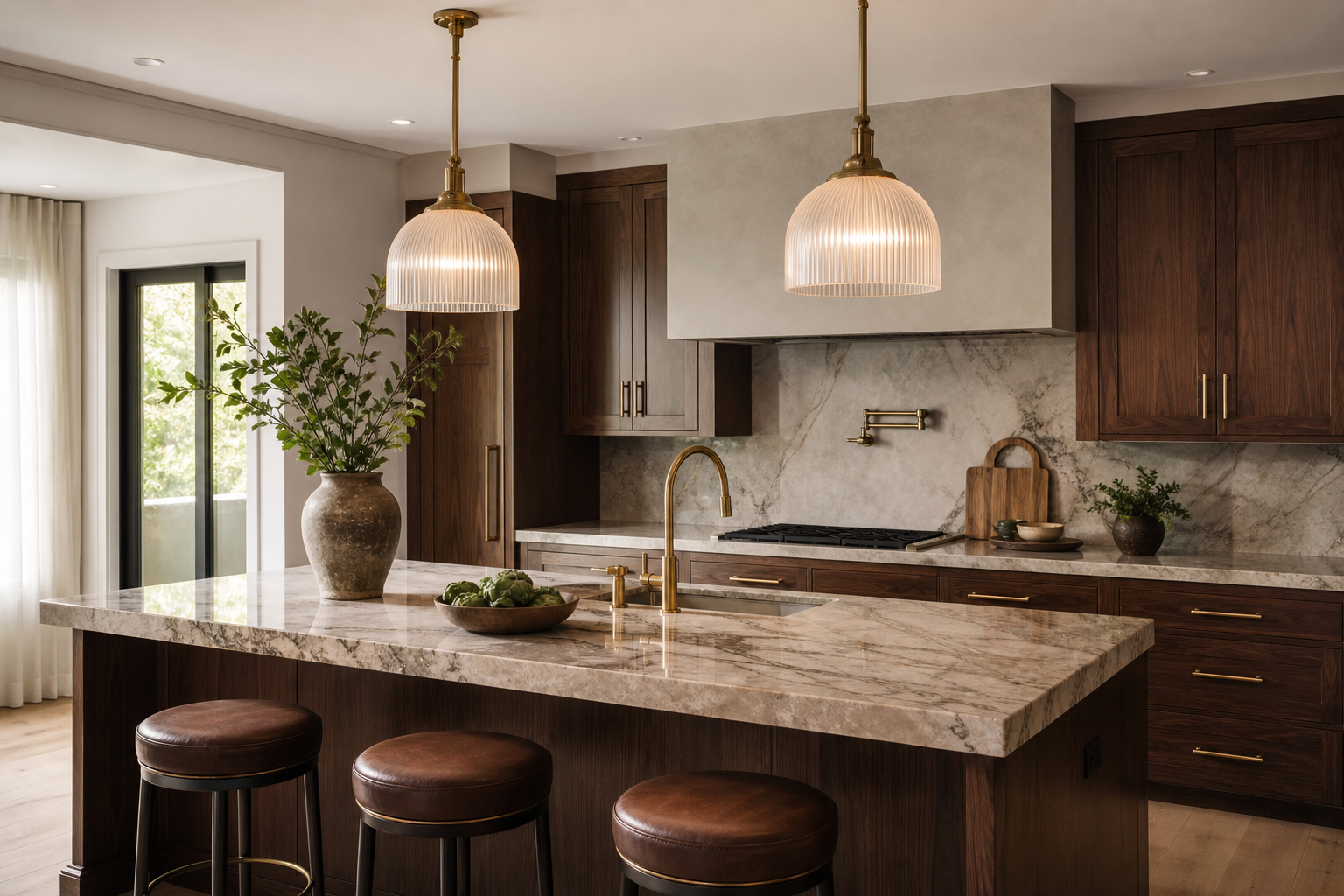
Pendant lights work especially well when illumination needs to relate to a specific surface or activity. Their focused shape helps define smaller zones within a larger room.
They are often the better option when:
- You need lighting over a kitchen island or breakfast bar.
- You want to repeat several fixtures across a long surface.
- The room benefits from a lighter, less dominant ceiling feature.
- You want flexibility in the number and spacing of lights.
- A chandelier would feel too large for the available area.
Explore our pendant light collection for glass, brass, globe, and sculptural designs suited to focused spaces.
When a chandelier is the better choice
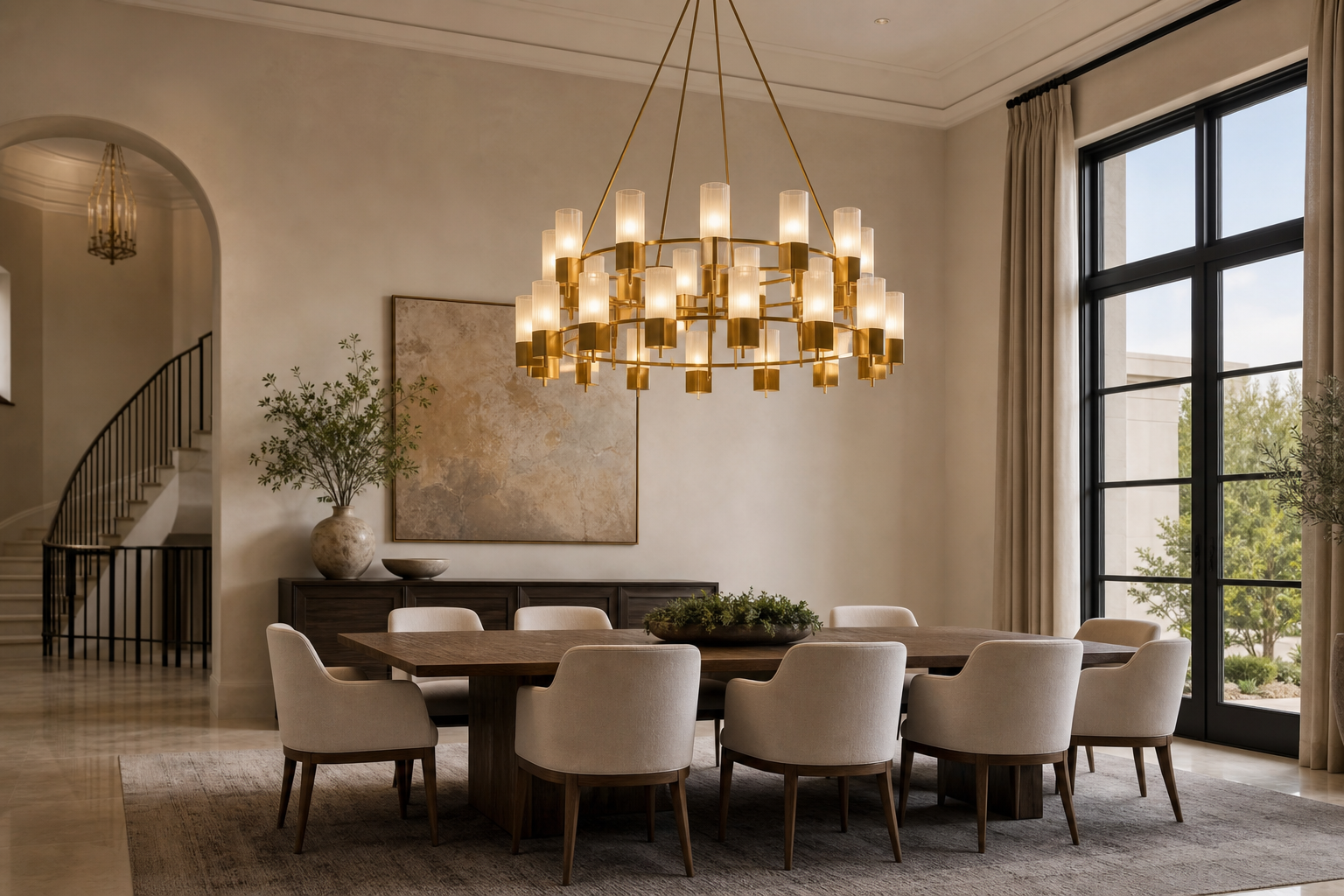
A chandelier is ideal when the room needs one clear focal point. Its wider structure can connect furniture, architecture, and decorative elements into a single composition.
Choose a chandelier when:
- You want to anchor a dining table or formal seating area.
- The room has enough width and ceiling height for a substantial fixture.
- You want the lighting to be visible from several entrances.
- The space needs a stronger sense of scale or occasion.
- A single fixture should provide visual structure across a larger area.
Browse our chandelier collection to compare round, linear, glass, crystal, and alabaster-inspired statement pieces.
Kitchen island: pendants usually offer more flexibility
Kitchen islands are one of the clearest applications for pendant lights. Two or three pendants can follow the length of the countertop, create an even visual rhythm, and keep the arrangement proportional to the island.
A linear chandelier can also work over a long island, particularly in a kitchen with clean architectural lines. It creates one continuous feature instead of several individual ceiling connections.
For detailed measurements, read our guide on how to choose pendant lights for a kitchen island.
Dining room: choose according to the table shape
Dining rooms can suit either option. A chandelier often creates a more traditional central focal point, while pendant lights can produce a lighter or more contemporary arrangement.
Round tables usually pair naturally with round chandeliers, globe fixtures, or one central pendant. Long rectangular tables often suit linear chandeliers, elongated pendants, or a carefully spaced pair.
Whatever you choose, the fixture should remain visually connected to the table and comfortably inside its edges.
Entryway and foyer: chandeliers create stronger presence
A foyer often needs lighting that can be appreciated from several viewpoints. Chandeliers are particularly effective because their form reads as one complete decorative element from the front door, staircase, and adjoining rooms.
In a compact entryway, however, one refined pendant may feel more proportionate. The best choice respects door clearance, ceiling height, and the width of the circulation path.
Living room: think about the entire lighting composition
A chandelier can center a seating area and provide an elegant overhead focal point. Pendants are more useful when highlighting a reading corner, side table, or a specific architectural feature.
Neither fixture needs to work alone. Wall sconces, ceiling lights, and lamps can provide additional layers so the room feels comfortable at different times of day.
Bedroom: pendants can save surface space
Small pendants beside a bed can replace table lamps and keep nightstands visually clear. A chandelier, by contrast, can add softness and decorative emphasis at the center of a larger bedroom.
Check the ceiling height and walking paths carefully. Fixtures should remain well above areas where people move and should not interfere with wardrobe doors or the view from the bed.
Let ceiling height guide the scale
Standard ceilings often favor compact chandeliers or visually light pendants. Higher ceilings can support taller fixtures, longer suspension lengths, and more layered forms.
The key is connection. A fixture should relate to the table, island, or seating area below rather than floating close to a tall ceiling. In open areas without furniture directly beneath, maintain comfortable clearance through all walking paths.
Compare focused light with broad ambience
Pendants generally direct attention toward a smaller area, especially when their shades angle light toward a countertop or table. Chandeliers spread their visual impact across a wider area and often contribute more strongly to the room's overall atmosphere.
The exact light distribution depends on the shade material, bulb position, and fixture construction. Review the individual product information rather than assuming every pendant or chandelier performs the same way.
Consider visual weight, not dimensions alone
A clear glass pendant can feel almost weightless, while a similarly sized metal or stone shade may appear substantial. The same principle applies to chandeliers: an open branching frame feels lighter than layered crystal or densely arranged globes.
Compare the fixture with nearby cabinetry, furniture, windows, and artwork. A good choice has enough presence to feel intentional without crowding the architecture.
Can pendant lights and chandeliers be used together?
Yes. In an open-plan home, pendants can define the kitchen island while a chandelier anchors the dining area. The fixtures do not need to match exactly, but they should share at least one visual connection.
That connection might be a similar metal finish, shade shape, glass texture, color temperature, or level of decorative detail. Vary the scale so the chandelier remains the main statement and the pendants play a supporting role.
Common mistakes to avoid
- Choosing by style alone without measuring the room.
- Using several large pendants where one linear fixture would feel calmer.
- Selecting a chandelier that extends beyond the table edges.
- Hanging fixtures too high and losing connection with the surface below.
- Combining competing statement pieces in one open-plan view.
- Assuming every fixture provides the same type of illumination.
A simple decision checklist
- What surface or zone should the fixture define?
- Do you need one central statement or several focused lights?
- Is the ceiling height suitable for the fixture's vertical scale?
- Does the shape relate to the table, island, or room?
- Will the fixture preserve clear sightlines and walking clearance?
- Does it coordinate naturally with nearby lighting?
Frequently asked questions
Can pendant lights replace a chandelier over a dining table?
Yes. One large pendant or a coordinated pair can work beautifully over a dining table when the scale and spacing suit the tabletop.
Are chandeliers only for formal rooms?
No. Contemporary chandeliers range from minimal globe arrangements to sculptural linear forms and can suit relaxed modern interiors as well as formal spaces.
Which option works better in a small room?
A compact pendant often has less visual weight, but a small open-frame chandelier can also work. Compare actual dimensions and preserve comfortable clearance.
Final thoughts
Choose pendant lights when you want flexible, focused illumination over a specific surface. Choose a chandelier when the room needs a broader decorative anchor and a stronger sense of presence.
The most successful choice is proportionate to the space, supports the way the room is used, and feels connected to the furniture and architecture below.
Related lighting guides
Continue planning your lighting layout with these related guides and collections: