
A round dining table brings people into an easy circle of conversation. The chandelier above it should support that arrangement: visually centered, comfortably scaled, and attractive from every seat. Choosing one is less about finding the biggest statement piece and more about balancing the table, the fixture, and the surrounding room.
This guide focuses on choosing a chandelier for a round dining table, from comparing silhouettes to checking the space available for the fixture and its suspension.
Start with the table, not just the room
Measure the tabletop diameter and note its final position before choosing a chandelier. A fixture centered on the room may look misplaced if the table sits off-center. In most dining arrangements, the table is the more useful visual reference.
Look at the table together with its chairs. Deep upholstered chairs, a substantial pedestal, and a large rug can support a visually fuller chandelier. Slender furniture and a compact breakfast area often benefit from a lighter silhouette. Leave a clear visual margin between the edge of the chandelier and the edge of the tabletop rather than choosing a fixture that nearly matches the table's width.
Choose a shape that works from every angle
A circular chandelier naturally echoes a round table. Ring designs create a clear outline, while branching chandeliers soften that geometry with a more organic profile. A cluster or globe arrangement can also work when its overall footprint stays balanced around the center.
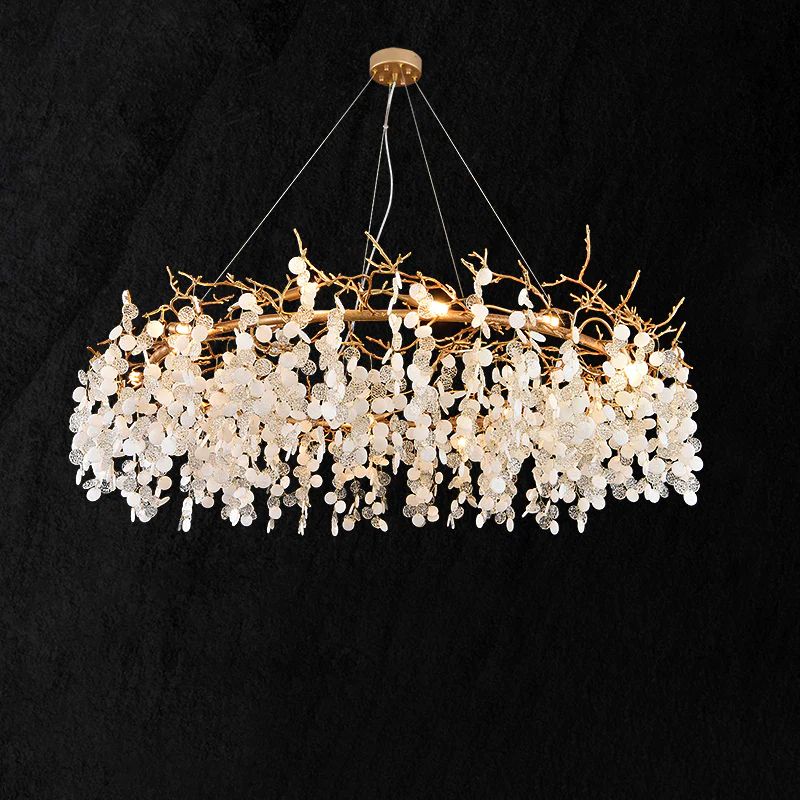
The Cathy Round Branch Chandelier illustrates this approach with brass branches and glass elements. Consider the full outer diameter, including projecting branches, when comparing it with your tabletop.
A long linear fixture usually relates more directly to a rectangular table. It is not automatically wrong above a round table, but its ends may extend awkwardly beyond the dining area. For a closer comparison, read our guide to round versus linear chandeliers.
Check visual weight as well as diameter
Two chandeliers with the same diameter can feel very different. An open metal frame leaves more of the room visible through it. Dense glass details, broad shades, or a layered stone ring can make a fixture feel more substantial.
Before ordering, outline the proposed diameter on paper or cardboard and hold it at the intended location with help from another person. This will not reproduce the light output, but it can reveal whether the fixture's footprint feels crowded. Review the dimensions of the exact size option, not only the product's main photograph.

The Alabaster Round Chandelier offers a different material direction. Its pale stone elements can complement wood and upholstered furniture without relying on a strongly contrasting color.
Plan hanging height around real sightlines
Measure from the tabletop to the lowest part of the fixture, and account for the fixture body, canopy, and minimum suspension length. A chandelier that looks compact in a photo may require more vertical space than expected.
Check the view while seated on opposite sides of the table. The fixture should not dominate face-to-face conversation or compete with tall floral arrangements. Also review its appearance from adjoining rooms. Our dining-table chandelier height guide discusses placement in more detail. Have a qualified installer confirm the mounting requirements for your chosen model.
Coordinate the light, not only the finish
Think about the lighting already present in the room. A chandelier can establish the dining area's focal point, while nearby sconces or lamps add another layer. Avoid assuming that decorative appearance tells you how brightly a fixture will illuminate the table.
Check the listed bulb type or integrated light source, output information where provided, and color temperature. If you want dimming, verify that the exact fixture, light source, and control are compatible before purchase. Similar-looking fixtures do not necessarily share the same electrical features.
A final checklist before you order
- Confirm the table diameter and its permanent location.
- Check the chandelier's full width, body height, and suspension range.
- Compare the visual weight of the material with the furniture.
- Review seated sightlines and nearby doors or circulation routes.
- Confirm ceiling compatibility and installation requirements.
The right chandelier for a round dining table should feel connected to the furniture beneath it. A considered shape and scale will usually do more for the room than extra ornament or unnecessary size.