
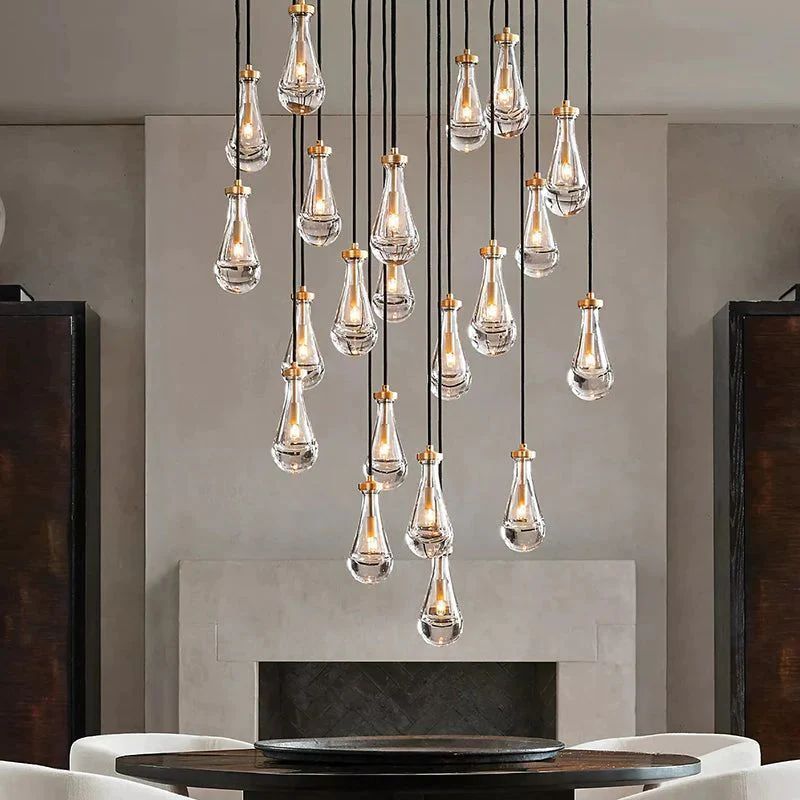
The shape of a chandelier does more than define its silhouette. It influences how the dining table feels within the room, how evenly the fixture fills the space, and whether the overall composition appears balanced. When choosing between a round and linear chandelier, begin with the table shape, then consider room proportions, sightlines, and the atmosphere you want to create.
This guide explains where each shape works best and offers practical starting points for selecting a dining room chandelier with confidence.
Round or linear chandelier: the quick answer
A round chandelier is usually a natural match for a round or square dining table. Its centered form creates an intimate focal point and distributes visual weight evenly around the table.
A linear chandelier generally suits a rectangular, oval, or long dining table. Its extended profile follows the length of the tabletop, helping the lighting feel proportional from one end to the other.
These are useful design guidelines, not rigid rules. A round chandelier can bring contrast to a rectangular table, while a compact linear fixture may sharpen the look of a square setting. The best choice is the one that supports both the furniture and the architecture of the room.
Start with the shape of your dining table
The dining table is the visual anchor of the room, so its geometry is the clearest place to begin. Repeating that shape above the table creates rhythm and order. Introducing a contrasting form can feel more artistic, but it requires closer attention to scale.
Round and square tables
A circular fixture echoes the symmetry of a round table and draws the eye toward its center. This pairing feels naturally conversational because every seat relates to the same focal point. Round chandeliers also work well above square tables, where they soften the table's straight edges without making the arrangement feel unbalanced.
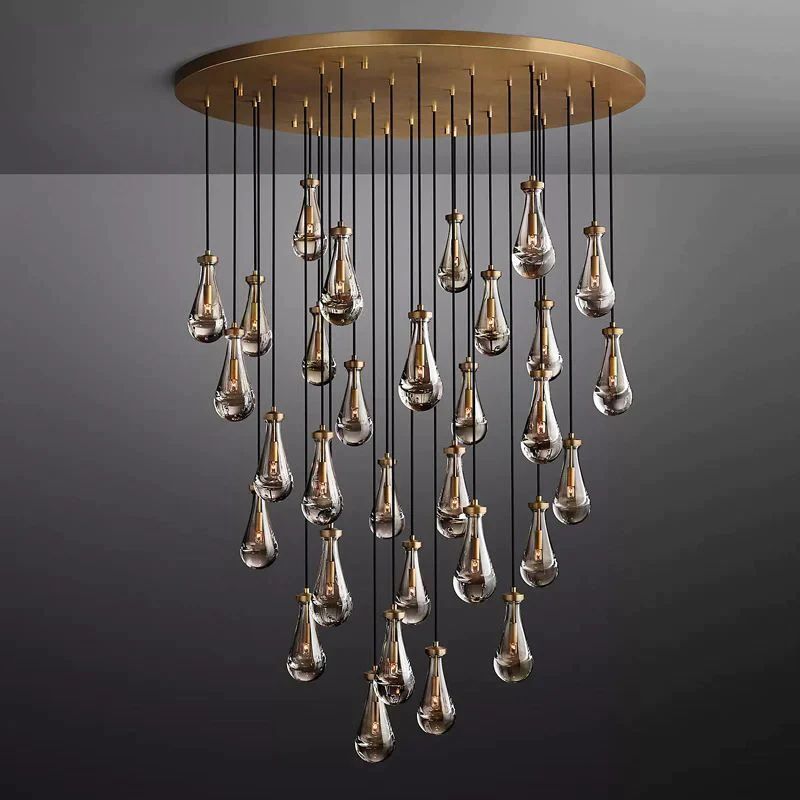
When the table is small, look for an airy frame, a single globe, or a restrained cluster that leaves breathing room around the fixture. For a larger table or an open dining area, a wider ring or tiered design can create presence while maintaining symmetry.
Rectangular and oval tables
A long table benefits from a fixture that carries light and visual interest across its length. A linear chandelier does this in one cohesive form, making it especially effective above rectangular dining tables, extended tables, and kitchen islands.
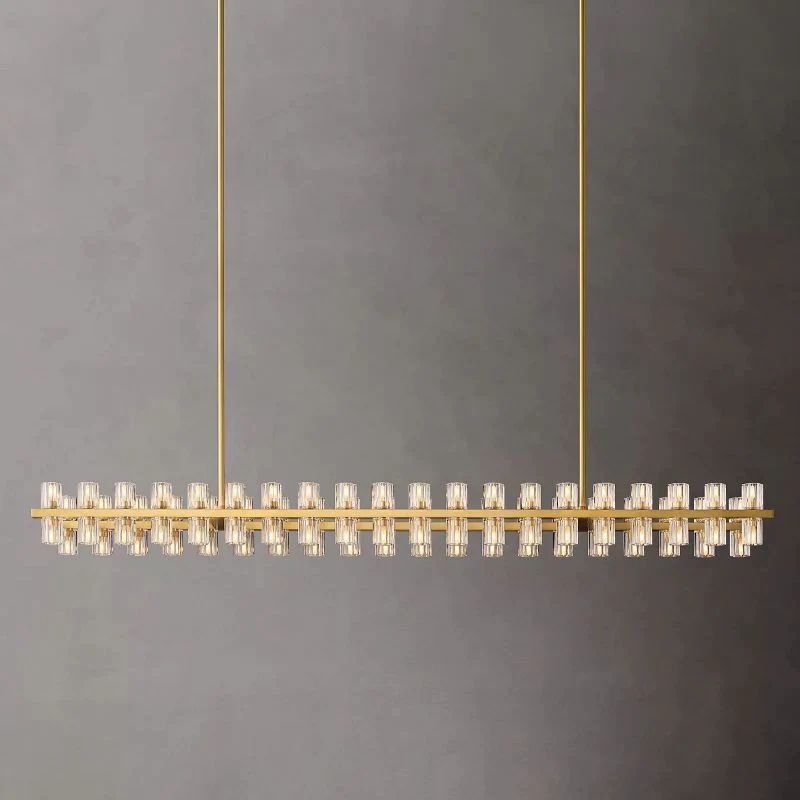
Oval tables can work with either shape. A linear fixture reinforces the table's length, while a generously scaled round chandelier emphasizes its curved ends. If you prefer a lighter look, two or three coordinated pendant lights can provide a similar lengthwise rhythm.
Compare the visual effect
| Consideration | Round chandelier | Linear chandelier |
|---|---|---|
| Best starting match | Round or square tables | Rectangular, oval, or long tables |
| Visual emphasis | Creates a strong central focal point | Emphasizes length and horizontal balance |
| Atmosphere | Intimate, sculptural, and gathered | Architectural, composed, and expansive |
| Common challenge | May look undersized above a very long table | May overwhelm a compact or perfectly round table |
Choose the right size and proportion
Shape alone will not create balance if the fixture is too small or too large. As a practical starting point, many dining rooms look comfortable when the chandelier measures approximately one-half to two-thirds of the table's relevant dimension. For a round fixture, compare its diameter with the table width or diameter. For a linear fixture, compare its length with the table length.
Keep the chandelier narrower than the table so guests can stand, sit, and move around it comfortably. The surrounding room also matters: a fixture that looks substantial in a compact dining room may feel delicate in an open-plan space or beneath a high ceiling.
Before ordering, mark the proposed dimensions with painter's tape on the table or suspend a lightweight paper template at the intended height. Viewing the outline from the doorway and from seated positions makes scale easier to judge than measurements alone.
For more detailed measuring guidance, read How to Choose the Right Chandelier Size for Your Dining Room.
Consider hanging height and sightlines
A dining room chandelier should feel connected to the table without interrupting conversation or views across the room. Ceiling height, fixture depth, and the visual density of the design all influence the final hanging position.
Transparent glass and open frames can often appear lighter at a larger scale. Dense crystal, dark metal, or multi-tiered silhouettes may need more visual space. Whatever the form, check the view from every seat and make sure the lowest element does not create an uncomfortable obstruction.
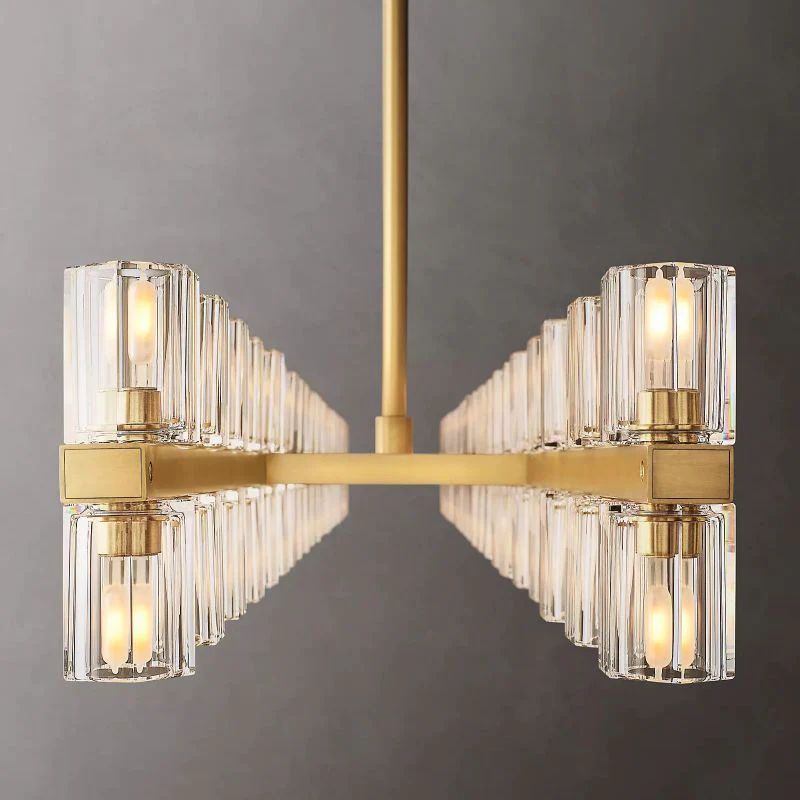
Use the recommendations in How High Should a Chandelier Hang Above a Dining Table? as a starting point, then adjust for the fixture and room.
Let the room architecture guide the decision
Look beyond the table to the lines already present in the room. A long dining area with wide windows, wall paneling, or a strong ceiling beam may feel more cohesive with a linear chandelier. A room with a central ceiling medallion, curved furniture, or a square footprint may naturally favor a round fixture.
In an open-plan interior, the chandelier can also help define the dining zone. A linear design creates a clear horizontal boundary, while a round design establishes a concentrated center. Consider how the fixture will relate to nearby kitchen pendants and living room lighting so the shapes complement rather than compete with one another.
Use material and style to refine the look
Once the shape and scale are established, material determines much of the mood. Clear or textured glass adds sparkle while keeping the silhouette visually open. Alabaster introduces a soft natural glow and subtle variation. Crystal brings light-catching detail, while metal frames can range from minimalist to architectural.
A round chandelier with cascading elements can feel fluid and decorative. A streamlined linear chandelier in brass and glass may feel more tailored and contemporary. Rather than matching every finish in the room exactly, look for a relationship between the fixture and nearby hardware, furniture, or architectural details.
A final checklist before you choose
- Does the fixture shape support the shape and length of the dining table?
- Is the chandelier narrower than the table with comfortable clearance around it?
- Does its scale suit the entire room, not only the tabletop?
- Will the hanging height preserve views and conversation across the table?
- Does the material create the level of glow and visual weight you want?
- Have you checked the fixture dimensions and installation requirements before ordering?
Find the shape that completes your dining room
Choose a round chandelier when you want a centered, intimate focal point, especially above a round or square table. Choose a linear chandelier when you want to follow the length of a rectangular or oval table and create a more architectural rhythm. With the right proportions, either shape can turn the dining area into a refined and inviting place to gather.
Explore round chandeliers, linear lighting, and the complete dining room lighting collection to compare silhouettes and materials.