
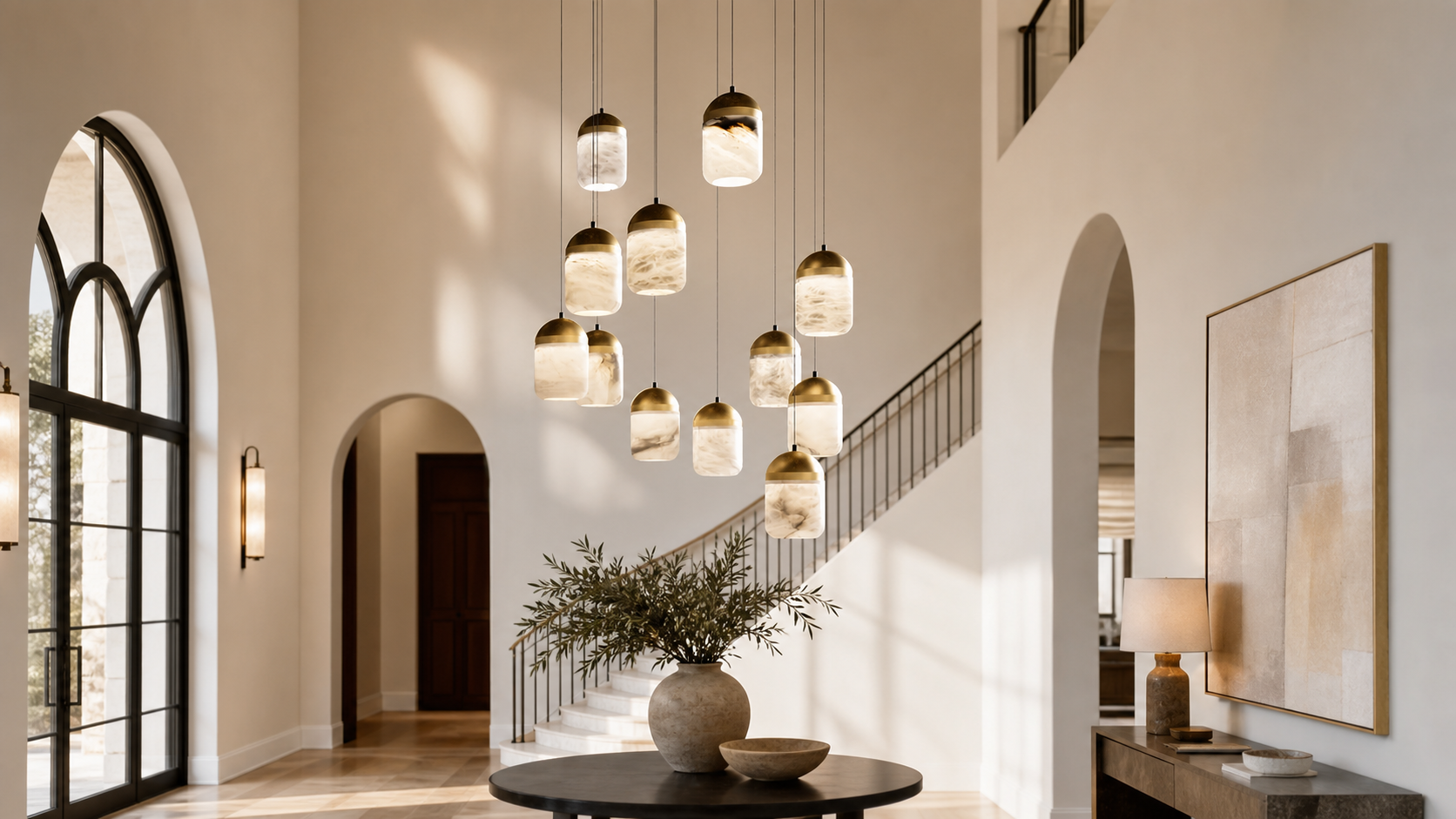
A foyer or entryway is the first space guests experience when they step inside a home. The right chandelier can make that moment feel warm, polished, and intentional before anyone reaches the living room or dining area.
Choosing a foyer chandelier is different from choosing a dining room fixture. Entryways often have taller ceilings, open sightlines, staircases, narrow layouts, or two-story volume. The chandelier needs to feel beautiful from more than one angle while still giving the space comfortable ambient light.
Why foyer lighting matters
Foyer lighting sets the tone for the rest of the home. A small fixture can make a tall entry feel unfinished, while an oversized or poorly placed chandelier can overwhelm the space. The goal is to choose a chandelier that feels proportional, welcoming, and visually connected to the architecture around it.
Start with ceiling height
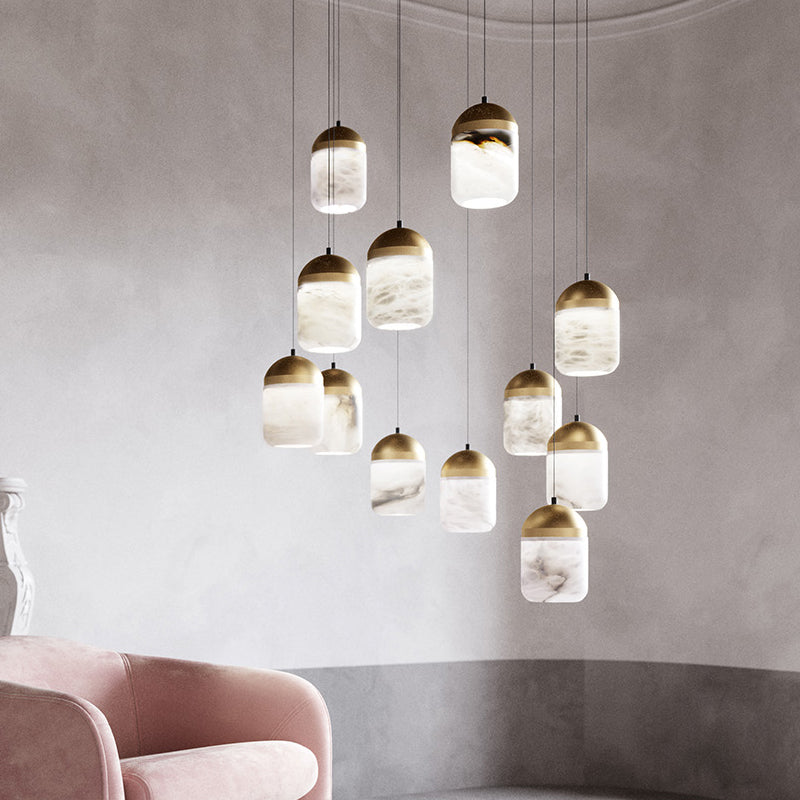
Ceiling height is the most important starting point. A standard 8 to 9 foot entry may need a compact chandelier or semi-flush fixture, while a two-story foyer can handle a taller, more sculptural design.
For high ceilings, look for fixtures with visual length. Multi-tier chandeliers, cascading pendants, or elongated designs can help the light feel connected to the full height of the space instead of floating too close to the ceiling.
How large should a foyer chandelier be?
A helpful starting point is to add the length and width of the foyer in feet, then convert that number to inches for an approximate chandelier diameter. For example, a 10 by 12 foot foyer suggests a fixture around 22 inches wide.
This rule is only a guide. If the foyer opens into a staircase, hallway, or living area, the chandelier may need more presence. If the entry is narrow, a slimmer fixture may feel more graceful.
Hanging height for entryway chandeliers
In a standard foyer, keep the bottom of the chandelier at least 7 feet above the floor so people can walk comfortably underneath it. In a two-story foyer, many designers place the fixture so it aligns visually with the second-floor landing or upper window area.
If the chandelier can be seen from outside through a window, consider how it appears from the exterior as well. A well-placed fixture can create a beautiful evening glow from both inside and outside the home.
Choose a style that matches the architecture
A modern home may suit a minimalist chandelier with clean lines, glass, brass, or alabaster details. A traditional foyer may feel better with a crystal chandelier, tiered frame, or warm metallic finish. The best choice should echo the home without making the entry feel too busy.
Think about the view from every angle
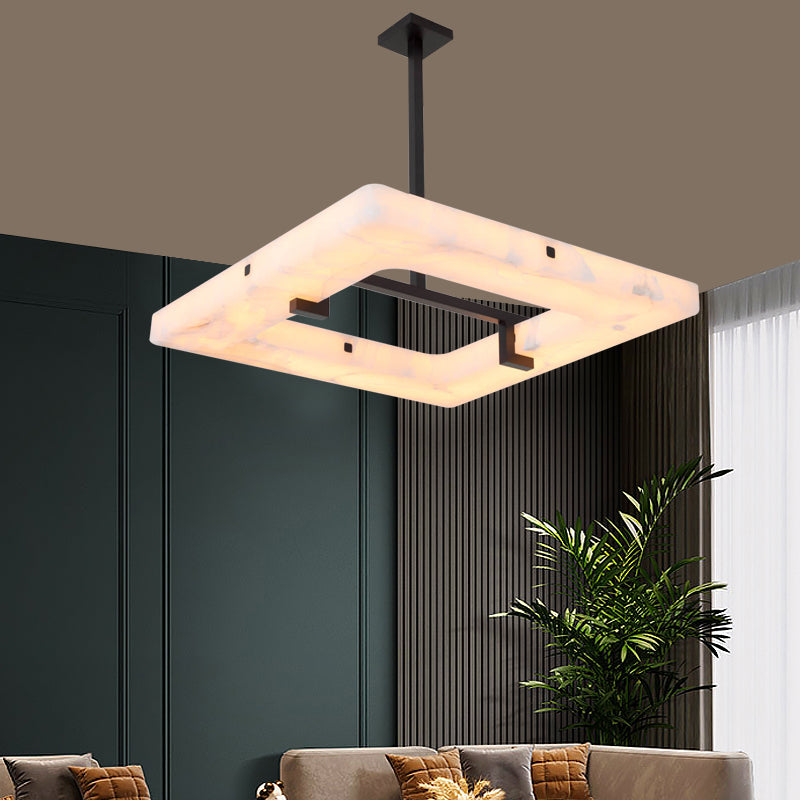
Unlike a dining room chandelier, an entryway fixture may be seen from below, from the staircase, from nearby rooms, and sometimes from the street. Choose a chandelier that looks balanced from multiple perspectives.
Open-frame chandeliers, alabaster pendants, glass globes, and cascading designs often work well because they offer visual interest without feeling heavy from below.
Use warm ambient light
A foyer should feel inviting rather than harsh. Warm ambient lighting helps soften the transition from outside to inside. If the chandelier has exposed bulbs, consider bulb shape and brightness carefully so the fixture does not create glare.
Layering can also help. Wall sconces, console lamps, or nearby hallway lights can support the chandelier and prevent dark corners.
Common foyer chandelier mistakes to avoid
- Choosing a fixture that is too small for a tall entryway
- Hanging the chandelier too low in a walkway
- Ignoring how the fixture looks from the second floor or outside
- Using lighting that feels too bright or cold
- Choosing a style that competes with the staircase, door, or architectural details
Related lighting collections
If you are comparing options, explore our chandelier collection, entryway lighting, and alabaster lighting for fixtures that bring warmth, height, and refined detail to a foyer.
Final thoughts
The right foyer chandelier should feel proportional to the space, comfortable to walk under, and beautiful from several viewpoints. Start with ceiling height and scale, then choose a material and style that makes the entryway feel welcoming from the first step inside.
Related lighting guides
Continue planning your lighting layout with these related guides: