
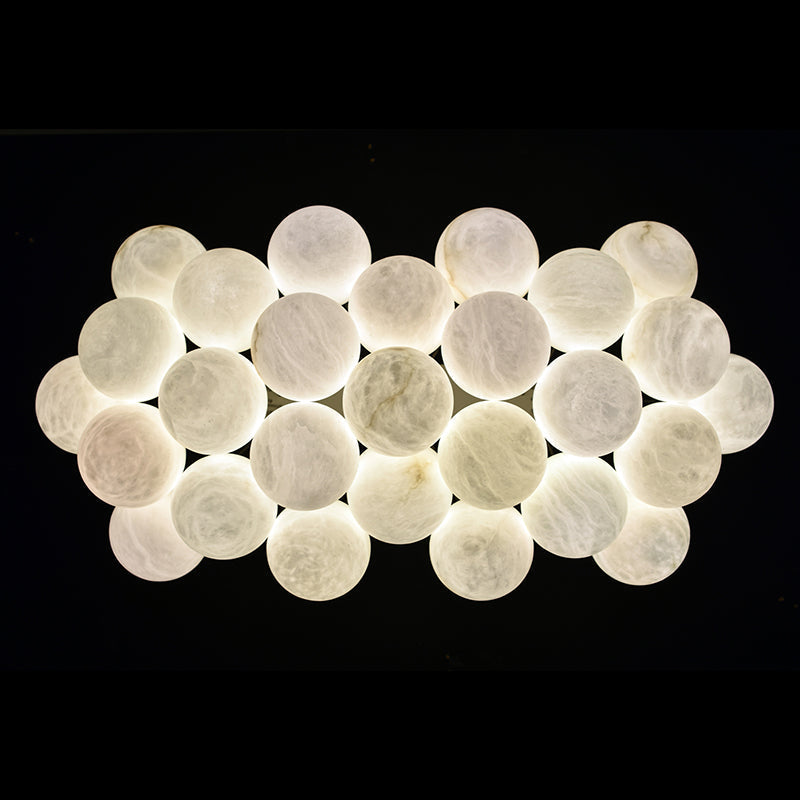
Alabaster, glass, and crystal lighting each brings a distinct character to a room. Alabaster is valued for its natural veining and gentle glow, glass for its clarity and versatility, and crystal for its light-catching brilliance. Thoughtful care helps these materials remain beautiful without risking their surfaces, fittings, or electrical components.
The safest cleaning method always begins with the care instructions supplied with your fixture. The guidance below provides a conservative routine for regular dusting and maintenance when more specific product instructions are not available.
Safety comes first
Before cleaning any light fixture, switch off the power and allow the bulbs and fixture to cool completely. Use a stable step ladder on a level surface, keep both hands free whenever possible, and ask another person to steady the ladder for larger fixtures.
Do not spray cleaner directly onto an installed fixture. Moisture can travel into sockets, wiring, seams, or metal connections. If the chandelier is very high, unusually heavy, or difficult to reach safely, use a qualified lighting or cleaning professional.
A gentle routine for every decorative light
- Turn off the power. Let the entire fixture cool before touching it.
- Protect the area below. Place a clean, soft covering beneath the fixture in case a removable piece is dropped.
- Document the arrangement. Photograph detailed crystal or glass assemblies before removing any components.
- Dust from top to bottom. Use a clean microfiber cloth or very soft brush, supporting delicate parts as you work.
- Use moisture only when appropriate. Apply any permitted solution to the cloth rather than the fixture, and keep it away from electrical and metal parts.
- Dry every surface. Reassemble removable components only after they are fully dry.
How to clean alabaster lighting
Alabaster is a natural stone with subtle tonal and veining variations. It is also more porous and sensitive than ordinary glass, so the safest regular care is dry and minimal.
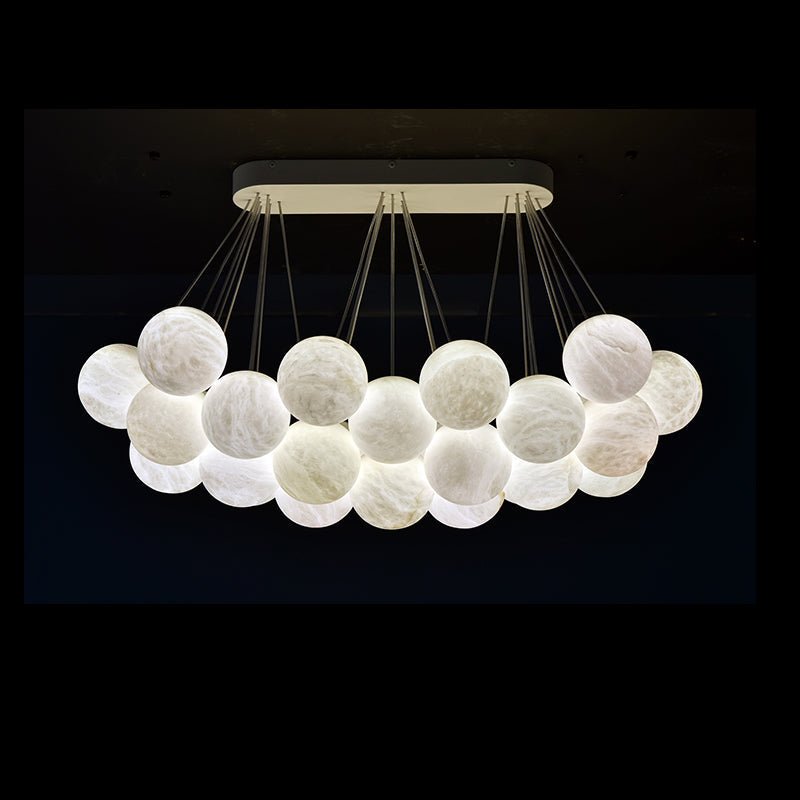
- Dust alabaster with a clean, dry microfiber cloth or a very soft natural-bristle brush.
- Support each shade or stone element gently rather than pulling on the fitting.
- Avoid household sprays, abrasive pads, acidic cleaners, polish, and prolonged contact with water.
- Do not apply oil or wax unless the fixture manufacturer specifically recommends it.
- Handle the fixture by its metal structure whenever possible, especially when repositioning it.
If a mark does not lift with gentle dry dusting, stop before experimenting with stronger products. Ask the manufacturer or a stone-care professional for advice suited to that exact finish. The natural pattern of alabaster is part of its character, so small variations should not be treated as stains.
To learn more about the material, see Alabaster Lighting: Why Designers Love Its Soft Natural Glow.
How to clean glass lighting
Glass shades and decorative pieces are generally less porous than alabaster, but they can still show fingerprints, dust, and mineral marks. Begin with a dry microfiber cloth. For more thorough cleaning, first confirm whether the glass is removable and whether the product instructions allow a mild cleaning solution.
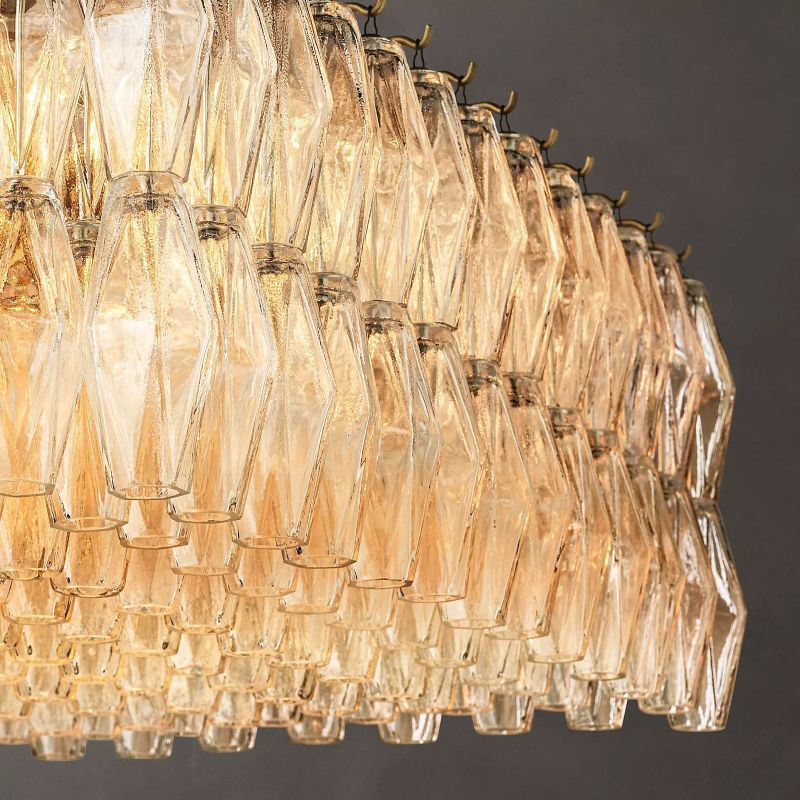
- Wear clean cotton or lint-free gloves to avoid adding fingerprints while you work.
- For installed glass, apply an approved mild solution to a cloth, never directly to the fixture.
- If removable shades may be washed, use lukewarm water and a small amount of mild soap, then rinse and dry them completely with a lint-free cloth.
- Avoid sudden temperature changes, which can stress delicate glass.
- Keep moisture away from sockets, wiring, metal joints, and finished surfaces.
Some decorative glass has a special coating, texture, or hand-applied finish that needs dry cleaning only. When in doubt, use the gentlest method and consult the product instructions before introducing moisture.
How to clean crystal lighting
Crystal chandeliers often contain many individually suspended pieces, so patience matters as much as the cleaning product. Work in small sections and support each prism or strand to avoid placing strain on pins and connectors.
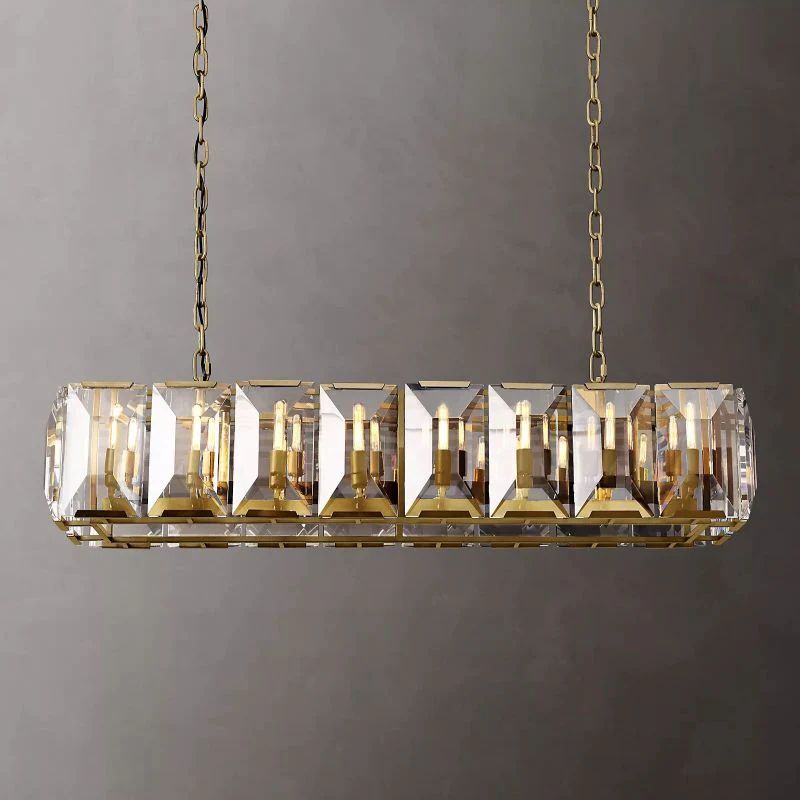
- Start with a soft brush or lint-free cloth to remove loose dust.
- Place a small amount of manufacturer-approved cleaner on the cloth if dry dusting is not enough.
- Hold each crystal gently with one hand while wiping with the other.
- Avoid twisting, pulling, or rotating the chandelier arms as you clean.
- Do not use abrasive materials or harsh ammonia-based products unless the manufacturer explicitly approves them.
If you remove crystals for cleaning, photograph the pattern first and place each group in a labeled, padded container. Make sure every component is dry before reattaching it.
Care for metal frames and finishes
Brass, bronze, nickel, and painted metal finishes can react differently to cleaners. A clean, dry microfiber cloth is the safest routine for most finished frames. Avoid metal polish unless the manufacturer says the surface is unlacquered and the product is suitable for that finish.
Do not hold or rotate a chandelier by its decorative arms. Support the central structure, and use light pressure when dusting around joints, canopies, and suspension hardware. If you notice a loose part, damaged wire, or unstable canopy, stop cleaning and arrange an inspection.
How often should decorative lighting be cleaned?
A light dusting every few weeks or whenever buildup becomes visible is easier on the fixture than infrequent heavy cleaning. Fixtures near kitchens, open windows, fireplaces, or busy entryways may need attention more often because airborne grease and dust can collect more quickly.
A deeper inspection once or twice a year is a useful starting point. Check that shades and decorative components are secure, but do not tighten electrical or structural hardware unless the product instructions permit it. Professional service is the safer choice for complex or high installations.
Material care at a glance
| Material | Best routine | Avoid |
|---|---|---|
| Alabaster | Dry microfiber cloth or very soft brush | Sprays, acids, abrasives, excess water |
| Glass | Dry cloth; mild cleaning only when approved | Direct spraying and rapid temperature changes |
| Crystal | Piece-by-piece cleaning with full support | Twisting, pulling, abrasives, harsh chemicals |
Final care checklist
- Follow the care instructions for the exact fixture and finish.
- Turn off power and allow the fixture to cool.
- Begin with the gentlest dry-cleaning method.
- Never spray liquid directly onto an installed light.
- Support delicate pieces and avoid twisting the frame.
- Dry removable components fully before reassembly.
- Call a professional when the fixture cannot be reached safely.
Consistent, gentle care protects both the material and the refined character of decorative lighting. Explore the alabaster lighting collection, glass lighting collection, and crystal lighting collection for more examples of each material.
If you are still deciding which surface best suits your interior, read Alabaster vs Glass Lighting: Which Is Right for Your Home?.