
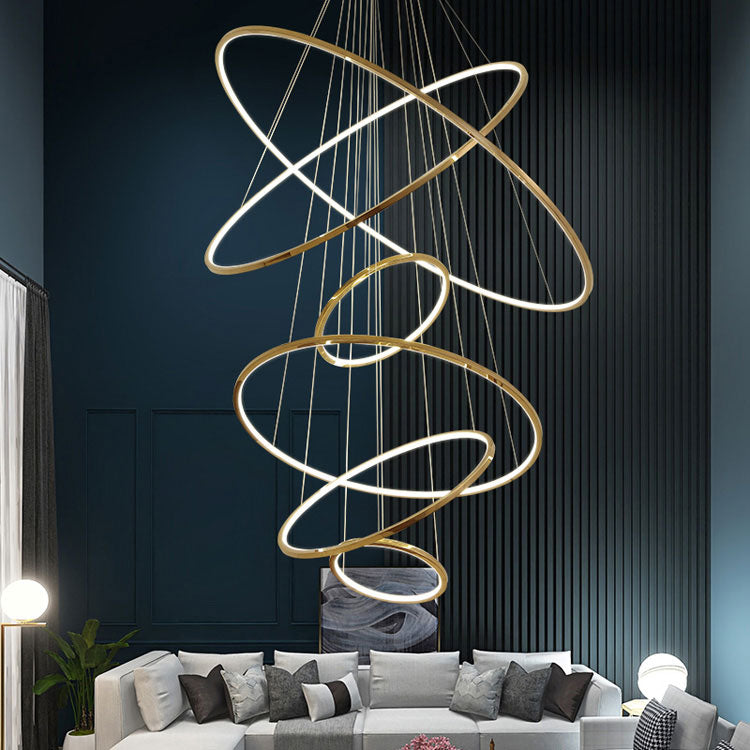
A staircase chandelier is viewed from more angles than almost any other light in the home. It may be seen from the entry, the lower steps, the upper landing, and adjoining rooms, so the right fixture must feel balanced both vertically and horizontally. Size, suspension length, placement, and maintenance access all deserve careful attention.
This guide offers practical starting points for choosing a staircase chandelier that complements a high ceiling while preserving comfortable sightlines and safe circulation.
Begin with the architecture of the stairwell
Before comparing chandelier styles, study the space the fixture will occupy. Measure the width and length of the open stairwell, the ceiling height, the distance between landings, and the height above every walkable surface. Note railings, windows, ceiling beams, and doors that may affect the view or installation.
A chandelier for a compact stairwell should not be selected using the same proportions as one for a two-story foyer. The fixture needs enough presence to connect both levels, but it should still leave visual breathing room around the railing and surrounding walls.
Record these measurements
- The width and length of the open stairwell or stair void
- The floor-to-ceiling height at the intended mounting point
- The distance from the ceiling to the upper and lower landings
- The available clearance above steps, landings, and walking paths
- The width of nearby doors, windows, and architectural openings
Photograph the space from the lower floor, the midpoint of the stairs, and the upper landing. These views make it easier to judge whether a chandelier will look balanced from every important angle.
Choose a chandelier shape that follows the space
The most successful staircase chandeliers respond to the direction of the architecture. A tall, cascading fixture emphasizes vertical height and draws the eye upward. A cluster of pendant lights can follow the movement of the stairs, while a tiered chandelier creates a strong central focal point in a square or circular stairwell.
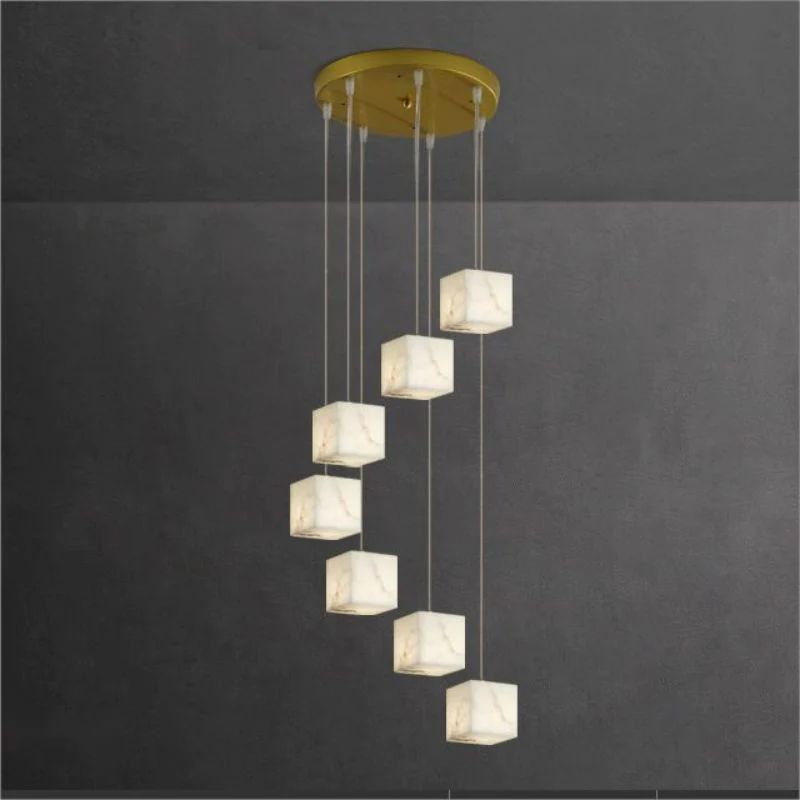
For a narrow stairwell, look for a slender arrangement that leaves generous clearance at the sides. A wide open staircase or two-story foyer can support a larger ring, branching form, or layered composition. If the stairs turn around a central void, a rounded or spiraling chandelier can echo that movement.
How large should a staircase chandelier be?
There is no single formula that works for every staircase, but the open area around the fixture should guide the decision. As a visual starting point, a chandelier may occupy roughly one-third to one-half of the stairwell's open width, provided there is comfortable clearance from walls, railings, and walking paths. Dense fixtures often appear larger than open frames with the same measured width.
Height matters just as much as diameter. In a tall stairwell, a fixture that is too short can appear disconnected from the lower level. A long cascade or multi-tier arrangement helps bridge the vertical space. Before ordering, compare the complete installed height—not only the chandelier body—with the available ceiling-to-landing distance.
Create a temporary outline with painter's tape, lightweight string, or paper shapes. View the mock-up from both floors. This simple step can reveal whether the proposed chandelier feels too narrow, too dense, or too close to a railing.
Plan the hanging height carefully
The lowest point of the chandelier must remain safely above any place where people walk or stand. A minimum clearance of approximately seven feet above walkable surfaces is a useful planning reference, but local building requirements and the specific stair geometry take priority. A qualified installer should confirm the final mounting position.
In an open two-story stairwell, the center of the chandelier often looks most balanced when it relates visually to the upper landing or the tall wall beside the stairs. The exact position depends on the fixture shape. A compact chandelier may sit higher, while a long cascade can extend lower into the open void without entering the circulation zone.
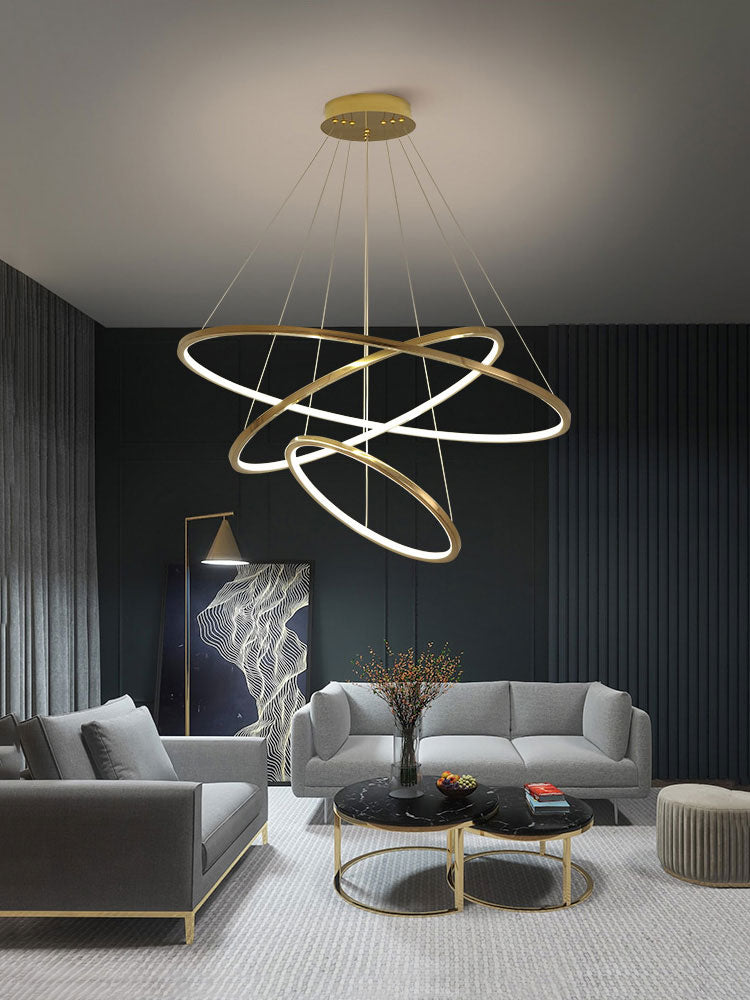
For additional high-ceiling ideas, see Best Lighting Ideas for High Ceilings and Grand Entryways.
Decide where the chandelier should be centered
A staircase chandelier does not always need to align with the lower-floor room. It usually looks more intentional when centered within the open stairwell or positioned along the dominant sightline. In a straight staircase, this may mean following the length of the steps. In a switchback staircase, it may mean centering the fixture within the void between flights.
Check the alignment from the front entrance, the bottom step, the upper landing, and any nearby hallway. If one viewpoint is especially important, such as the view through a large foyer window, give that sightline additional weight.
Match the material to the atmosphere
Material changes how a chandelier fills a tall space. Alabaster offers a soft natural glow and gentle variation that can make a large fixture feel calm rather than overpowering. Clear glass preserves openness and allows architectural details to remain visible. Crystal introduces sharper reflections and a more luminous decorative presence, while metal rings create a clean, contemporary outline.
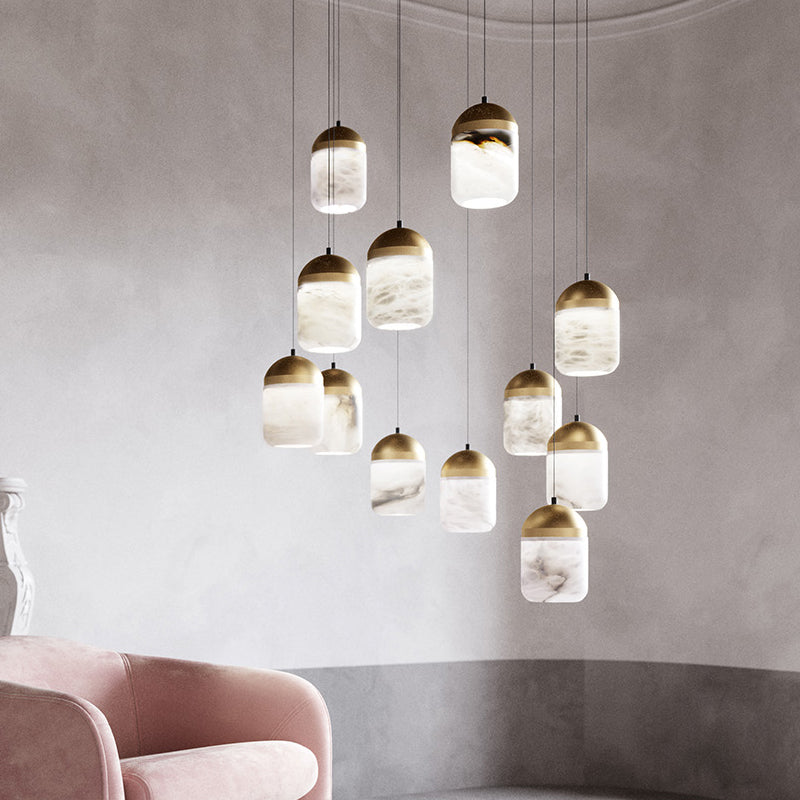
Consider the wall color and natural light as well. A transparent fixture may nearly disappear against bright windows, while a dark metal frame creates stronger contrast. A softly glowing stone or glass shade can add warmth to a stairwell with hard surfaces.
Think about light distribution, not only appearance
A statement chandelier can provide ambient light, but stairs also need practical illumination at treads, landings, and turns. Combine the chandelier with wall sconces, recessed lights, or step lights when necessary. Layered lighting reduces shadows and allows the chandelier to remain a decorative focal point rather than the only source of light.
Review the fixture's actual light source, wattage, color temperature, and installation specifications before purchase. Do not assume that a large chandelier will automatically provide more usable light; shade material and bulb placement can significantly change the result.
For a broader approach to combining fixtures, read How to Layer Lighting in a Living Room. The same ambient, accent, and task-lighting principles can be adapted to a staircase.
Plan installation and future maintenance
Staircase chandeliers are difficult to reach, so installation access should be considered before the fixture is ordered. Confirm the ceiling structure, canopy dimensions, suspension method, total weight, and electrical requirements with a qualified electrician.
Also plan how bulbs, shades, or decorative pieces will be cleaned and serviced. A fixture that looks beautiful on installation day should remain practical to maintain. For delicate materials, follow the manufacturer's instructions and review How to Clean and Care for Alabaster, Glass, and Crystal Lighting.
Staircase chandelier planning checklist
- Measure the stairwell width, length, total height, and every walkable clearance.
- Choose a vertical, clustered, tiered, or rounded shape that supports the architecture.
- Compare the fixture's complete installed dimensions with the open space.
- Check the view from the entrance, lower steps, midpoint, and upper landing.
- Keep the lowest element safely above circulation areas and local code requirements.
- Combine decorative lighting with practical illumination for steps and landings.
- Confirm ceiling support, electrical details, installation access, and future maintenance.
Create a balanced focal point between floors
The right staircase chandelier connects the lower and upper levels without crowding the architecture. Begin with accurate measurements, choose a shape that follows the vertical space, and evaluate the fixture from every important viewpoint. Careful planning produces a chandelier that feels sculptural, proportional, and naturally integrated into the home.
Explore foyer and staircase chandeliers, alabaster lighting, and the complete chandelier collection for suitable forms and materials. You may also find helpful guidance in How to Choose the Right Chandelier for a Foyer or Entryway.