
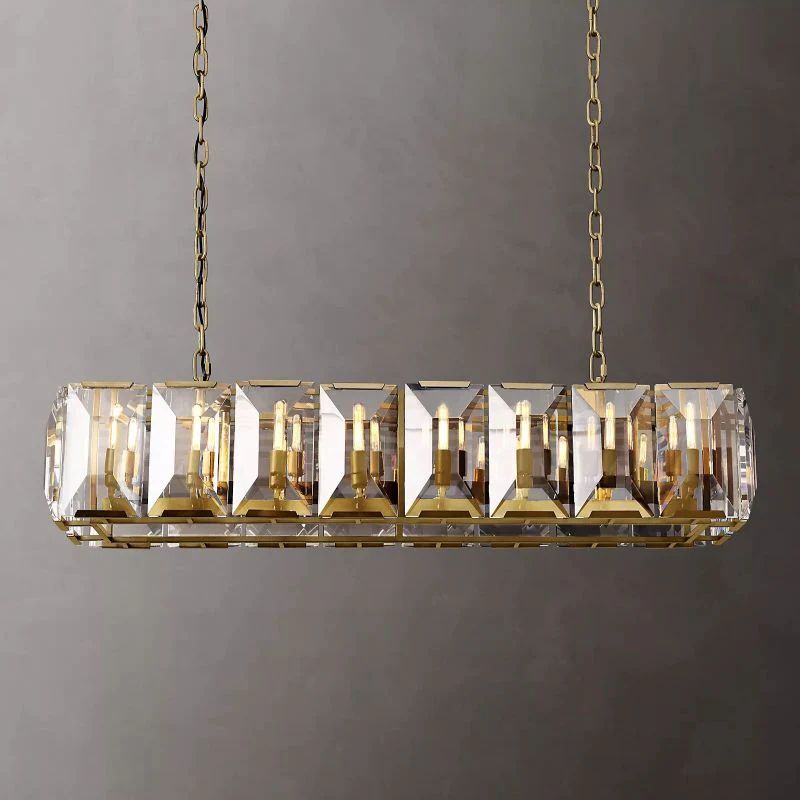
Glass and crystal chandeliers can both bring clarity, reflection, and an elegant focal point to a room, yet they create noticeably different visual effects. Glass often emphasizes shape, texture, and a softer glow. Crystal is selected and cut to reflect light with greater brilliance, creating sharper highlights and a more jewel-like presence.
The right choice depends on the atmosphere you want, the architecture of the room, the scale of the fixture, and how much detailed maintenance suits your lifestyle. This guide compares the two materials so you can choose with confidence.
What is the difference between glass and crystal?
Glass is a broad category used in lighting shades, rods, globes, panels, and sculptural decorative pieces. It may be clear, frosted, colored, seeded, textured, or hand-shaped. The visual effect can range from almost invisible to richly dimensional.
Crystal used in chandeliers is generally formulated, cut, or polished to increase clarity and light refraction. Its exact composition varies by manufacturer, and modern crystal may be lead-free. Faceted prisms divide and redirect light, producing the sparkle associated with crystal chandeliers.
Neither material is automatically better. Glass is often chosen for sculptural form and versatility, while crystal is chosen for brilliance and decorative impact.
Glass chandeliers: soft reflection and sculptural texture
A glass chandelier can feel modern, organic, vintage, or architectural depending on the shape and finish of the pieces. Clear glass keeps the room visually open. Textured or blown glass creates softer highlights, while amber or smoke-toned glass adds warmth and depth.
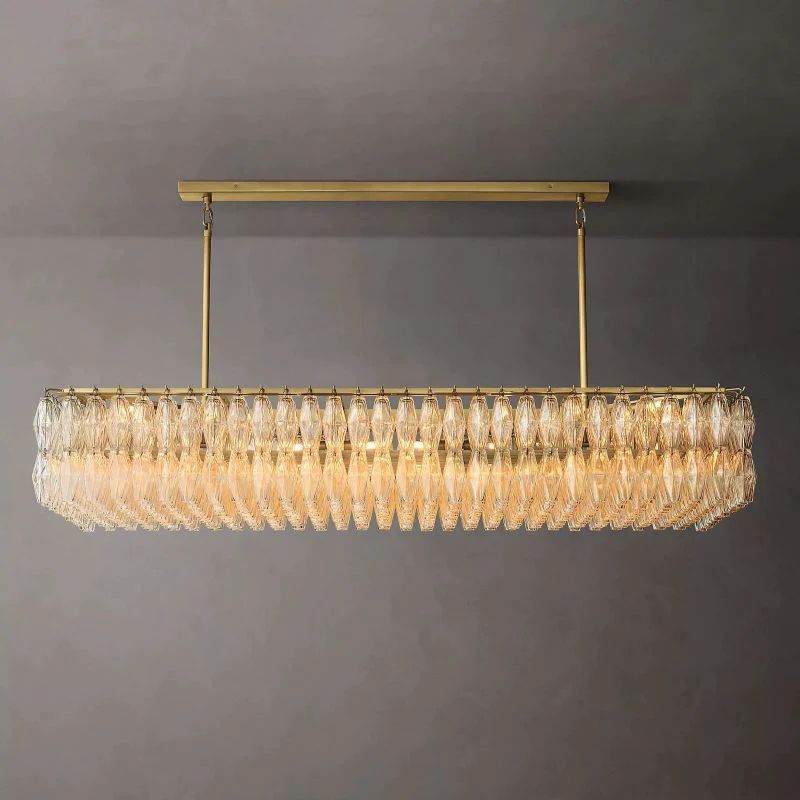
Glass works especially well when you want the chandelier to complement the room rather than dominate it. It can bring visual interest above a dining table or kitchen island while allowing furniture, artwork, and architectural details to remain prominent.
Glass may be the right choice when you prefer:
- A softer or more diffused glow
- Sculptural shapes and varied surface textures
- A contemporary, transitional, or relaxed luxury look
- A fixture that feels visually open in a smaller room
- Large decorative elements with fewer individual prisms
Crystal chandeliers: brilliance and precise reflection
Crystal chandeliers use faceted pieces to catch and redirect light. Even a clean rectangular design can create bright highlights and a more formal sense of detail. Traditional crystal fixtures may feature drops and arms, while contemporary versions often use streamlined rows, geometric blocks, or layered prisms.
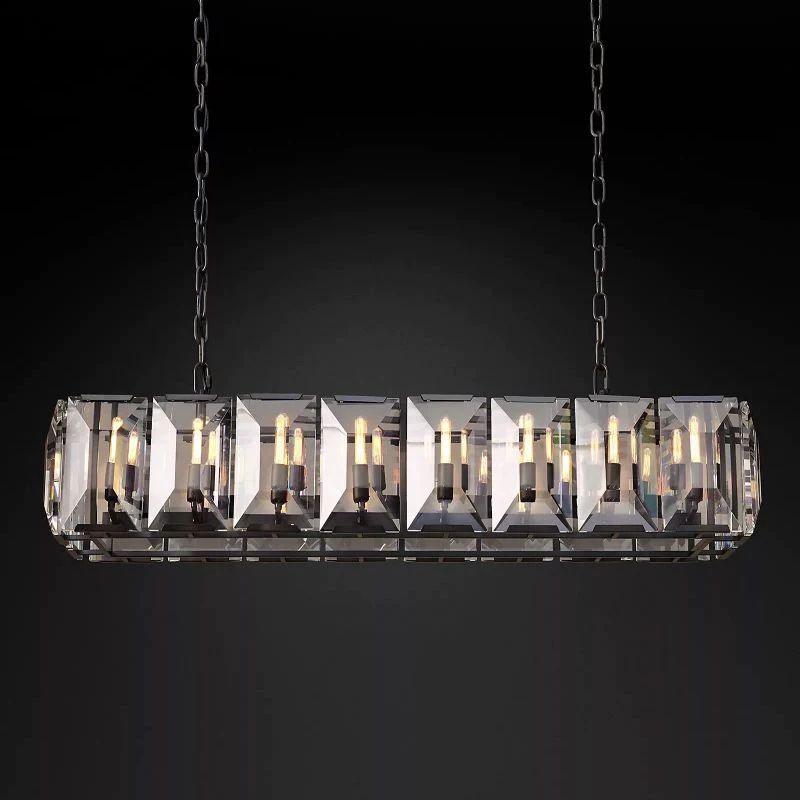
Crystal is a strong choice for a dining room, foyer, formal living room, or high-ceiling space where the chandelier should become a clear focal point. The material can also suit minimalist interiors when the fixture uses a simple frame and restrained geometry.
Crystal may be the right choice when you prefer:
- Distinct sparkle and brighter reflected highlights
- A refined statement piece with jewel-like detail
- Formal, glamorous, art deco, or polished contemporary styling
- A fixture that remains visually prominent in a large room
- Faceted shapes that change throughout the day as light moves
Glass vs crystal chandeliers at a glance
| Consideration | Glass chandelier | Crystal chandelier |
|---|---|---|
| Light effect | Soft reflection, glow, or texture | Sharper sparkle and greater refraction |
| Visual mood | Airy, sculptural, understated, or organic | Brilliant, detailed, polished, or dramatic |
| Common forms | Globes, shades, rods, blown pieces, textured panels | Prisms, drops, faceted blocks, cut panels |
| Maintenance | Often fewer or larger pieces to wipe | May require careful piece-by-piece cleaning |
| Best for | Versatile interiors and softer visual layering | Statement lighting and luminous focal points |
Compare the light, not only the unlit fixture
Product photos taken with the light switched off do not tell the entire story. Look for illuminated images and close details. Clear glass may reveal the bulbs and frame, while textured glass can soften them. Crystal facets may produce stronger points of light and visible reflections on surrounding surfaces.
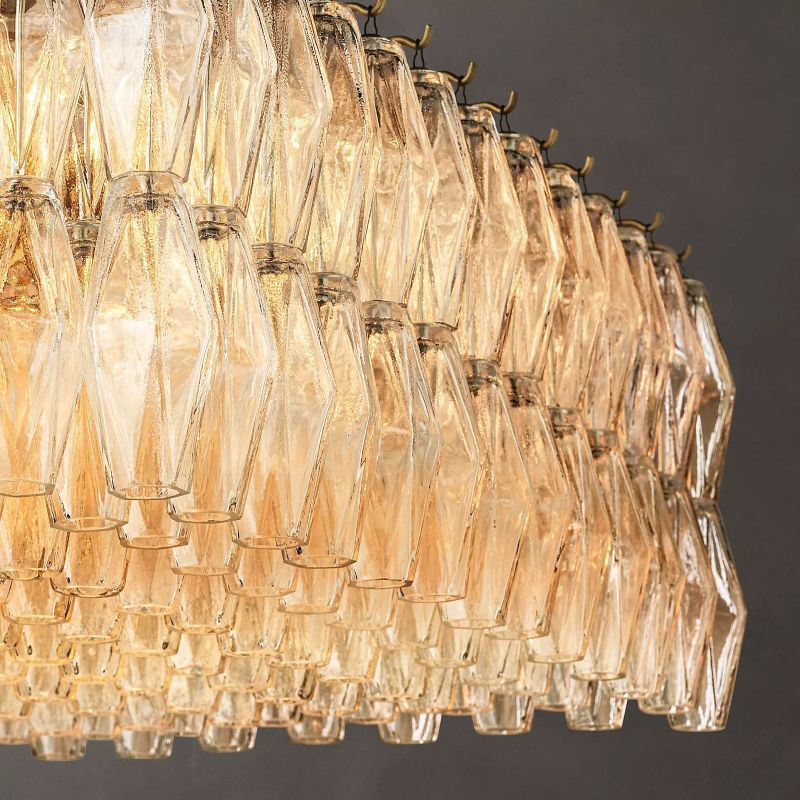
Bulb type, color temperature, and placement also influence the result. A warm light source can give clear glass a golden tone and soften crystal sparkle. Review the product specifications rather than assuming that every fixture made from the same material will produce identical light.
Consider the size and style of the room
In a compact dining room, clear glass can provide decorative scale without making the ceiling feel crowded. In a large foyer or formal dining room, crystal can hold its visual presence across a greater distance. However, fixture shape and dimensions remain more important than material alone.
A long rectangular table often suits a linear chandelier, while a round table naturally relates to a round or clustered form. Use Round vs Linear Chandeliers: Which Shape Is Right for Your Dining Room? to select the silhouette before comparing materials.
For size and hanging guidance, see How to Choose the Right Chandelier Size for Your Dining Room and How High Should a Chandelier Hang Above a Dining Table?.
Which material is easier to maintain?
Maintenance depends on the design as much as the material. A glass chandelier with a few large shades may be quicker to clean than a crystal fixture with many individual prisms. A heavily layered glass chandelier, however, may require just as much care as a streamlined crystal design.
Both materials show dust and fingerprints under direct light. Turn off the power, allow the fixture to cool, and follow the manufacturer's instructions. Never spray liquid directly onto an installed chandelier. For detailed guidance, read How to Clean and Care for Alabaster, Glass, and Crystal Lighting.
Does crystal always cost more than glass?
Not necessarily. Price is influenced by fixture size, frame material, manufacturing process, number of decorative pieces, complexity of assembly, and the quality of the glass or crystal. A large sculptural glass chandelier may cost more than a compact crystal fixture.
Compare the complete specifications, dimensions, materials, and installation requirements instead of choosing by material name alone. The best value is a fixture that fits the room, produces the desired light, and can be maintained comfortably.
A final decision checklist
- Do you prefer a soft glow and sculptural texture or sharper sparkle?
- Should the chandelier complement the room or become its dominant focal point?
- Does the fixture shape suit the table and room architecture?
- Will its visual weight feel comfortable at the intended size and height?
- Are you comfortable with the number of pieces that require cleaning?
- Have you reviewed the actual product dimensions, materials, and light-source details?
Choose the effect that feels right for your home
Choose glass when you want versatility, sculptural texture, and a softer reflective quality. Choose crystal when you want brighter sparkle, precise facets, and a more prominent decorative statement. Both materials can work in modern or traditional interiors when the fixture's scale and shape support the room.
Explore the glass lighting collection, crystal lighting collection, and the full chandelier collection. For another material comparison, read Alabaster vs Glass Lighting: Which One Is Right for Your Home?.