
A chandelier can make a bedroom feel composed, intimate, and finished, but the fixture has to work with the room rather than simply fill the ceiling. Size, hanging height, placement, and material all affect whether the result feels calm or crowded.
The best bedroom chandelier is not necessarily the largest or most decorative option. It is the one that fits the ceiling height, relates to the bed and furniture, preserves comfortable sightlines, and supports the softer atmosphere people usually want in a bedroom. Use this guide as a practical starting point, then confirm the product dimensions and installation conditions before ordering.
Begin with the room, not the fixture
Before choosing a style, measure the bedroom's length, width, and ceiling height. Note the position of the bed, walking paths, doors, windows, wardrobes, and any ceiling fan or existing electrical box. These details reveal how much visual and physical space a chandelier can occupy.
A frequently used sizing reference is to add the room's length and width in feet, then use the total as an approximate fixture diameter in inches. A 12-by-14-foot bedroom, for example, suggests a chandelier around 26 inches wide as an initial reference. This is not a strict rule. A visually light open-frame fixture may appear smaller than its measured width, while a dense stone or crystal form can carry more visual weight.
For more choices organized by room, explore the bedroom lighting collection and compare each product's actual width, height, canopy, and suspension information.
Choose a diameter that feels balanced
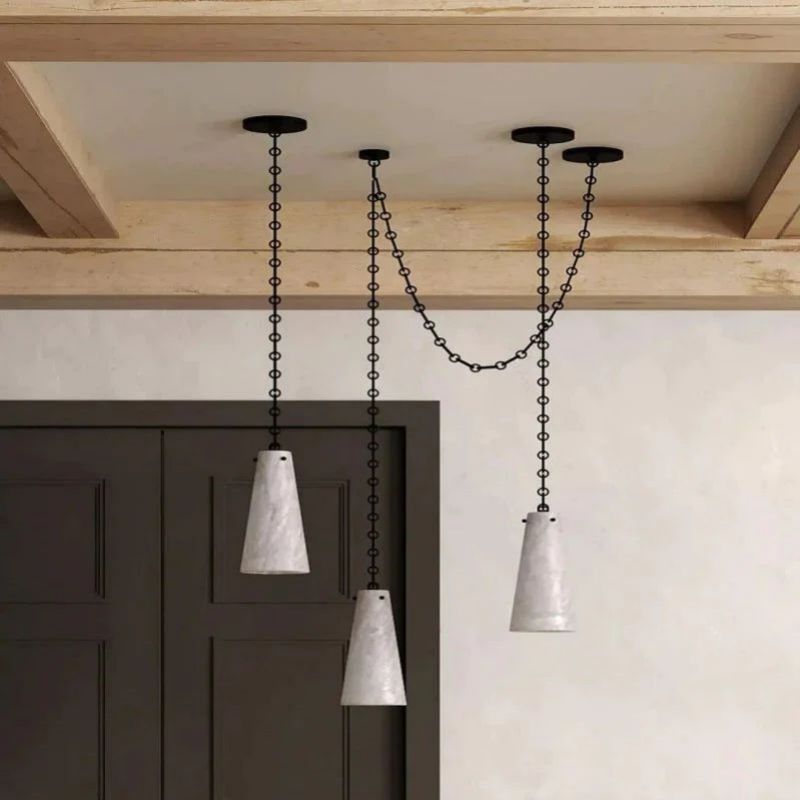
Bedroom scale is influenced by more than floor area. The bed is usually the dominant object, so the chandelier should feel connected to it without competing with the headboard or overwhelming the space. In a compact room with a full or queen bed, a smaller chandelier may create enough presence. A spacious primary bedroom with a king bed, sitting area, or high ceiling can often support a broader or more layered design.
Mock up the fixture width before purchasing. Mark the proposed diameter on the floor with painter's tape, or suspend a lightweight paper outline at the intended height. View it from the doorway, from the bed, and from the main walking path. This simple step often shows whether a size that looked appropriate on a product page feels too heavy or too slight in the real room.
If you are comparing several silhouettes, the chandelier collection includes round, linear, branching, and multi-light forms. Focus on measured dimensions rather than relying only on the apparent scale of styled photographs.
How high should a bedroom chandelier hang?
Hanging height depends on what is below the fixture. In an open walking area, the bottom should generally remain at least about 7 feet above the floor, with additional clearance where taller occupants or local requirements call for it. A low ceiling may be better suited to a compact ceiling light or flush mount that keeps the room open.
When a chandelier is centered directly over the bed, it is not in a normal walkway, so the composition may allow a lower visual position. Even then, it should not feel close to the person sitting or standing on the mattress, interfere with making the bed, or dominate the view from the doorway. Check the complete fixture height, including the canopy and minimum suspension length, rather than considering the chandelier body alone.
For a standard 8-foot ceiling, favor a shallow or compact profile. Nine- and 10-foot ceilings provide more flexibility, while vaulted ceilings may support a taller arrangement. Always have the final suspension length confirmed by a qualified installer who can assess the ceiling, electrical box, and local code.
Center it over the bed or the room?
There are two common approaches, and the right one depends on the layout. Centering the chandelier in the room creates architectural symmetry and often works when the bed is also centered. Centering it over the bed can be more visually satisfying when the furniture layout is intentionally offset or when the bed defines a distinct zone in a larger suite.
Use the viewpoint that matters most. Stand in the doorway and look toward the bed. If the chandelier, bed, and headboard form one clear axis, the room will usually feel calm and intentional. If the room includes a sitting area, dressing zone, or fireplace, an off-center fixture may instead mark one functional area. Avoid locating a low-hanging design above a route used to reach a closet or bathroom.
For another room-based sizing method, read how to choose a living room chandelier. The same ideas about architecture, furniture groups, and sightlines can help clarify a bedroom plan.

Match the shape to the furniture layout
A round chandelier naturally relates to a centered bed, round rug, or compact square room. A linear design can echo a wide headboard or help span a longer bedroom. Branching and multi-pendant forms bring movement and may suit an asymmetrical or contemporary scheme. The fixture does not need to copy the bed shape exactly, but the two should share a sense of proportion.
Consider what else is visible near the ceiling. Strong ceiling beams, a tray ceiling, or detailed molding already creates structure. In that setting, a simple profile may feel more refined. A plain ceiling can support a more sculptural chandelier that becomes the room's main decorative feature.
Select a material that supports a restful mood
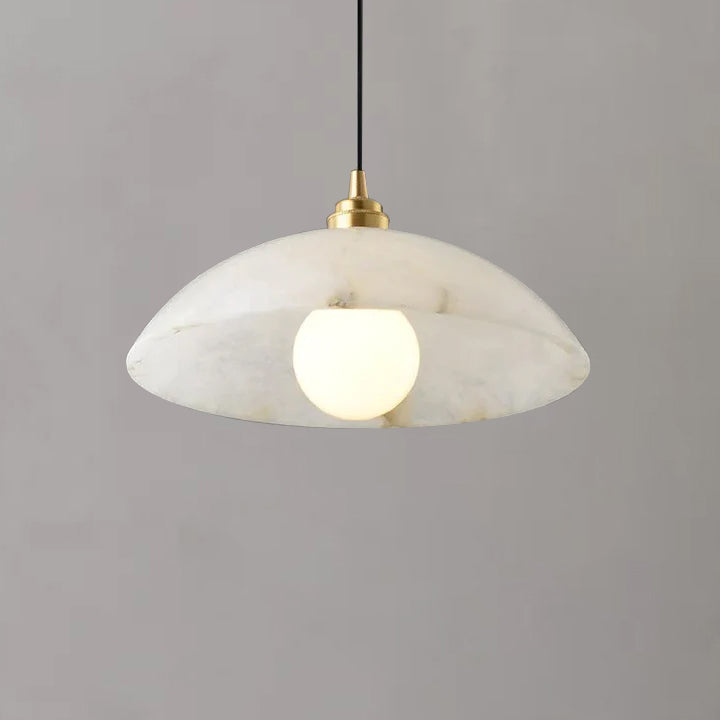
Material changes both daytime appearance and evening atmosphere. Alabaster offers natural variation and a softly luminous surface. Glass can feel visually open, while crystal introduces sharper reflections and a more formal character. Brass or other warm metal finishes can connect the ceiling fixture to furniture hardware, picture frames, or bedside details.
An alabaster lighting collection is useful when you want a sculptural form with natural texture. Because stone pattern varies, review product notes and expect each piece to have its own markings. If you are deciding between transparent and reflective materials, the guide to glass versus crystal chandeliers explains how their visual effects differ.
Plan layered bedroom lighting
A chandelier should not carry every lighting task. Bedrooms feel more comfortable when overhead ambient light is supported by bedside lamps or sconces, plus targeted light near a vanity, desk, reading chair, or wardrobe. Separate sources allow the room to feel useful in the morning and softer at night.
Think about how the chandelier's shades and materials direct light. A diffusing surface can create a gentler glow, while clear glass or exposed bulbs may produce more sparkle and visible brightness. Bulb type, color temperature, and output must match the fixture's listed specifications. Do not assume a product is dimmable unless its product information explicitly confirms compatibility.
To plan the supporting layers, browse wall sconces and read the guide to layering chandeliers, sconces, and lamps. The room is different, but the principle of combining ambient, task, and accent light remains useful.
Check installation details before ordering
Confirm the product's total width, body height, canopy size, weight, suspension range, bulb requirements, voltage, and included components. If the chandelier is heavy, the existing ceiling box may need additional support. Sloped or vaulted ceilings may require compatible hardware or a special installation approach.
Also decide how the fixture will be controlled. Place switches where they are convenient from the entrance and, when possible, from the bed. Any electrical changes should be planned with a licensed professional who can verify local requirements and the suitability of the mounting location.
A practical bedroom chandelier checklist
- Measure the room and ceiling height before choosing a fixture.
- Compare the chandelier's diameter with the bed and surrounding furniture.
- Preserve comfortable clearance in every walking path.
- Check the view from the doorway and while sitting in bed.
- Confirm minimum and maximum hanging height, not only body dimensions.
- Coordinate the material and finish with the room's quieter design details.
- Support the chandelier with bedside and task lighting.
- Have mounting, electrical capacity, and code requirements verified professionally.
Final thoughts
A well-chosen bedroom chandelier brings focus without disturbing the calm of the room. Start with accurate measurements, decide whether the bed or the architecture should set the centerline, and protect the clearances that make the space comfortable every day. Then choose a material and silhouette that adds character in daylight and a welcoming glow after dark.
When scale, height, placement, and layered lighting are considered together, the chandelier feels like part of the room rather than an object added at the end.