
A living room chandelier must do more than fill an empty ceiling. It should relate to the seating arrangement, support the room's architecture, preserve comfortable sightlines, and contribute to layered ambient light. The right fixture feels connected to the entire space rather than floating above it.
This guide explains how to choose a living room chandelier by size, hanging height, placement, shape, and material. Use the recommendations as planning references, then compare them with the actual product dimensions and your room layout.
Begin with the seating area, not only the room dimensions
Measure the room length, width, and ceiling height, but also record the size of the main seating group. In an open-plan home, the living area may occupy only one part of a much larger room. Centering the chandelier in the full architectural space can place it away from the furniture it is meant to illuminate.
Measure the sofa, chairs, coffee table, and rug as one composition. Note the main walkways and views toward windows, artwork, a fireplace, or an adjacent dining room. The chandelier should help define the seating zone without entering those paths.
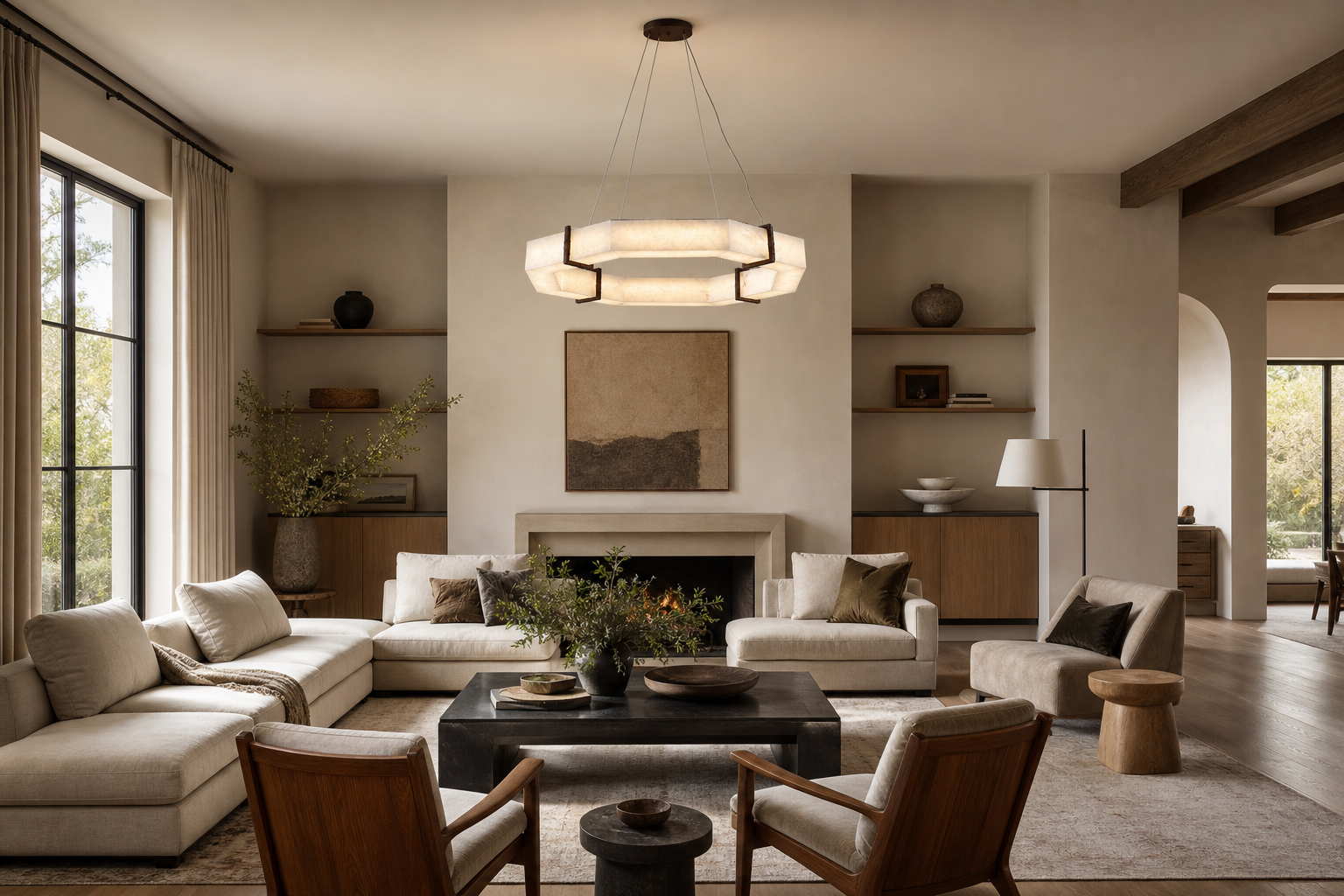
How large should a living room chandelier be?
A familiar sizing method is to add the room length and width in feet and use the total as an approximate chandelier diameter in inches. For a 14-by-18-foot room, the calculation suggests a fixture near 32 inches wide. This is a useful first comparison, not a final specification.
Living rooms need an additional check: compare the fixture with the seating group and rug. A chandelier centered over a compact seating arrangement may need to be smaller than the room formula suggests. A tall open frame may appear lighter than a dense alabaster, glass, or crystal design with the same measured diameter.
Use three measurements together
- Room dimensions: establish the overall architectural scale.
- Seating-zone dimensions: connect the chandelier to the furniture below.
- Fixture dimensions: include width, body height, canopy, rods, chains, and cords.
Create a temporary outline using painter's tape, lightweight string, or a paper template. View it from the doorway and from every seat. A simple mock-up can reveal whether the proposed chandelier is too wide, too dense, or visually disconnected from the furniture.
Choose the hanging height for the way the room is used
In an open area where people may walk beneath the fixture, keep the lowest point approximately seven feet or more above the floor as a practical starting reference. Local requirements, fixture instructions, and the exact circulation pattern take priority.
A chandelier centered above a permanent coffee table may sometimes hang lower because the table prevents people from walking directly underneath. Even then, check the view from every chair and sofa. The fixture should not interrupt conversation, television viewing, or the sightline toward a fireplace or artwork.
For an eight-foot ceiling, a shallow chandelier or semi-flush design usually feels more comfortable. Nine- and ten-foot ceilings provide room for a more defined chandelier body. Vaulted or double-height living rooms can support taller tiered, clustered, or sculptural forms, but the fixture still needs to relate to the seating area below.
Center the chandelier on the right feature
The geometric center of the room is not always the best mounting point. In a formal living room, the chandelier may align with the fireplace and main rug. In an open-plan room, it may be centered over the conversation area to separate it visually from the dining or kitchen zone.
Choose the dominant relationship before moving an electrical box:
- Center over the seating group for a comfortable conversational layout.
- Align with the fireplace when it is the primary architectural focal point.
- Follow the center of a large rug when it clearly defines the living zone.
- Use the ceiling center only when the furniture arrangement supports it.
Match the chandelier shape to the furniture layout
A round chandelier naturally complements a circular or square seating arrangement. It also softens rooms with many straight architectural lines. A rectangular or elongated chandelier can follow a long sofa, sectional, or large rectangular coffee table. A branching or asymmetrical fixture adds movement to a minimal interior but requires more careful sightline planning.
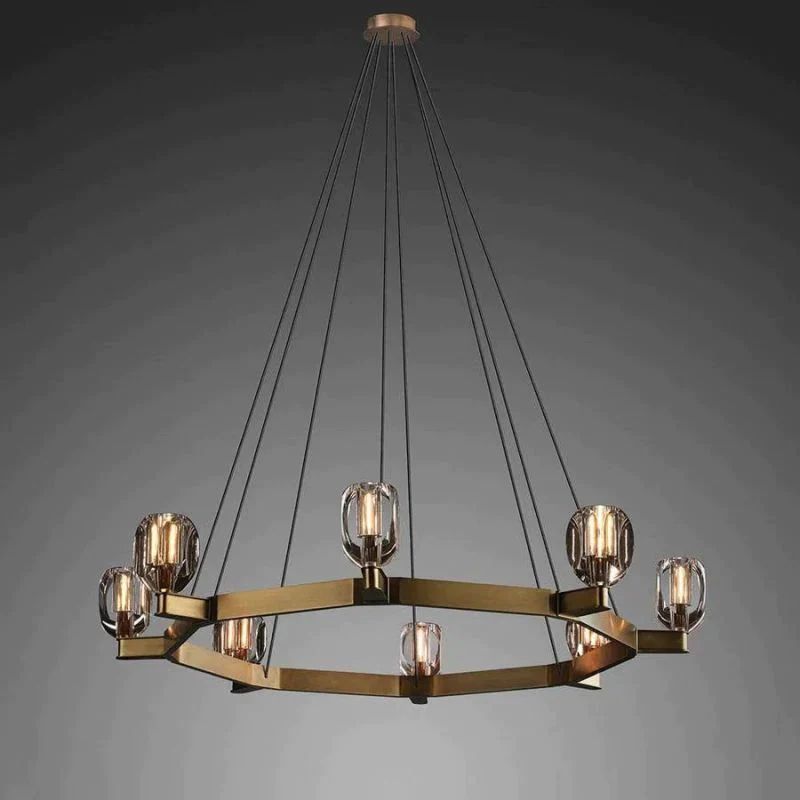
If the room contains several competing shapes, repeat the strongest one. A circular coffee table and curved chairs may support a round chandelier. A long sectional and linear fireplace may look more resolved with a rectangular or oval fixture.
For a deeper comparison of these silhouettes, read Round vs Linear Chandeliers: Which Shape Is Right for Your Dining Room?. The same shape principles can be adapted to a living room seating group.
Consider visual weight as well as measured size
Two chandeliers with the same width can feel completely different. Clear glass and open metal frames allow the walls and ceiling to remain visible, so they often appear lighter. Solid alabaster panels, layered glass, or dense crystal prisms create more visual mass and may feel larger.
A dark frame creates strong contrast against a pale ceiling. A warm brass finish can blend with wood and neutral textiles. Before choosing a larger diameter, look at the amount of open space within the fixture and the contrast between the chandelier and its background.
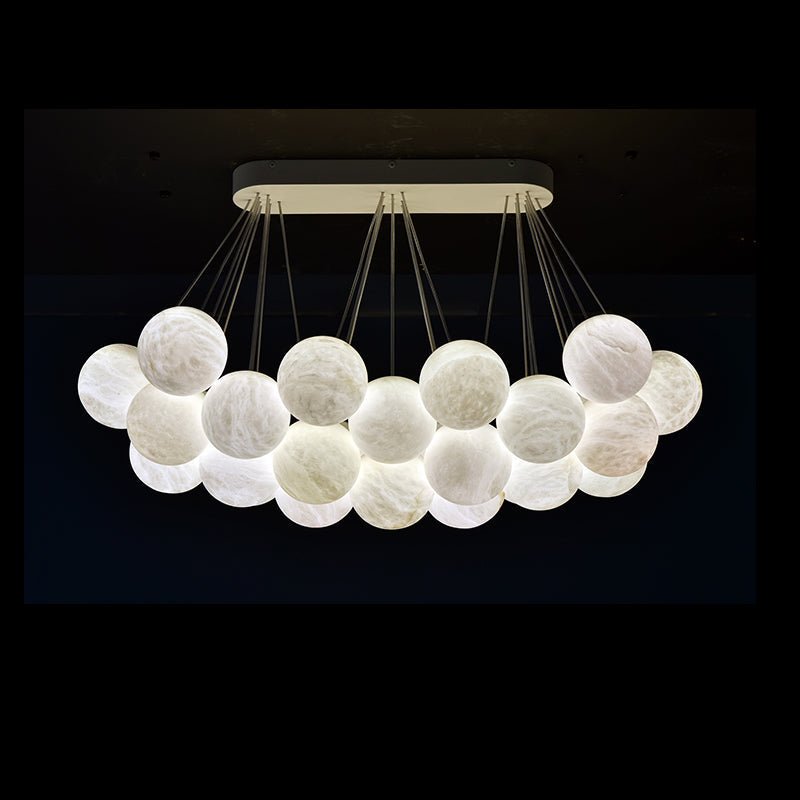
Select a material that supports the atmosphere
Material affects both style and light quality. Alabaster introduces natural variation and a soft glow that can make a living room feel calm and warm. Clear or textured glass preserves openness while adding reflective detail. Crystal creates sharper highlights and a more decorative focal point. Metal frames provide a clean outline and can suit modern, vintage, or transitional interiors depending on the finish.
Choose the effect you want before selecting a named style. A contemporary room can still use a traditional-inspired chandelier if the proportions and materials feel restrained. A classic room can support a modern sculptural fixture when it relates to the furniture scale and existing finishes.
For material comparisons, see Glass vs Crystal Chandeliers: Which One Is Right for Your Home? and Alabaster vs Glass Lighting: Which One Is Right for Your Home?.
Plan layered lighting around the chandelier
A chandelier provides ambient and decorative light, but it should not be the only source in a living room. Add floor or table lamps near reading seats, wall sconces beside artwork or architectural features, and discreet ceiling lights where practical illumination is needed.
Layered lighting makes the room more flexible throughout the day. It also allows the chandelier to operate as a soft focal point rather than being expected to provide every lumen. Review the fixture's specified bulb type, wattage, color temperature, and light-source details instead of assuming that a larger body will produce more usable light.
Use How to Layer Lighting in a Living Room: Chandeliers, Sconces, and Lamps to coordinate ambient, task, and accent lighting.
Check sightlines from every seat and doorway
Sit in each chair and look toward the television, fireplace, windows, and adjacent rooms. Then stand in the main doorway and walk through the primary circulation paths. The chandelier should look balanced without blocking important views.
This check is especially important for wide fixtures with a low body. A chandelier may meet floor-clearance recommendations and still feel intrusive from a sofa. Raising it a few inches or choosing a more open design can preserve the desired scale while improving the view.
Coordinate finishes without matching everything
The chandelier does not need to duplicate every metal finish in the room. Instead, repeat its tone once or twice through a picture frame, table detail, cabinet handle, or decorative object. This creates a visual connection without making the interior feel overly coordinated.
When mixing metals, keep the dominant finish consistent and use the second finish as an accent. Warm brass can sit comfortably beside blackened metal, while polished nickel can relate to cool gray stone and clear glass.
Confirm installation and maintenance before ordering
Review the complete fixture weight, canopy dimensions, mounting method, and electrical requirements with a qualified installer. Large chandeliers may require additional ceiling support. Sloped ceilings may need compatible hardware or an adjustable suspension system.
Also consider how the fixture will be cleaned and how bulbs or decorative pieces will be reached. A chandelier that fits the design should also remain practical to maintain. For delicate materials, read How to Clean and Care for Alabaster, Glass, and Crystal Lighting.
Living room chandelier planning checklist
- Measure the room, ceiling height, seating group, rug, and main walkways.
- Use the room-size formula only as a first diameter estimate.
- Compare the chandelier with the furniture zone and its visual weight.
- Choose a centerline based on the seating group, fireplace, or rug.
- Keep comfortable floor clearance and check every seated sightline.
- Match the fixture shape to the dominant furniture arrangement.
- Combine the chandelier with lamps, sconces, or other practical lighting.
- Confirm ceiling support, electrical details, and maintenance access.
Create a focal point that belongs in the room
The right living room chandelier balances architecture, furniture, and light. Start with accurate measurements, center the fixture on the feature that matters most, and evaluate its visual weight from every important viewpoint. A thoughtful choice will define the seating area while keeping the room open, comfortable, and inviting.
Explore the living room lighting collection and the complete chandelier collection for suitable shapes and materials. If your living room has an unusually tall ceiling, continue with Best Lighting Ideas for High Ceilings and Grand Entryways.