
Glass chandeliers can feel clear, airy, sculptural, or dramatic depending on the glass shape and finish. Some designs nearly disappear into the room, while others create strong reflections and a polished focal point. Choosing the right one means looking beyond the word “glass” and paying attention to scale, transparency, color, shape, and placement.
This guide explains how to choose a glass chandelier for dining rooms, living rooms, foyers, bedrooms, and open interiors, with practical tips on clear glass, smoked glass, blown glass, and wine-glass-inspired forms.
Why choose a glass chandelier?
Glass is one of the most versatile chandelier materials because it can add detail without always adding visual heaviness. Clear glass keeps sightlines open. Smoked glass creates a moodier effect. Blown glass can feel artistic and organic. Ribbed or shaped glass introduces texture while still allowing light to pass through.
Unlike opaque materials, glass often reveals the bulb or internal light source, so the appearance of the bulb, color temperature, and brightness matter. The right combination can make a room feel refined and luminous; the wrong one can create glare or visual clutter.
If you are choosing between crystal and glass, read Glass vs Crystal Chandeliers. Crystal usually adds sharper sparkle, while glass often creates a lighter, more transparent effect.
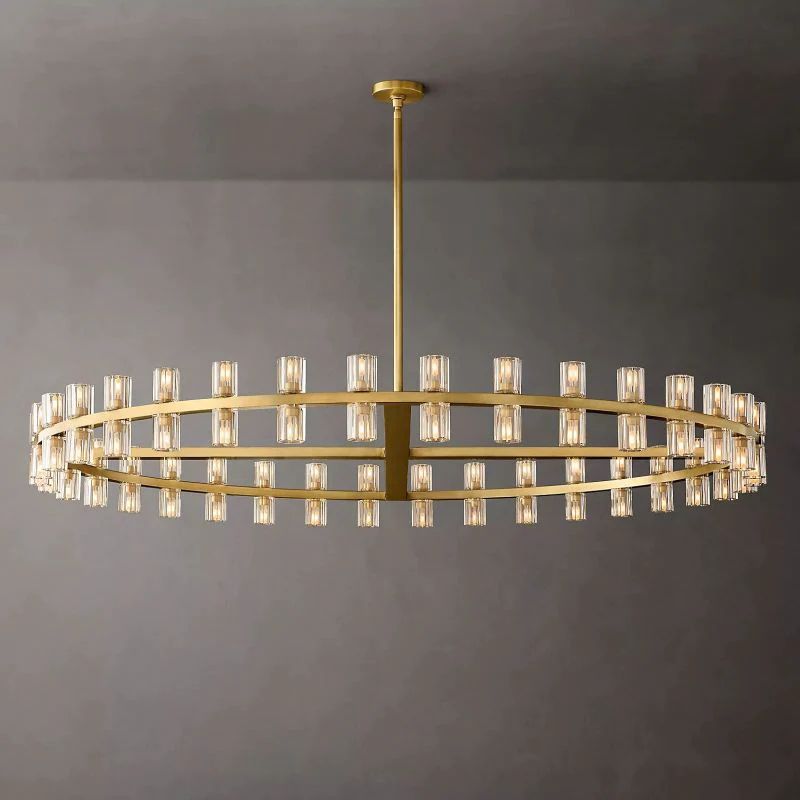
Clear glass: light, open, and versatile
Clear glass chandeliers are useful when you want a statement fixture that does not block views or make the ceiling feel crowded. They work well in dining rooms, living rooms, foyers, and open-plan spaces where the fixture needs presence but not too much opacity.
Because clear glass exposes more of the bulb, choose bulbs carefully. The shape, color temperature, and brightness will be visible. A warm source can soften the fixture, while a cooler source may create a crisper look. If the chandelier includes many exposed points of light, check glare from seated and standing positions before finalizing height.
Clear glass is also forgiving with many interior styles. It can suit modern, transitional, light luxury, and classic rooms depending on the frame finish and glass shape.
Smoked glass: deeper mood and softer contrast
Smoked glass adds tone and depth. It can make a chandelier feel more dramatic without relying on heavy ornament. Gray, bronze, or amber-toned glass may work especially well in rooms with darker furniture, warm metals, stone, or contemporary finishes.
The tint can soften the brightness of the light source, but it may also reduce apparent output. Review the product specifications and consider how much ambient light the room needs. In dining rooms and living spaces, smoked glass often works best as part of a layered lighting plan with sconces, lamps, or secondary ceiling lights.
Blown glass and shaped glass
Blown glass chandeliers introduce small variations in form, which can make the fixture feel more crafted and less mechanical. Globes, droplets, lantern shapes, and wine-glass-inspired shades all change the personality of the chandelier. These shapes can add movement even when the material remains transparent.
In a simple room, shaped glass can become the main decorative feature. In a room with detailed furniture, patterned rugs, or strong architectural elements, choose a cleaner glass profile so the chandelier supports the design instead of competing with it.
For a broader comparison of pendant and chandelier forms, see Pendant Lights vs Chandeliers.
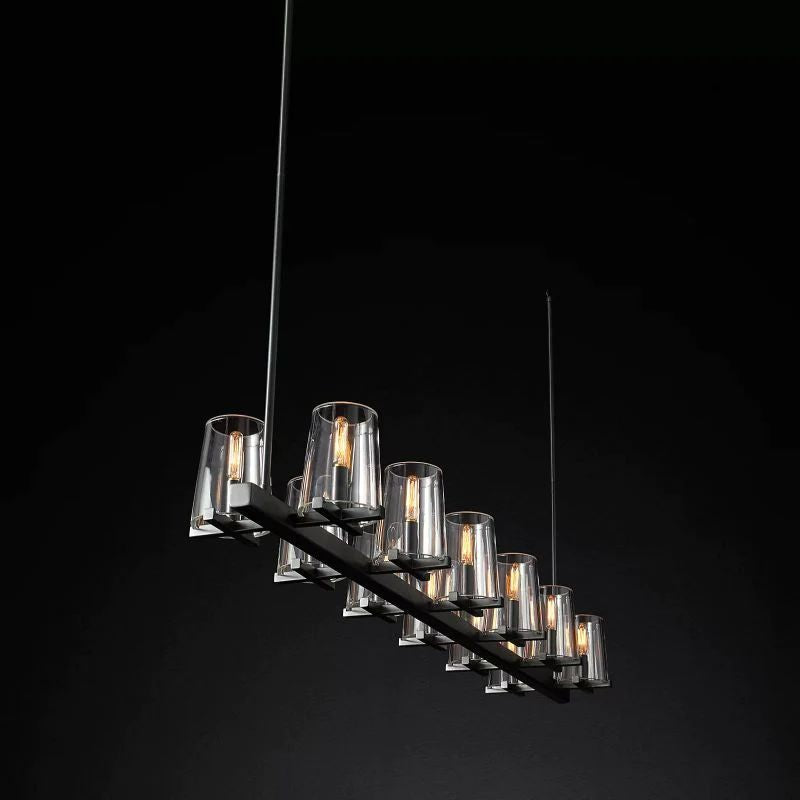
Choose the right shape for the room
Round glass chandeliers work well in square rooms, foyers, bedrooms, and round dining areas. They create a central point that feels balanced from several angles. Linear glass chandeliers are better suited to long dining tables, kitchen islands, and rectangular rooms where the lighting needs to follow a horizontal surface.
Clustered glass chandeliers can add height and movement, especially in entries or staircases. Their layered forms are useful when the room needs vertical interest. For rooms with lower ceilings, a shallow glass ceiling light or compact chandelier may be more comfortable than a deep hanging fixture.
The guide to round versus linear chandeliers can help you match fixture shape to table shape and room proportions.
Size and scale
Use the room and furniture as the starting point. For a general room reference, add the room length and width in feet and use the sum in inches as an approximate chandelier diameter. For a dining table, choose a fixture that feels proportional to the tabletop and leaves enough space at the edges so the chandelier does not feel wider than the furniture it anchors.
Glass often feels lighter than opaque stone or dense crystal, so a glass chandelier can sometimes be slightly larger without overwhelming the room. That said, many glass shades, arms, or tiers still create visual activity. Look at the total silhouette, not only the material.
For dining rooms, the detailed chandelier size guide offers a practical method for comparing fixture width, table size, and clearance.
Hanging height and sightlines
Glass chandeliers are often transparent, but they can still interrupt sightlines if hung too low. Over a dining table, many plans begin with the bottom of the chandelier around 30 to 36 inches above the tabletop for an 8-foot ceiling, then adjust for the room and fixture. In open walking areas, preserve comfortable clearance below the lowest point.
Check the view from the doorway, from seated positions, and from adjacent rooms. A clear glass chandelier may look visually light in photos, but the bulbs, frame, and repeated glass elements still occupy space. For more height guidance, read how high a chandelier should hang above a dining table.
Finish and frame color
The frame finish gives the glass its design direction. Brass warms the transparency and pairs well with wood, cream, stone, and warm neutral interiors. Black creates contrast and can make a glass chandelier feel more modern or architectural. Polished nickel and chrome lean cleaner and cooler, especially in bright contemporary rooms.
Repeat the finish somewhere else in the space, even lightly. Cabinet pulls, curtain hardware, mirror frames, dining chair details, or decorative objects can make the chandelier feel connected rather than isolated.
Lighting comfort matters
Because glass transmits light directly, comfort depends on the source. Check bulb base, wattage, color temperature, and the number of light sources listed for the product. Do not assume a fixture is dimmable unless the product information specifically confirms dimming compatibility.
Dining rooms and living rooms often feel comfortable with warm white light, commonly around 2700K to 3000K depending on the interior. The guide to dining room color temperature explains how those choices affect mood, materials, and color rendering.
Layered lighting helps glass chandeliers feel more refined. Wall sconces, table lamps, and accent lights can reduce harsh contrast and make the room feel balanced. Explore the wall lights collection if the room needs supporting light at eye level.
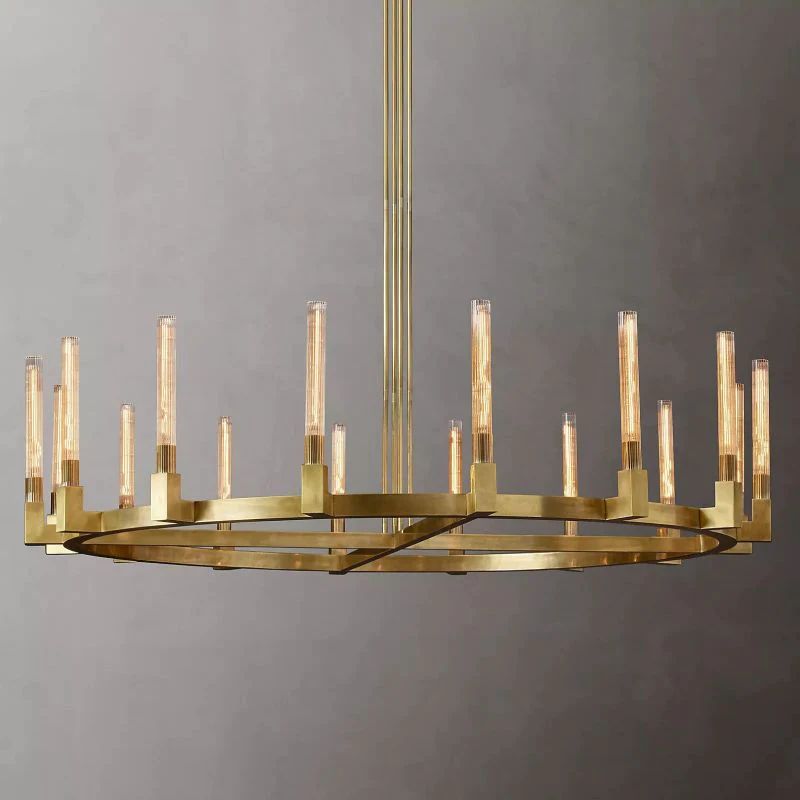
Where glass chandeliers work best
- Dining rooms that need a focal point without blocking the view across the table
- Kitchen islands where a linear chandelier can create rhythm and structure
- Living rooms that need a lighter statement fixture above the seating area
- Foyers where transparency keeps the entry from feeling visually crowded
- Bedrooms where a compact glass chandelier can add polish without heaviness
Glass chandelier care
Glass shows dust, fingerprints, and water spots more easily than some textured materials. Regular gentle dusting helps preserve clarity. For deeper cleaning, follow the product care instructions and avoid harsh cleaners that may damage glass coatings or metal finishes.
If the chandelier hangs in a foyer, staircase, or high ceiling area, plan cleaning access before installation. A fixture that is beautiful but impossible to maintain may become frustrating over time. For safe material care, see how to clean and care for glass, crystal, and alabaster lighting.
Common mistakes to avoid
- Choosing clear glass without considering visible bulb shape and glare
- Using smoked glass where the room needs stronger general brightness
- Ignoring the full chandelier drop in low or standard-height rooms
- Selecting a fixture that is too small because glass appears visually light
- Forgetting to coordinate the frame finish with the rest of the room
Final thoughts
A glass chandelier is a strong choice when you want light, detail, and elegance without excessive visual weight. Clear glass keeps the room open, smoked glass adds depth, and shaped or blown glass can bring sculptural personality.
Start with the room layout and ceiling height, then choose the glass style, shape, finish, and light source that support the way the room is actually used. The result should feel bright, balanced, and intentionally refined.