
A crystal chandelier can give a room brilliance, depth, and a formal focal point, but the best choice is not only about sparkle. The fixture has to fit the scale of the room, suit the ceiling height, support the furniture layout, and create the right balance between reflection and comfort.
This guide explains how to choose a crystal chandelier by style, size, material presence, hanging height, and room placement. Use it as a practical planning reference before comparing product dimensions and installation details.
What makes crystal chandeliers distinctive?
Crystal chandeliers are designed to catch and reflect light. Faceted elements can create sharper highlights than frosted glass or stone, making the fixture feel decorative even when the lights are off. In the evening, crystal can add shimmer, movement, and a more layered sense of atmosphere.
Because crystal is visually active, scale matters. A fixture that is too dense may overwhelm a quiet room, while one that is too small may lose the dramatic effect people expect from crystal lighting. The goal is to choose a chandelier that feels intentional from both close range and across the room.
If you are comparing materials, the guide to glass versus crystal chandeliers explains why the two materials create different kinds of clarity and reflection.
Start with the room type
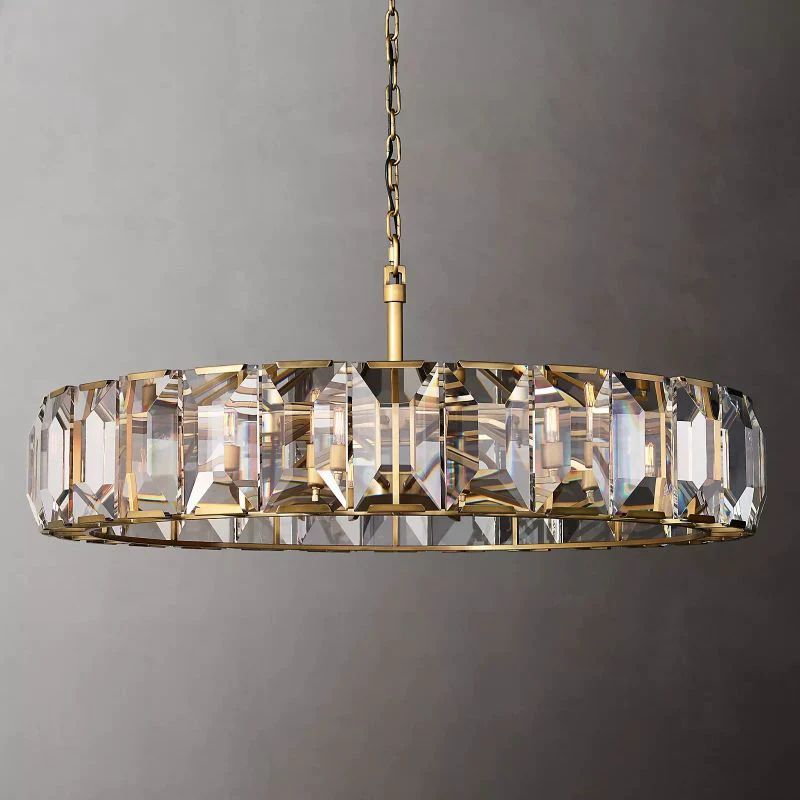
A crystal chandelier behaves differently depending on where it is placed. In a dining room, it usually anchors the table and becomes part of the meal setting. In a living room, it can define the seating area and add vertical interest. In a foyer or staircase, it may be visible from several levels, so the fixture needs to look balanced from below, across, and above.
For a dining room, choose a chandelier that relates to the table shape. Round or tiered crystal chandeliers often pair well with round tables and square rooms. Rectangular or linear crystal chandeliers can feel more balanced above long dining tables and kitchen islands. For more dining-specific sizing advice, see how to choose the right chandelier size for a dining room.
For living rooms, consider the seating group rather than the full floor area alone. A chandelier should visually connect with the sofa, chairs, and rug. If the room has a high ceiling, a larger or multi-tier design can help the lighting feel connected to the architecture. The living room chandelier guide covers this in more detail.
Choose the right size
A common starting point is to add the room length and width in feet, then use that number in inches as an approximate chandelier diameter. A 12-by-14-foot room suggests a fixture around 26 inches wide as a first reference. For dining tables, another useful approach is to select a chandelier that is about one-half to two-thirds the width of the table.
These are planning guides, not fixed rules. Crystal often appears visually larger than its exact measurement because it catches light and creates many small highlights. If the chandelier is very dense or multi-tiered, consider stepping down slightly in width. If it has an open frame with spaced crystal elements, it may feel lighter.
Always compare the body height, canopy size, total suspension range, and weight. A product's width alone does not tell you whether it will fit the room comfortably.
Pay attention to hanging height
Over a dining table, many layouts begin with the bottom of the chandelier around 30 to 36 inches above the tabletop for an 8-foot ceiling. Higher ceilings may allow a slightly higher placement, but the fixture should still feel connected to the table. For a detailed placement walkthrough, read how high a chandelier should hang above a dining table.
In an entryway or open walking area, preserve comfortable clearance under the fixture. A common reference is at least about 7 feet from the floor to the bottom of the chandelier, with final placement confirmed by a qualified installer and local code. In a two-story foyer, the chandelier may align visually with the upper landing or window zone rather than a single floor-based measurement.
For staircases and grand entries, the fixture is seen from multiple angles. A crystal chandelier with finished details on the underside can be especially effective, because guests may view it from below as they move through the space.
Match shape to architecture and furniture
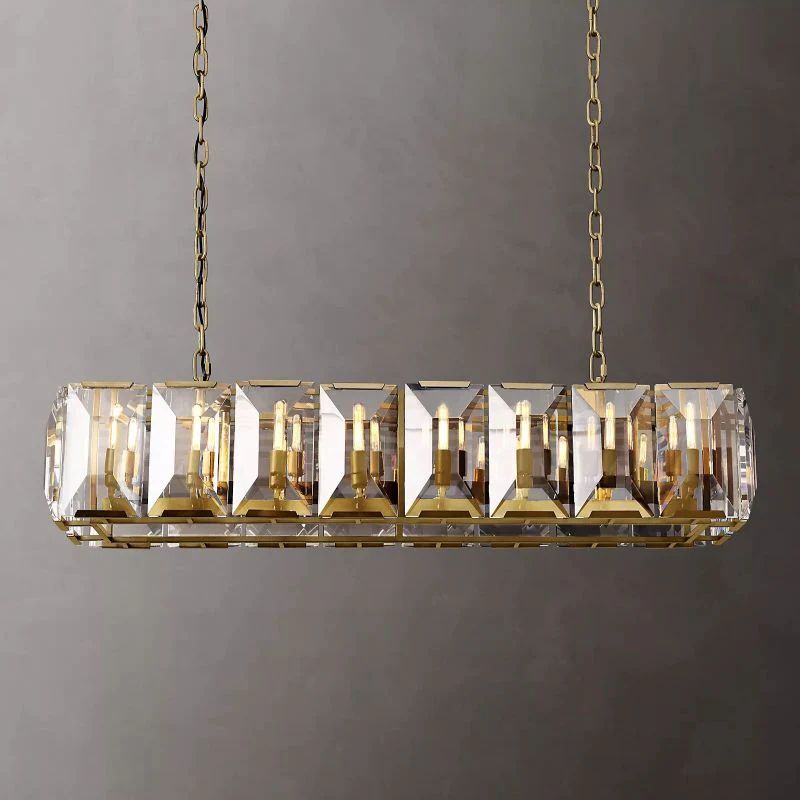
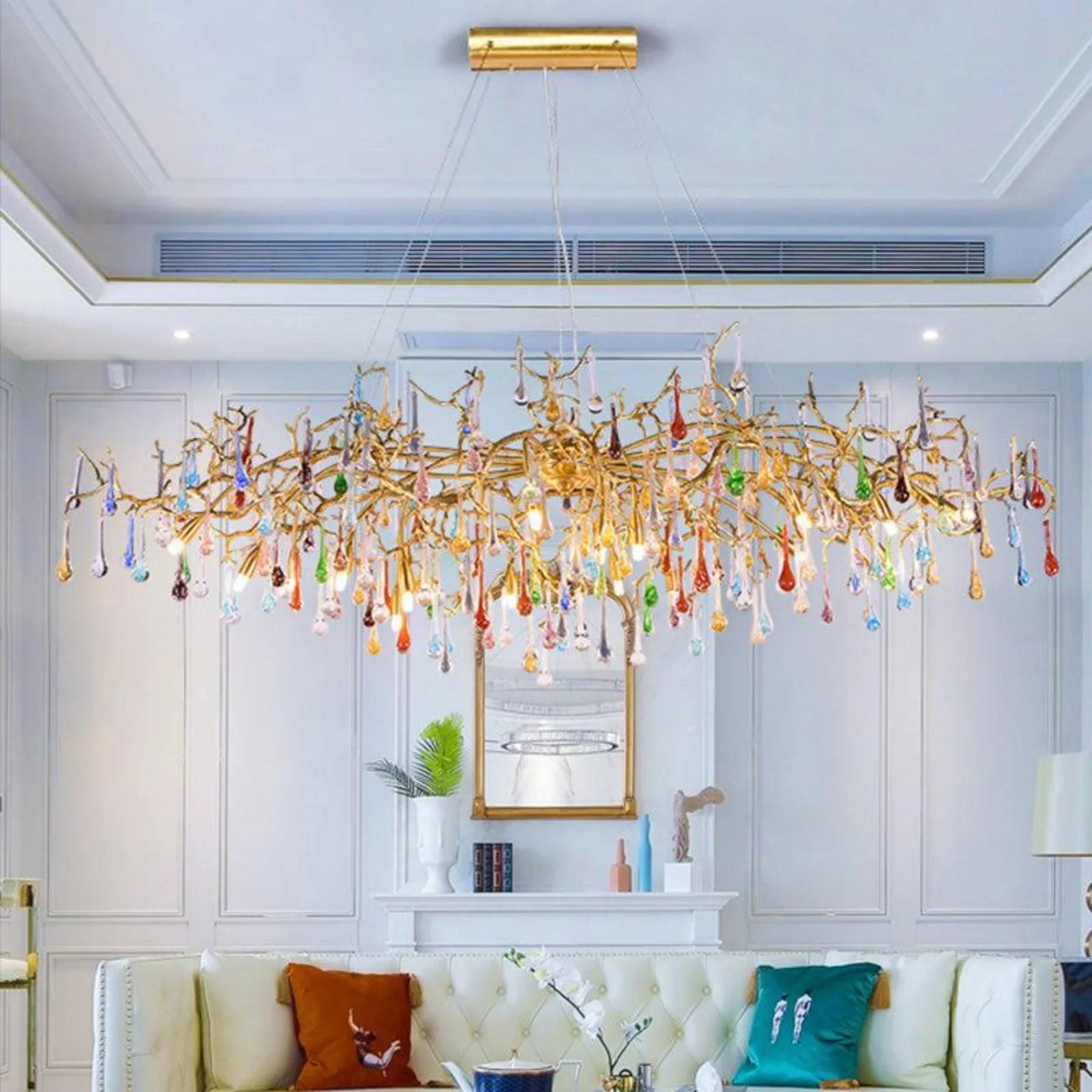
Round crystal chandeliers bring symmetry and work well in square rooms, foyers, bedrooms, and round dining areas. Linear crystal chandeliers emphasize length and are useful over dining tables, islands, and long seating areas. Branch designs can feel more organic and suit interiors that need movement without a heavy central mass.
Look at the strongest lines already in the room. A long table, long console, or wide sofa may benefit from a linear chandelier. A curved staircase, round table, or centered foyer can make a round chandelier feel natural. If you are deciding between round and linear forms, the guide to round versus linear chandeliers is a helpful next read.
Consider crystal style and visual density
Not all crystal chandeliers feel traditional. Some use faceted drops for a formal look, while others use geometric blocks, clear panels, or modern crystal rods. The shape of the crystal changes how the light behaves. Fine facets create sparkle; larger clear pieces create broader reflections; smoked or tinted elements can soften the overall effect.
If the room already includes patterned wallpaper, detailed molding, or bold artwork, a cleaner crystal chandelier may keep the space from feeling crowded. If the room is simple and architectural, a more dramatic fixture can become the main statement.
Browse the chandelier collection to compare visual density across round, rectangular, and tiered designs.
Choose a finish that connects to the room
The metal finish shapes the mood as much as the crystal. Brass and gold finishes add warmth and often pair well with cream walls, wood furniture, and warm stone. Black or dark finishes create contrast and can make the chandelier feel more graphic. Polished nickel or chrome may suit cooler, more contemporary rooms.
The finish does not need to match every metal in the room, but it should feel connected. Repeat the tone through cabinet hardware, picture frames, furniture legs, mirrors, or decorative objects. A chandelier looks more integrated when at least one other element quietly echoes its finish.
Plan brightness and glare carefully
Crystal reflects light strongly, so glare control matters. Exposed bulbs may look beautiful in product photos but feel too bright if the fixture sits close to eye level. Check the product's listed bulb type, number of light sources, and recommended wattage. If brightness control is important, confirm that the fixture, bulbs, and controls are explicitly compatible before assuming any dimming function.
Color temperature also changes the result. Many dining rooms and living rooms feel comfortable around 2700K to 3000K, but the best choice depends on the space and product specifications. The guide to dining room color temperature explains how warm and cooler light affect atmosphere and materials.
Layered lighting can make a crystal chandelier easier to live with. Wall sconces, table lamps, and accent lights reduce the need for the chandelier to provide all the light in the room. See how to layer living room lighting for practical examples.
Think about maintenance before buying
Crystal chandeliers reward care. Dust, fingerprints, and residue can dull reflective surfaces over time. More detailed chandeliers may require more careful cleaning than simple glass or alabaster fixtures. If the chandelier will hang in a tall foyer or above a staircase, consider how it will be accessed safely for dusting and maintenance.
Use gentle cleaning methods and follow the product care recommendations. Avoid harsh chemicals unless the manufacturer confirms they are safe for the material and finish. For material-specific care tips, read how to clean and care for crystal, glass, and alabaster lighting.
Where crystal chandeliers work especially well
- Dining rooms that need a polished focal point above the table
- Foyers and staircases where the fixture can be seen from several angles
- Living rooms with high ceilings or formal seating layouts
- Bedrooms where a smaller crystal chandelier adds elegance without crowding the ceiling
- Open interiors that need one luminous statement piece to define a zone
Common mistakes to avoid
- Choosing by sparkle alone without checking total width and drop
- Hanging the fixture too low in an open walking area
- Using a very dense chandelier in a room that already has heavy decoration
- Ignoring glare from exposed bulbs or reflective crystal
- Forgetting to plan cleaning access for high or difficult locations
Final thoughts
A crystal chandelier should feel brilliant, not busy. Start with the room's scale and ceiling height, then choose a shape that supports the furniture layout. Pay attention to visual density, finish, brightness, and maintenance so the chandelier remains beautiful in everyday use.
When chosen carefully, crystal lighting can create a refined focal point that feels timeless, luminous, and deeply connected to the room around it.